Over 350,000 tons of highly radioactive waste and spent fuel rods are in temporary storage on site at nuclear power complexes and at intermediate storage sites all over the world. More than 10,000 additional tons join them every year. It is the most dangerous waste man has ever produced. Waste that requires storage in a safe final repository for hundreds of thousands of years. Out of reach of humanity and other living creatures. The question is, where? Together with Swiss-British nuclear physicist Charles McCombie, who has been searching for a safe final storage site for highly radioactive nuclear waste for thirty-five years, director Edgar Hagen investigates the limitations and contradictions involved in this project of global significance. Supporters and opponents of nuclear energy struggle for solutions whilst dogmatic worldviews are assailed by doubt
The extraordinary destiny of two people. After the Second World War, Lois is an actress in Broadway theatre, television and Hollywood films. Her husband, Edgar Snow, is world famous. A pioneer fascinated by China, he is the first journalist to film and interview Mao Tse-tung. Suspected by the American authorities of Communist sympathies, Ed and Lois are blacklisted. Together with their two small children, they go to Switzerland, mid-way between China and America, where they find a new home. A story of revolution, utopia, disillusionment, and hope.
A behind-the-scenes look at the of how the Paris Opera is run under the direction of Stephane Lissner.
This documentary follows Swiss improvisation musicians and tells their stories.
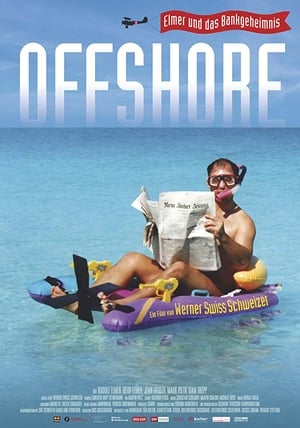
While managers of Swiss banks in the USA ruefully apologize for their tax evasions practices and customer data is disclosed to the American authorities, Rudolf Elmer, former auditor at bank Julius Bär, is indicted for violating the Swiss banking secrecy law on the Cayman Islands. Rudolf Elmer: from insider to critic.
An intimate portrayal of the everyday lives of Carthusian monks of the Grande Chartreuse, high in the French Alps (Chartreuse Mountains). The idea for the film was proposed to the monks in 1984, but the Carthusians said they wanted time to think about it. The Carthusians finally contacted Gröning 16 years later to say they were now willing to permit Gröning to shoot the movie, if he was still interested.
Max Frisch was the last big Swiss intellectual widely respected as a “voice” in its own right – a character hardly found today. The film retells Frisch’s story as a witness of the unfolding 20th century, wondering if such “voices” are needed at all, or if we could do without them.
'From One Day To The Next' follows four elderly people through their everyday lives, observing how they cope with a gradual loss of autonomy.
Documentary account of a man’s life in the face of imminent death – Francisco Varela's story told affectionately and gently, touchingly and astutely. Varela spent his life building bridges: between Western science and Eastern wisdom, neurobiology and philosophy, abstract theory and practical life. This film seeks to deconstructs the prevailing division between science and art.
In May of 1982 Julio Cortázar, the Argentinean writer and his companion in life, Carol Dunlop set out in their VW bus on a journey along the highway from Paris to Marseille that, for each of them, was to be their final one. Twenty-five years later, Océane Madelaine and Jocelyn Bonnerave set out to undertake the journey again.
Modern Amazons are fierce heroines. They are ready to fight for what is important to them. Without explaining, without compromising, always persisting. They fight for victory in the ring for acceptance, and too, for fellow sufferers and humanity.
Zurich-born Hugo Koblet was the first international cycling star of the post-war period. He was a stylist on the bicycle and in life, and a huge heartthrob. Koblet had a meteoric rise and won the Giro d'Italia in 1950. Once he had reached the zenith of his career, Koblet was put under pressure by overly ambitious officials and ended up ruining his health with drugs. In 1954, he married a well-known model and they became a celebrity dream couple. After his athletic career ended, Koblet began to lose his footing. Threatened by bankruptcy, he crashed his Alfa into a tree.
A documentary film about Tibetan traditional medicine.
A documentary. David Sieveking takes the advice of his idol, David Lynch and tries out Maharishi Mahesh Yogi's transcendental meditation technique.
Filmmakers Nicolaus Humbert and Werner Penzel examine the nature of nomadic existence in this documentary, from the literal nomads of North Africa to the more metaphorical kind of wanderer, such as American poet and ex-pat Robert Lax. Humbert and Penzel focus especially on the nomad's paradoxical ability to fully inhabit every moment while remaining coolly detached from specific locales and anxious thoughts about the past or future.
Mulhapar is a village in the wide expanses of the Punjab in Pakistan. A country associated with violence and intolerance. Beyond this sombre prejudice, the film plunges into the brimming life of a community of poor and rich people, Muslims and Christians, the young and the old, women and men. In Mulhapar, their family and individual destinies, as well as their stories and anecdotes are condensed into a vivid mosaic.
At the far end of the Alaskan peninsula, for filmmaker Roman Droux a childhood dream comes true. He discovers together with the bear researcher David Bittner the universe of wild grizzlies. The two adventurists face bears at smelling-distance, experience the struggle for survival of a bear family and witness dramatic fighting scenes. Driven by a desire to explore the unknown the film tells a personal story of wilderness, framed in breathtaking pictures of unique creatures.
The story of three Turkish men. They all grew up in Switzerland and all got deported after various criminal offenses.
In 1906, Dr. Morgenthaler, a psychiatrist at Bern Psychiatric Hospital, started to collect and photograph the drawings, paintings and various objects designed by his patients. This collection of works by schizophrenic artists would later prove an important contribution to art history and the history of "Art Brut" or "Outsider Art": work by artists who have been deemed obsessive, mentally or psychologically ill, or otherwise "abnormal."
Switzerland is presently the only country in the world where suicide assistance is legal. Exit: The Right to Die profiles that nation's EXIT organization, which for over twenty years has provided volunteers who counsel and accompany the terminally-ill and severely handicapped towards a death of their choice.