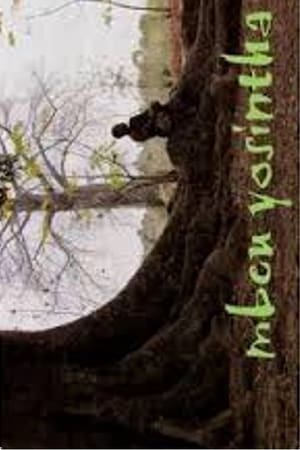
Mbeu Yosintha was made to help farmers and rural communities cope with the effects of climate change and in particular the ever changing rain patterns in South East Africa. The film is a drama using local actors and was devised with Malawian writer Jonathan Mbuna following extensive research with various agricultural NGOs in Malawi. Following successful drama like Mawa Langa this film has already been seen in Malawi by over 10,000 people in rural areas using a pedal-power cinema kit.
A teen-aged nanny is impregnated by her employer, who pays for her education to keep her quiet.
Anita Chitaya has a gift: she can help bring abundant food from dead soil, she can make men fight for gender equality, and maybe she can end child hunger in her village. Now, to save her home in Malawi from extreme weather, she faces her greatest challenge: persuading Americans that climate change is real. Traveling from Malawi to California to the White House, she meets climate sceptics and despairing farmers. Her journey takes her across all the divisions that shape the USA: from the rural-urban divide, to schisms of race, class and gender, and to the American exceptionalism that remains a part of the culture. It will take all her skill and experience to help Americans recognise, and free themselves from, a logic that is already destroying the Earth.
Follows Molina, a 12-year old Malawian girl who is forced to leave school and enter an arranged marriage to improve the family's economic standing. Once married, Molina quickly becomes a young mother and the victim of an abusive husband until the arrival of Chief Kachindamoto.
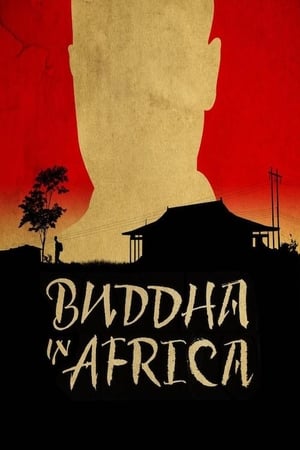
Enock is six years old when he is taken to a Confucian Buddhist orphanage and given the Chinese name Alu. He becomes extremely skilled in acrobatics. Suddenly he must make a choice to reunite with the culture of Africa or to sign up for five years in order to study in Taiwan.
A terrified young girl comes face to face with Death and only one can save her.
Two boys’ lives are changed forever when they survive a boating accident and end up stranded on a remote Alaskan shore. Through environmental calamities and unimaginable obstacles, the two fundamentally different kids must eventually trust and depend on each other in order to survive.
A couple’s late-night conversation goes awry.
Years after their separation, Marianne accompanies Joe at his allotment. Together, they talk navigating through their lives, their love and the loss of their daughter.
Inspired by Picasso's Guernica (1937), this film is fundamentally about the Israeli-Palestinian conflict.
As Robin Williams runs lines energetically on the set of “Mork & Mindy,” his co-star Pam Dawber interrupts him to deliver the news of John Belushi’s death.
Six episodes set in and focusing on the history of Brasília, the capital of Brazil. Episode list: A Paisagem Natural (dir. Vladimir Carvalho), O Sinal da Cruz (dir. Pedro Jorge de Castro), A Volta de Chico Candango (dir. Roberto Pires), Além do Cinema do Além (dir. Pedro Anísio), Suíte Brasília (dir. Moacir de Oliveira) and A Capital dos Brasis (dir. Geraldo Moraes).
After seeing a man lying in the snow, a boy recalls a Saint Nicholas night spent with his father years before. Playing with his father takes an unexpected turn, while his dream toy leaves a bitter aftertaste.
Inspired by the Greek poem "Waiting for the Barbarians" by Constantine P. Cavafy
Japanese film from 1925.
An experimental short fiction film about Kemal Altun, a Turkish asylum seeker who threw himself out of the window of a West Berlin courtroom in 1983 at the age of 23 out of fear of being deported. Altun's situation is related to that of the writer Georg Büchner. Büchner died of typhus in 1837, during his lonely Zurich exile, where he was on the run from the Hessian authorities. What did Büchner think at the end of his long persecution? What did Altun feel on the eve of his suicide, his ultimate freedom?
The action takes place in a Bosnian town during the Second World War and shows how anti-fascist illegals try to protect their intelligence network from the Germans and their Ustasha allies.
A photographer comes face to face with forces that threaten her road to redemption.
Non Sinto A Forma
Howard Peyton served two years for forgery. Jerry Grafton, a genteel crook, is on the lookout for him when Howard comes out of prison. He is met at the jail door by his young wife. Jerry also meets him and offers him help, but urged on by his wife, Howard refuses it. When they reach home, his wife, who has a little money, induces him to go to New York and start life anew, and send, for her when he has a position. In New York, he manages to obtain a position in the office of Arthur Jamieson, an importer. Howard sends for his wife to join him. While he is waiting, Grafton finds him and insists that he forge his employer's name, or he will expose his past offense. Naturally weak, Howard yields.