Three part documentary of the history of the Royal Air Force during World War Two. They combine actual Air Ministry films and period newsreel footage with interviews of surviving members of the air force. The first part covers the period from the 'phoney war', the invasion of Poland and the early bombing raids on enemy shipping, through to the attacks on France. Aircraft featured include the Blenheim and Wellington bombers, the Sunderland flying boat, Spitfires and Hurricanes and the opposing ME109.
Three part documentary of the history of the Royal Air Force during World War Two. They combine actual Air Ministry films and period newsreel footage with interviews of surviving members of the air force. The second part covers the early years of 1939-1940 from the threat of German invasion preceded by Oporation Eagle attacks on airfields and ports, through the Battle of Britain to the commencement of the British bombing of Berlin after attacks on London and wider civilian casualties such as Coventry.
The film tells about members of Finnish women's Lotta Service during the Second World War through the eyes of three young women.
Vladimir Rudnev, a VGIK graduate, newsreel cameraman, and his assistant Sashenka, assistant director of the Moscow Newsreel Studio, are filming the Red Army's combat operations during the Great Patriotic War. Not everything works out at once - they have no experience yet. From the huge stream of newsreel footage shot in the line of fire, they patiently and courageously create a portrait of their contemporaries.
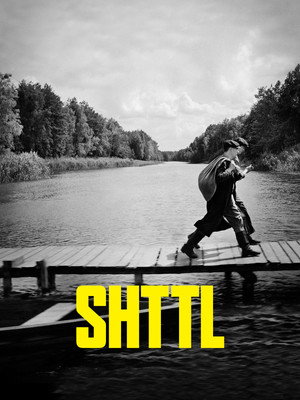
Two brothers return to their devastated home village after the end of the Second World War with nothing to their name but their army-issue machine guns. There they find a traumatised German, abandoned in retreat. Together, the three men act out a tragicomic tale.
During WWII, US Lieutenant Morris and British captain Hull are assigned in a mission to kill Rommel.
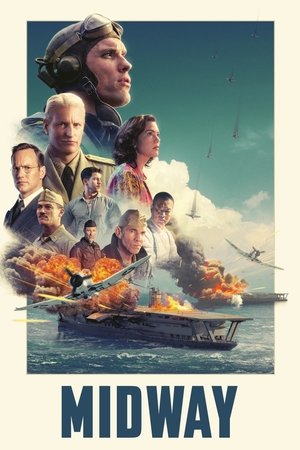
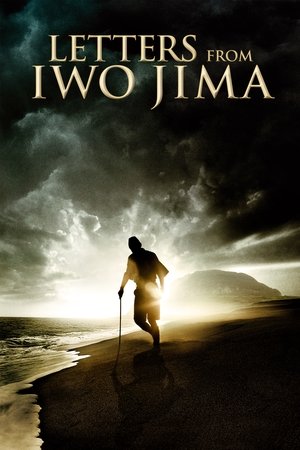
Lt. Koji Kitami is a navigator-bombardier in Japan's Naval Air Force. He participates in the Japanese raid on the U.S. Naval Base at Pearl Harbor in 1941 and is welcomed with pride in his hometown on his return. As Japan racks up victory after victory in the Pacific War, Kitami is caught up in the emotion of the time and fights courageously for the standard of Japanese honor. But his assuredness of his government's righteousness is shaken after the Japanese navy is defeated in the debacle of Midway.
A tribute to the courage and resiliency of Britons during the darkest days of the London Blitz.
A compilation of images co-creator Frank Mouris had collected from magazines interwoven with two narrations, one giving a mostly linear autobiography and the other stating words having to do with the images, the story the first voice is relating, or neither. Preserved by the Academy Film Archive.
This film is strongly anti-war film. The film is based on the collection of writings by Japanese student soldiers who died during World War II. The film is located to Burma. It shows the everyday problems of soldiers in contrast of their ideas and the cynicism of their commanders. Soldiers are also victims of military bullying by their commanders.
"Under Ten Flags" is a WWII movie loosely based on the true story of the German navy commerce raider Atlantis, a converted Auxilliary Cruiser, and her Captain Bernhard Rogge. Atlantis, camouflaged as a merchant ship, cruised the South Seas ( Atlantic, Indian & Pacific) and sank or captured 22 merchant ships from May 1940 through November 22, 1941 when she was sunk by the British Cruiser HMS Devonshire. Rogge was one of the few German officers of flag rank who were not arrested by the Allies after the war ended. This was due to the very proper and ethical way he exercised his command of Atlantis. After the war he advanced to Rear Admiral in the West German Navy and became a high-ranking NATO commander.
During the start of the Pacific campaign in World War II, Lieutenant Janet Davidson is the head of a group of U.S. military nurses who are trapped behind enemy lines in the Philippines. Davidson tries to keep up the spirits of her staff, which includes Lieutenants Joan O'Doul and Olivia D'Arcy. They all seek to maintain a sense of normal life, including dating, while under constant danger as they tend to wounded soldiers.
An exceptional documentary film that chronicles the liberation of Auschwitz, commencing on the day of liberation and backtracking in time to narrate the tragedy of the Holocaust from four distinct perspectives: the prisoners, the liberators, the perpetrators, and the local residents.
A film about an incident in the last war when a gypsy girl sacrifices herself for her lover, a partisan who has deserted.
This movie tells a true story about events in Zagreb in 1941. Nazis and their collaborators organized the great gathering of students on Dubrava stadium. The intention was to publicly separate Jews from them which would lead to future pogrom. The event, however, took an unexpected turn.
Documentary focusing on the contributions to the American war effort of African-American soldiers.
The U.S. Army Signal Corps Pictorial Division made this short documentary shortly after the end of WWII to look at the after-effects of the atomic bombs dropped on Hiroshima and Nagasaki. There is no credited crew or cast.
A soldier is expected to never question the actions of his commanding officer, but when a Marine sees his CO breaking the law, he finds himself facing a difficult dilemma in this provocative war drama.
Mother Earth and Father Time converse about the choices humans make. Preserved by the Academy Film Archive in 2010.
The seventh and final film of Frank Capra's Why We Fight World War II propaganda film series. This entry attempts to describe the factors leading up to America's entry into the Second World War.