Soprano Anna Netrebko appears in her highly anticipated Met role debut as Leonora, the tortured heroine who sacrifices her own life for the love of the Gypsy troubadour. Dmitri Hvorostovsky sings Count di Luna, Yonghoon Lee is Manrico in his Met role debut as the title character, Dolora Zajick sings her signature role of the gypsy Azucena, and Štefan Kocán is Ferrando. Marco Armiliato conducts Sir David McVicar’s Goya-inspired production.
Rebellious servants, capricious lovers, cross-dressing farce and a happy ending: the fast paced action of this comic Baroque opera had all the ingredients to please the self-confessed ‘low-brow taste’ of an Austro-German prince, who commissioned Giuseppe Scarlatti for a piece to celebrate his son’s wedding. This is the opera’s first revival in modern times, and it takes place in the very same Baroque theatre, impeccably restored to its original glory, which hosted the first performance. With a cast of young singers drawn from Prague’s National Theatre and a stylish period-instrument ensemble, this vivid reconstruction will delight audiences as much today as it did the aristocratic guests at Český Krumlov in 1768. Filmed in High Definition and recorded in true Surround Sound.
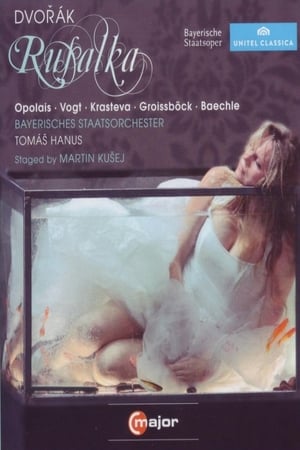
Renée Fleming sings one of her signature roles, the title character in Dvořák’s sumptuously melodic Rusalka. The story of the opera, which is about a water spirit’s tragic romance with a human prince, is drawn from several folktale sources including Hans Christian Andersen’s “The Little Mermaid.” Star conductor Yannick Nézet-Séguin leads a cast that also includes Piotr Beczala as the handsome Prince whom Rusalka yearns to love; Dolora Zajick as the cackling swamp witch Ježibaba; Emily Magee as the Foreign Princess, Rusalka’s rival; and John Relyea as Rusalka’s father, the Water Sprite.
Radiant mezzo-soprano Susan Graham and dashing Italian tenor Marcello Giordani are unlucky lovers in La Damnation de Faust, Hector Berlioz’s classic take on dancing with the devil.
Valery Gergiev conducts Mariusz Trelinski’s thrilling new production of these rarely heard one-act operas. Anna Netrebko stars as the blind princess of the title in Tchaikovsky’s lyrical work, opposite Piotr Beczala as Vaudémont, the man who wins her love—and wakes her desire to be able to see. Nadja Michael and Mikhail Petrenko are Judith and Bluebeard in Bartók’s gripping psychological thriller about a woman discovering her new husband’s murderous past.
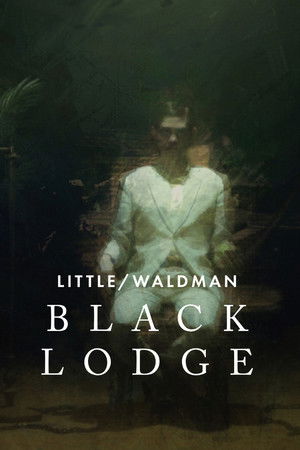
Bill Morrison’s experimental short features decayed film reels from the lost, German silent film Pawns of Passion (1928).
Without question, this is an incredibly bizarre production. The revised storyline makes little sense, and there is a surprising amount of violence and sexual innuendo. However, the singers are superb, both vocally and in regard to their stage presence and acting, the orchestra plays beautifully, the chorus is wonderful, and the set is as clever as it is strange. It's definitely not for purists, or for someone new to this particular opera. But for someone who's seen Die Entfuhrung before, and is familiar enough with the original story to not miss it, watching Belmonte, Constanze, Blonde, Pedrillo, and Osmin embark on an entirely new adventure -- and push the boundaries of good taste -- is rather enjoyable.
The stupendous climax to Wagner’s four-part Ring cycle is brilliantly realized by the Otto Schenk/Günther Schneider-Siemssen production and byJames Levine’s monumental conducting. The Met orchestra, chorus, and an all-star cast make this Götterdämmerung one that truly rises to the occasion. Hildegard Behrens’s Brünnhilde must be experienced to be believed, as does Matti Salminen’s richly sung, domineering Hagen. At the center of the drama is Siegfried Jerusalem as Siegfried, who does not realize he has been drawn into a plot of betrayal until it is too late. Christa Ludwig is magnetic as Waltraute and Ekkehard Wlaschiha is a compelling Alberich.
The opera Turandot by Giacomo Puccini from the Arena di Verona (2024), with desings by late Franco Zeffirelli. Turandot is sung by Ecaterina Semenchuk.
Last production staged by Patrice Chéreau, this Elektra will remain as the main and most striking lyrical event of these last years in Aix-en-Provence. This production is leaded by three amazing singers: the German soprano Evelyn Herlitzius gave a tremendous, never-to-be-forgotten account of the title role, Waltraud Meier portrays a human and chilling Clytemnestra and Adrianne Pieczonka is a fantastic Chrysothemis. Everyone's loneliness and intimate struggles are Patrice Chéreau's favorites theatrical themes. With Esa-Pekka Salonen conducting the Orchestre de Paris, this production of Elektra becomes an unforgettable experience.
Visually this is a gripping production which captures the drama of this opera perfectly. It's downright exciting! and I found the singing, acting, and orchestral playing reasonably fine. I found only one major problem with it, a problem that kept Puccini for quite a few years. Turandot has been looking for an opportunity to kill Calif and Calif has singlemindedly tried to get Turandot to love and wed him focusing on her and ignoring a better looking girl who loves him truly. The problem is how to get the audience to applaud the match once Calif gets his wish. Puccini couldn't figure out how to do it. The traditional quick ending doesn't do it, and Berio's attempt is longer , tries its best, but ends up making it plain this is one wierd couple.
The Queen of the Night enlists a handsome prince named Tamino to rescue her beautiful kidnapped daughter, Princess Pamina, in this screen adaptation of the beloved Mozart opera. Aided by the lovelorn bird hunter Papageno and a magical flute that holds the power to change the hearts of men, young Tamino embarks on a quest for true love, leading to the evil Sarastro's temple where Pamina is held captive.
This Italian film version of Verdi's opera stars Sophia Loren on the screen, with Renata Tebaldi providing the vocals.
Although the son of a skilled golfer and an outstanding player in his own right, Harvey Miller is too nervous to play in front of a gallery, so he acts as coach and caddy for Joe Anthony, his girlfriend's brother.
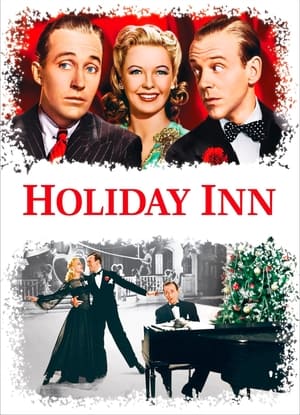
Jim leaves the bright lights of show business behind to settle down on his farmhouse in Connecticut… but life just isn’t the same without a bit of song and dance. Jim’s luck takes a spectacular turn when he meets Linda, a spirited schoolteacher with talent to spare. Together they turn the farmhouse into a fabulous inn with dazzling performances to celebrate each holiday, from Thanksgiving to the Fourth of July. But when Jim’s best friend Ted tries to lure Linda away to be his new dance partner in Hollywood, will Jim be able to salvage his latest chance at love?
There are elements of Eurotrash in this outdoor Aix-en-Provence summer opera production. Nevertheless, the splendid singing and acting transform the story, normally treated as farce, into something considerably more serious. As many other critics have noted, the young lovers have not yet sorted everything out as this performance ends. Act One begins with the principal characters running around in the outdoor theater -- while the audience takes it in as if they had been advised to sit back and enjoy the novelty. Very likely they were also asked to refrain from applauding at the end of arias and ensemble pieces, in which the three-hour opera abounds.
Paris, 1984. A group of friends contend with the first outbreak of the AIDS epidemic.
A tribute to marriage coming from a bachelor is a tad suspicious. But for Beethoven the idealization of the woman-bride was heartfelt and sincere. It has always been a unique opera starring a courageous wife who wows audiences. Fidelio is a moral title, associated with the ideals of liberty of the French Enlightenment. Nobility and commoners are united in their thirst for justice against the oppression of power. For once the faithful consort of a desaparecido wins her battle against a treacherous tyrant, and the collective joy truly is “nameless”, as is sung on the stage. Especially because the “our heroes to the rescue” finale is recounted by the triumphant symphonic flair of the quintessential musician. Beethoven really does bring the world to collapse at the conclusion of this opera, which begins like a delightful little comedy, but which scales and transcends all the summits of the dramatic-musical art.
After accidentally going viral, our apologetic hero encounters unhinged adversaries and unhelpful childhood heroes on her quest to keep her job.
This May 2010 production of Massenet's 1910 opera "Don Quichotte" marked the opera's centenary and also Jose Van Dam's operatic farewell at the Theatre de la Monnaie, Brussels. It is beautiful in every way--vocally, scenically, sonically, and visually--and a worthy record of Van Dam's farewell. Van Dam is just shy of 70 in this production, but you would never guess it from his singing or stage movements--a consummate artist. His is a noble portrayal and deeply moving. The Act V death scene is a model of beautiful singing and acting.