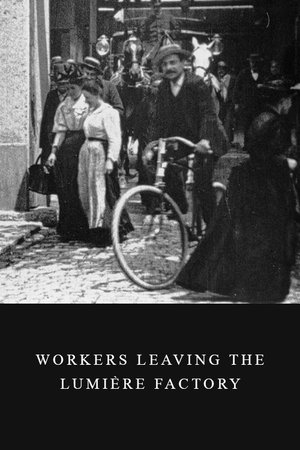
A group of people are standing along the platform of a railway station in La Ciotat, waiting for a train. One is seen coming, at some distance, and eventually stops at the platform. Doors of the railway-cars open and attendants help passengers off and on. Popular legend has it that, when this film was shown, the first-night audience fled the café in terror, fearing being run over by the "approaching" train. This legend has since been identified as promotional embellishment, though there is evidence to suggest that people were astounded at the capabilities of the Lumières' cinématographe.
Boujad: A Nest In the Heat is a personal and anguishing look at issues of separation, independence and return. As director Hakim Belabbes chronicles his journey from his home in Chicago to visit his family in his hometown of Boujad in Morocco, his exploration of family relationships is self-conscious and at times painfully honest. We witness his most private moments with his family. Belabbes' film intimately explores the domestic spaces and religious rituals of intra-family relationships, especially when compounded by one member's break with traditional values.
Tango of Yearning (1998) is the first episode of an autobiographical trilogy on postwar Lebanon, later including Nightfall (2000) and Civil War (2002). Taking its title from Tango of Hope, a classic ballad by Nur al-Huda, the film draws from the director’s reflections on war, love, and cinema, as well as his personal experience at the public television channel TéléLiban. Conjuring various snippets of audiovisual archival material, the film is a poetic elegy to film, Beirut’s movie theaters, and a city undergoing radical transformation. Mohamed Soueid has long been a proponent of the experimental video documentary movement in Lebanon, playing a significant role in the country’s creative renaissance since the end of the civil war. Originally trained as a news videographer during the war, the experience offered him a facility with the medium, which he further developed by making non-linear documentary films with a distinctly personal take.
After “Letter From a Time of Exile”, the director is back in Lebanon where he discovers that his dreams about his country are an illusion and that the exile in your homeland is by far the worst exile. Programmer's Note: Borhane Alaouié returns to Beirut from his exile. His documentary film constitutes a new letter at the start of the 21st century in reply to the letters of the 1980s. The reconstruction process appears to affect stones more than people.
Adolfo Kaminsky started saving lives when chance and necessity made him a master forger. As a teenager, he became a member of the French Resistance and used his talent to save the lives of thousands of Jews. The Forger is a well-crafted origin story of a real-life superhero.
Filmmaker Froukje van Wengerden’s 86-year-old grandmother shares a powerful memory from 1944, when she was just 14. As her story unfolds, we see a group of contemporary 14-year-old girls. Their procession of portraits permits the spectator to see simultaneously forward and back, into the future and towards the past. A miraculous testimonial that uses eye contact to focus the viewer inward and evoke unexpected emotions.
For First Nations communities, the headdress bears significant meaning. It's a powerful symbol of hard-earned leadership and responsibility. As filmmaker JJ Neepin prepares to wear her grandfather's headdress for a photo shoot she reflects on lessons learned and the thoughtless ways in which the tradition has been misappropriated.
Battered Warsaw is getting back to life after the WW2 destruction. The ruins of the Old Town become homes once again.
A miniature parable about a young boy who misunderstands the function of a bird feeder.
A 10-year-old boy and his father support themselves by pulling a cart through Bombay's chaotic traffic. One day when they visit the doctor, they are told that they should change jobs. A visual and sound intensive documentary about a nightmarish traffic situation beyond all control.
Repainting Cuba takes a critical look at communist Cuba, where both the facades and the aging regime were given a coating of colorful paint in connection with the 50 year anniversary of the revolution. Two young Cubans under house arrest talk about being imprisoned for dealing with foreign tourists in a society where gossip and backstabbing is endemic, and where the heavy varnish can’t conceal the cracks.
Keeper of the Mountains is a portrait of Elizabeth Hawley and her unlikely key role in the Golden Age of Himalayan mountaineering, her defiance of the traditional gender roles of her day and her decision to settle alone in Kathmandu in 1960, where she has famously lived life on her own terms ever since. Hawley, 91 and a former journalist, maintains the world's largest and most treasured archive of Himalayan mountaineering expeditions and her work is trusted by news organizations and publications around the globe. All this despite never having climbed a mountain herself.
6-18-67 is a short quasi-documentary film by George Lucas regarding the making of the Columbia film “Mackenna's Gold”. This non-story, non-character visual tone poem is made up of nature imagery, time-lapse photography, and the subtle sounds of the Arizona desert.
Documentary examining the work of sculptor Richard Lippold, particular his sculpture of the sun at the Metropolitan Museum of Art.
Men and women in the Horn of Africa and adjiacent regions of the Middle East tell stories of their relationships and contacts with demons and spirits in their life and culture.
A Mixe village is vulnerated when their musical instruments are stolen.
A poetic journey through the paths and places of old Castile that were traveled and visited by the melancholic knight Don Quixote of La Mancha and his judicious squire Sancho Panza, the immortal characters of Miguel de Cervantes, which offers a candid depiction of rural life in Spain in the early 1930s and illustrates the first sentence of the first article of the Spanish Constitution of 1931, which proclaims that Spain is a democratic republic of workers of all kind.
"Green Day: The Early Years" chronicles the rise of the world's most influential punk band, from their origins playing shows at Berkley's notorious Gilman Street venue in the late 80s, through the release of the platinum-selling Dookie in 1994.
A dazzling journey through time via the remarkable images of National Geographic photographer Frans Lanting and his epic "LIFE" project, which presents a stunning interpretation of life on Earth, from the Big Bang through the present.
Documentary film that deals with the problems of the rock'n'roll scene in Niš, focusing primarily on the period after the collapse of the former SFRJ.