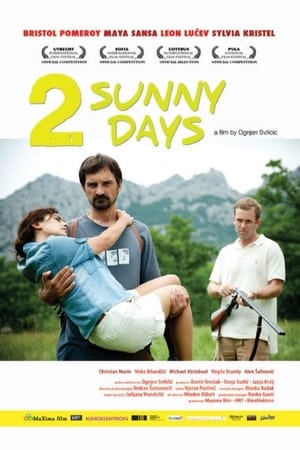
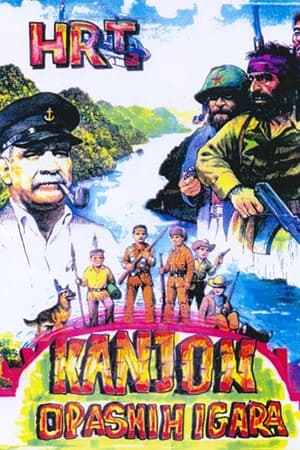
In this sun soaked adventure for the entire family, a group of five orphaned children form their own makeshift family while attempting to operate outside the rules of society. Though they must sometimes steal to survive, their loyalty to one another means that they will always have a brother or sister to count on.
Celebrating the end of World War II and liberation of their city, a group of students is set on holding a cultural evening. They invite Ema, a reclusive piano teacher from the same building, to play for them. Ema declines, but starts reminscing back on her own life and the historical events that have seemingly overshadowed it.
Movie adaptation of the history novel by August Senoa, about Matija Gubec, the leader of peasant revolt of 1573.
The year is 1940, Croatian coast, Kingdom of Yugoslavia. Jakov, a poor peasant from hinterland, and his daughter Mala, go to the city, trying to find a job to repay a debt...
A trip to Croatia to celebrate Inger's 60th birthday. The whole thing sounded like a great idea until Inger caught her husband having an affair. When the plane takes off for Split the depressed Inger and her two daughters, much too sensible Malin (35) and chaotic Tove (32) are on board. Tove has to struggle to be included in Inger and Malin's circle, the sister's rivalry over their mother is so strong it quickly escalates into a competition of who can comfort Inger the best.
A young countess, Nera Keglević, is fighting against believing in witches by using witchcraft. But the problem is that local judge Krajačić is accusing Nera to be witch for revenge.
Brišem i sudim is a Croatian film. Only one minute of the film is saved.
Gisela and Werner Bauer are shocked: shortly before the wedding to their only son Sebastian, dream daughter-in-law Jana has pulled the ripcord. She desperately lacks passion in her long-term relationship with the down-to-earth but somewhat comfortable Sebastian, which has become routine. While he reacts helplessly, his parents, who know that their ancestor and the long-established Bavarian carpentry business are in the best of hands with Jana, decide to take the plunge.
A Chilean woman, Teresa, comes into a firmly structured and isolated mountain community of Croatian shepherds in the early 20th century, claiming to be the widow of their émigré brother. Her arrival changes the dynamics between the members of the community and brings unrest, but also inspiration for other women.
Communist party commissar Ivica is sent to the lowland village to monitor the local partisan squad. Despite their disagreements he befriends their leader Dikan and they plan to evacuate the chief headquarters. Dikan also sees the opportunity to have his personal revenge on an enemy officer, responsible for death of one of his men.
Next to a small Dalmatian town of Murvice oil was found, and politicians make a hasty decision to build a tanker port, although there is no oil in the quantities required for exploitation. Urged by his ambitious wife, the engineer Slobodan Despot becomes director of the port construction, which his wife's lover skillfully exploits to use Despot as scapegoat. The construction of unprofitable airport gradually destroys the patriarchal structure of Murvice, as well as Despot's personal life and ideals, which he tried to restore by having affair with the young and unspoiled girl.
The video installation entitled Partenza (Italian for departure, and used in many of Croatia’s island and coastal dialects) express the global insecurity of contemporary society and the fragility of human existence. Metaphorically, they address a story about departure, waiting and separation, dictated by migrations. In the early 20th century, it was usual yet traumatic for men to leave Croatian islands (mostly bound for the countries of South America) due to poverty and hunger. One of these tragic stories is weaved into the author’s family history. The installation is inspired by the life story of Renata’s great-grandmother who lived on the island of Brač, whose husband went to Chile looking for work in order to secure his family’s future. Like many of the island’s women, she waited for her husband who, like many of the men, never returned.
A lonely young boy, overshadowed by his older brother, picked on by other boys at school and ignored by his businessman father, finds strength and companionship from a stately old oak tree. When his father, a real-estate developer, plans to demolish the old tree in order to make way for a factory, the boy decides to stand up for his friend and stand up to his father.
The first Croatian sound feature film. Viennese painter, bound to an oath that will endure whole month without a woman, goes to Adriatic coast to paint, but in Trogir he sees beauty Mira and falls in love with her.
The painful challenges experienced in the life of a farmer from Zadar, Croatia, in the years from World War I to World War II.
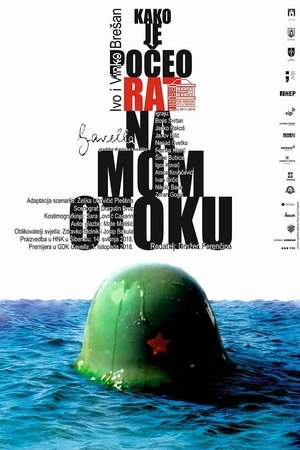
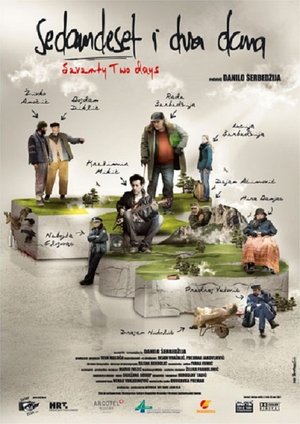
At the beginning of 1991, Yugoslav army did not acknowledge Croatian's independence, and still holding few military barracks in Croatia. Gajski travels to an island to get his son out of the army. Locals have besieged the barracks and organized a festival to try with singing and recitals to get major Aleksa and his soldiers to surrender, but Aleksa has explosives thru the barracks and wants to blow up the island.
Milenu is based on very popular Eritrean story about a girl whose parents wanted to marry her to her own brother. Being in love with another young man, she refuses her parents' decision and flees the village to take refuge up in an oak tree.
A family from isolated village in Lika makes a good living out of American pension earned by their late granddad Djuradj and received by his widow Nedja. The very existence of a family is threatened when Nedja dies, but the head of the family comes up with a cunning plan.
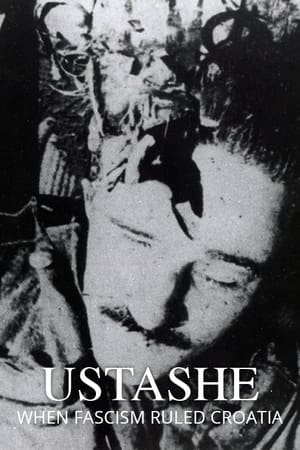
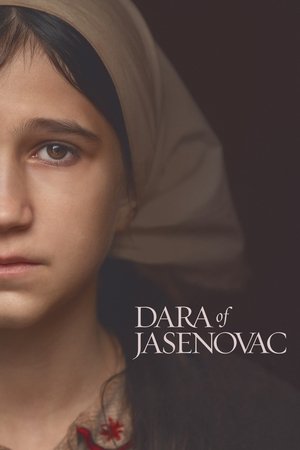
During the Nazi-occupied Ustasha regime "NDH" in former Yugoslavia during WWII, little girl Dara is sent to the concentration camp complex Jasenovac in Croatia also known as "Balkan's Auschwitz".
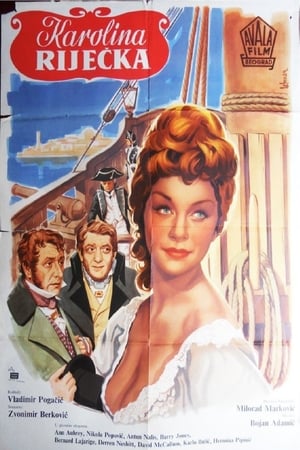
The movie Karolina Rijecka is loosely based on the legendary story of young Karolina Belinic. When the English fleet began firing cannons on the Adriatic port of Rijeka, young Karolina boarded the ship of English Admiral John Leard and negotiated a cease-fire to save the town from destruction.