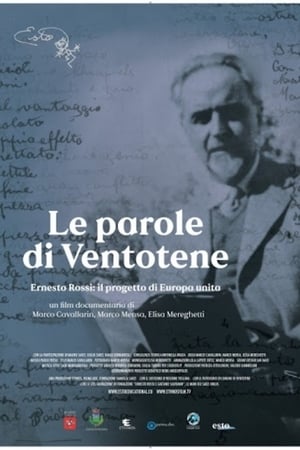
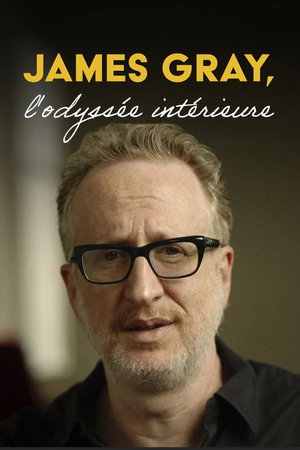
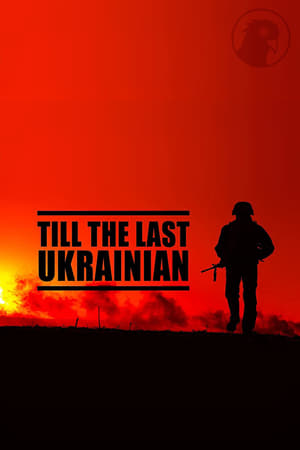
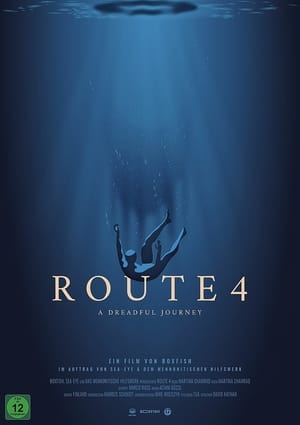
Twenty-five films from twenty-five European countries by twenty-five European directors.
One Meter of Democracy (2010) challenged the endurance of viewers, as well as the courage of the artist. In a quasi-democratic process, He Yunchang invited approximately 20 friends to vote in a secret ballot on whether he should have a surgeon cut a one metre incision the length of his body, from collar bone to knee, without anaesthesia. The vote was carried by a narrow majority, with several abstaining. The performance was documented in video and photographs that reveal the emotional cost of witnessing this gruelling event. This work, sometimes also known as ‘Asking the Tiger for its Skin’ was also staged on a symbolic date: 10 October 2010 was the 99th anniversary of the Wuchang uprising and the Xinhai Revolution which led to the fall of the Qing Dynasty and the establishment of the Republic of China. The final image shows the group with sombre, shocked faces.
This documentary analyses the perverse monetary policies initiated before the euro inception. It focuses on the case of Spain and the terrible housing bobble that developed there.
A landscape is only a landscape until we know what lies beneath. Pozo Ibarra, in the Central Mountains of León, is a mining complex full of significant architectural attributes, and also the imposing and ruinous remnant of a painful past that passed the ideas of freedom, literally, through the stone, turned into a great mass grave. Now, when the sun goes down, the souls that inhabit it rise up, refusing to forget.
Pauline, Norah, Kristina and others wait for hours, sitting under a hut deep in the Bois de Vincennes. In front of the administrative detention center (CRA) in Paris, they have all come to see their loved ones locked up. Lives on hold, awaiting deportation or release. On this stage, these women tell their stories, talk to each other, share their experience, their revolt and their dreams with new visitors. They are the mirror of migrant detention, its reverse view.
Hacking at Leaves documents artist and hazmat-suit aficionado Johannes Grenzfurthner as he attempts to come to terms with the United States' colonial past, Navajo tribal history, and the hacker movement. The story hones in on a small tinker space in Durango, Colorado, that made significant contributions to worldwide COVID relief efforts. But things go awry when Uncle Sam interferes with the film's production.
Phil Comeau shines a spotlight on the Ordre de Jacques-Cartier, a powerful secret society that operated from 1926 to 1965, infiltrating every sector of Canadian society and forging the fate of French-language communities. Through never-before-heard testimony from former members of the Order, along with historically accurate dramatic reconstructions, this film paints a gripping portrait of the social and political struggles of Canadian francophone-minority communities.
Britain's Special Operations Executive (SOE) provides trained agents, arms and other assistance to the European resistance groups fighting against Hitler. British agents, Captain Harry Rée DSO, OBE, Croix De Guerre, Médaille de la Résistance, aka "Felix", and Jacqueline Nearne, MBE, aka "Cat", recreate some of their adventures in France.
Paying tribute to some of America's only surviving drive-ins – and those who keep them running – this heartfelt documentary captures efforts to preserve these nostalgic theaters in small-towns across the country.
Intimate confessions, paired with experimental choreography outside a woman’s clinic in Memphis, offer a glimpse into post Roe v. Wade America.
Lieber Herr Doktor
In northern Albania, ancestral customs still exist, governing the laws of vendetta between families. Sometimes, for generations, an old feud has pitted two clans against each other, condemning them to take turns murdering a member of the opposing family. This blood code, known as the Kanoun, has painful consequences for many Albanians, who are condemned to live in seclusion to avoid being killed.
A homeless man living in a encampment in Minneapolis tells his perspective on the ongoing crisis of homelessness.
Completely topless. Completely uninhibited. The craze that began in San Francisco is now exploding across the USA and Europe.
French documentary campaigning for the liberalization of abortion and contraception, directed by Charles Belmont and Marielle Issartel in 1973.
A documentary about Who's Emma, a collective of punks and anarchists that existed in Toronto's Kensington Market from 1996 to 2000.
This fascinating political look at a little-known chapter in women's history tells the story of "Jane", the Chicago-based women's health group who performed nearly 12,000 safe illegal abortions between 1969 and 1973 with no formal medical training. As Jane members describe finding feminism and clients describe finding Jane, archival footage and recreations mingle to depict how the repression of the early sixties and social movements of the late sixties influenced this unique group. Both vital knowledge and meditation on the process of empowerment, Jane: An Abortion Service showcases the importance of preserving women's knowledge in the face of revisionist history. JANE: AN ABORTION SERVICE was funded by the Independent Television Service (ITVS) with funds provided by the Corporation for Public Broadcasting.
Millions have seen the photograph, and no one who has seen it will ever forget it. A naked woman, dead from a botched illegal abortion, lying on a motel room floor. The picture appeared in Ms. Magazine in April 1973, and quickly became a symbol for the abortion rights movement. LEONA'S SISTER GERRI tells the dramatic story of Gerri Santoro, a mother of two and the "real person" in the now famous photo. Should the media have used this image? What circumstances led to Gerri's tragic death? Powerfully addressing issues of reproductive rights and domestic violence, this video is a moving portrait of Gerri Santoro's life and society's response to her death.
Looking at whether the history of early human evolution should be rewritten. For decades, most experts have been convinced that Africa is the cradle of mankind and many fossil finds from Kenya, Ethiopia, South Africa and Chad seemed to prove it.
Banlie.ue