Violence erupts in north Belfast when the residents of Glenbyrn, a predominantly Protestant suburb, object to schoolgirls walking through their neighbourhood from the Catholic area of Ardoyne to the Holy Cross primary school.
Leo Doyle, a convicted IRA murderer, is released into the community after 14 years in prison on a scheme to rehabilitate former terrorists. He soon finds that the ceasefire has robbed him of both purpose and identity. Relationships with his family are difficult and reach boiling point when they find that he has rekindled his affair with a former fiancee Roisin, now married with three children.
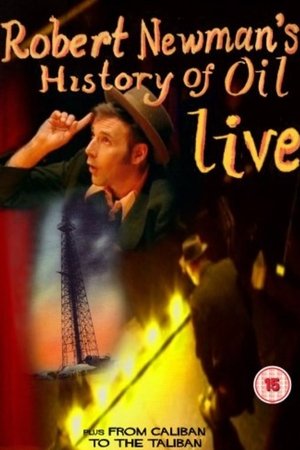
Stand-up comedian Robert Newman gets to grips with the wars and politics of the last hundred years, from WWI through to the 2003 invasion of Iraq; but rather than adhering to the history we were fed at school, this show places oil centre stage as the cause of all commotion. This innovative history programme is based around Robert Newman's stand-up act and supported by resourceful archive sequences and stills with satirical impersonations of historical figures from Mayan priests to Archduke Ferdinand.
Commemoration of the 1916 Easter Rising in Ireland, commissioned for its 50th anniversary.
This British documentary looks at 40 years of the London Community Gospel Choir, focusing on co-founder Bazil Meade who travelled to the United Kingdom from Montserrat as a boy.
A woman returns to Belfast after ten years in England and becomes involved in the Maze prison protest.
Ireland's victory over Italy at the World Cup in New Jersey in 1994, remains a source of Irish pride. But it is haunted by memories of a massacre: terrorists opened fire and killed six innocents while they watched the match in a small village pub in Northern Ireland. Remarkably, no one was ever charged for the crime. For more than twenty years the victims' families have searched for answers. Now, at last, they may have found them. But what they learn turns a murder mystery into bigger inquiry relevant for us all: what happens when governments cover up the truth?
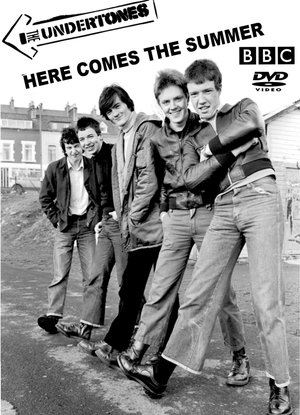
In 1978 the Undertones released Teenage Kicks, one of the most perfect and enduring pop records of all time - an adolescent anthem that spoke to teenagers all over the globe. It was the first in a string of hits that created a timeless soundtrack to growing up, making the Undertones one of punk rock's most prolific and popular bands.
A docudrama about the life of the former UK Secretary of state for Northern Ireland, Mo Mowlam.
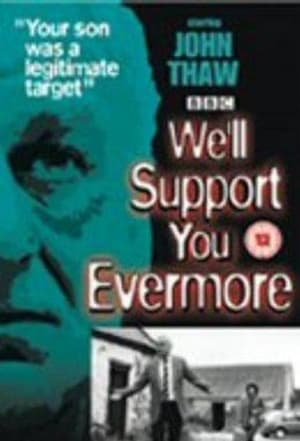
A chilling depiction of a series of violent killings during the Troubles in Northern Ireland.
Brothers addicted to speed at any price. Documentary following the motorcycle road racing careers, and fate, of the Dunlop family.
As part of the 2017 UK-India Year of Culture, the British Council and British Film Institute share a unique collection of films documenting the sights and culture of a bygone India. Filmed between 1899-1947, and preserved in the BFI National Archive since then, these rare films capture many glimpses of life in India, from dances and markets, to hunts and pageantry.
Mr. Whicher is hired by former Home Secretary Sir Edward Shore to investigate the violent threats made against his son Charles, who has recently returned from India with his family.
‘Bring Out a Briton’ was a short appeal for Australians to help the Immigration Department in its plan to form and assist a ‘Bring Out a Briton’ Committee in each district. It featured popular Australian actor Chips Rafferty as the spokesman for the campaign. Aimed at the Australian public rather than the prospective immigrants it was designed to allay a perceived anxiety amongst the public about non-British European migration.
After living in Australia for the past decade, Fitz and Judith return to Manchester in 2004 for their daughter Katie's wedding. Drinking too much at the reception, Fitz stumbles through a rambling toast, which only embarrasses the bride. Instead of spending time with his grandson, son of his married son Mark, Fitz opts to join in the investigation of a serial killer who has an apparent dislike of Americans in the wake of the U.S. Invasion of Iraq.
Derry, 1972; As the civil rights movement across the North of Ireland begins to secure unprecedented wins, the British state responds with lethal force, murdering 14 people and sparking a 60 year fight for justice and accountability by a community for whom everything had changed. From the acclaimed directors of ‘To Kill a War Machine’ and the community who took on the British state and won, ‘The Day Innocence Died’ tells the story of the Bloody Sunday massacre and its legacy, weaving unheard testimonies and indelible archive footage into an epic cinematic documentary.
On January 30th, 1972, the British Army shot dead thirteen unarmed civilians taking part in a civil rights march in Derry. At the subsequent Tribunal of Inquiry Lord Chief Justice Widgery exonerated the soldiers and blighted the reputations of those who were killed and wounded by describing them as gunmen and bombers. In 1998, in a move that was widely seen as significant in sealing the Northern Ireland peace process, Prime Minister Tony Blair announced a new Tribunal of Inquiry to be led by Lord Saville of Newdigate. This highly personal documentary, made by Margo Harkin who was witness to the events, follows the 6-year long search for the truth at the second Inquiry until its momentous conclusion on June 15th 2010 when the report was finally published.'
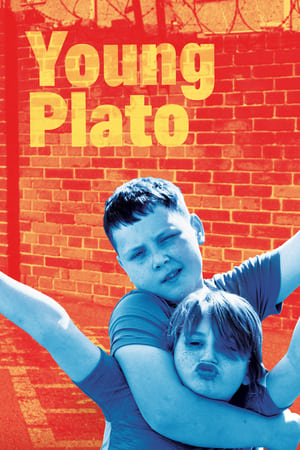
Mr. McArevey is a visionary headmaster at a Catholic primary school in one of the toughest neighborhoods of Belfast, Northern Ireland. He loves Elvis and teaches his students to connect with their feelings, while taking on the legacies of the “The Troubles.” In this exceptional portrait of a community still healing from trauma, we follow this educator extraordinaire as he uses Ancient Greek wisdom as an antidote for pessimism, violence, and historical despair.
Presenter Holly Hamilton tells the feelgood story of the Glentoran team who left Belfast on a European football adventure just before the First World War to win the Vienna Cup, the first ever European Cup.
Belfast, it's a city that is changing, changing because the people are leaving? But one came back, a 10,000 year old woman who claims that she is the city itself.