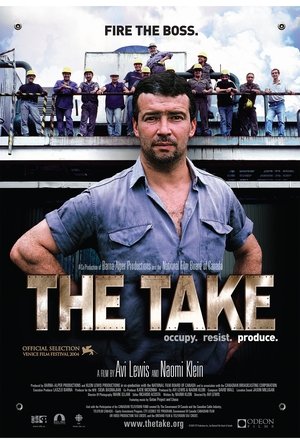
In suburban Buenos Aires, thirty unemployed ceramics workers walk into their idle factory, roll out sleeping mats and refuse to leave. All they want is to re-start the silent machines. But this simple act - the take - has the power to turn the globalization debate on its head. Armed only with slingshots and an abiding faith in shop-floor democracy, the workers face off against the bosses, bankers and a whole system that sees their beloved factories as nothing more than scrap metal for sale.
Do Útero Ao Túmulo
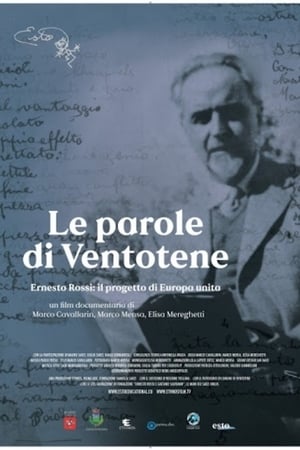
The film focuses on Ernesto Rossi (1897 – 1967), who was imprisoned by the fascist regime between 1930 and 1943 for his political ideas. Exiled on the island of Ventotene, he co-authored the Ventotene manifesto.
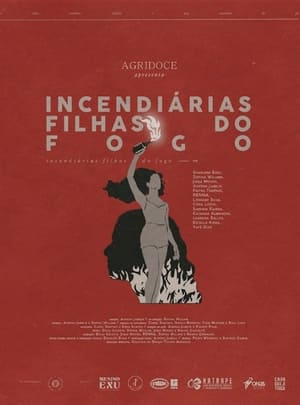
Directed and written by Aurora Jamelo and Sophia William, “Incendiárias” compiles scenes of trans women and transvestites performing in public spaces in Pernambuco. The images sometimes tune in to these women's dreams and desires, their roots and truths; sometimes they denounce fears, frustrations and aggressions experienced daily - a provocation and, at the same time, a manifesto for the existence of this population.
A story of diaspora. The film criticises the myth of Swiss neutrality, which violently masks structural, systemic, and social passivity.
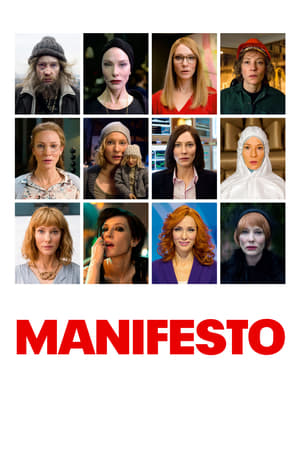
An edited version of Rosefeldt's installation work of the same name, Manifesto is an outstanding tribute to various (art) manifestos of the nineteenth and twentieth century, ranging from Communism to Dogme, in connection with thirteen different characters, including a homeless man, a factory worker and a corporate CEO, who are all played by Cate Blanchett. A striking humorous audio-visual experience.
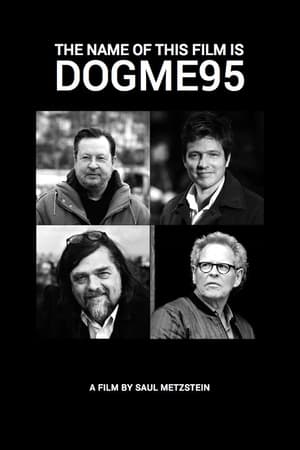
The Name of this Film is Dogme95 is an irreverent documentary exploring the origins of Dogme95, the most influential movement in world cinema for a generation. The film tells how a 'brotherhood' of four Danish directors armed with a radical Manifesto, has inspired, outraged and provoked filmmakers and filmgoers the world over. The rules of Dogme95 take filmmaking back to its brass-tacks - stories must be set in the here and now; the films must be shot on location, with a handheld camera, using natural light, and direct sound; the rules forbid murders and weapons (staples of the much-loved action-movie genre); and, most amusingly, the director must not be credited (that holds also for the director of The Name of this Film is Dogme95...).
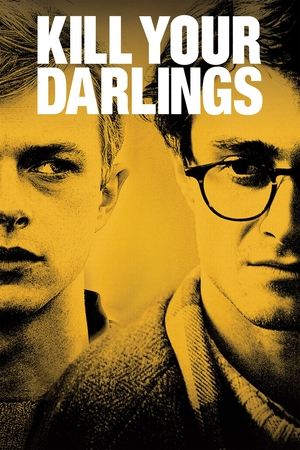
A murder in 1944 draws together the great poets of the beat generation: Allen Ginsberg, Jack Kerouac and William Burroughs.
Manifesto Roda de Samba
An avarage man dreams of becoming a famous entertainer and thus fulfilling the wishes of his late father.
Cinema is like poetry. It can grow out of fantasy that became reality, or it can grow out of reality that turned into a dream. Who knows where on the screen lies end and truth begin? In the pavilion of Lenfilm, after shouting "motor" everyone can become a poet, a dream of something more. A glued-on nose can turn you into Joseph Brodsky, and artificial snow will burn you with cold.
A small town girl, who's an aspiring singer, tries to make a living out of music in the big city of Rio de Janeiro.
Chun, 28, Taiwanese, goes on a conflict-packed search journey with her Chinese guide, Ming, to find her father's long-lost first love, XiuQian, in China. Chun's father had promised XiuQian 60 years ago that he'd definitely come back to marry her. But not until recently, Taiwan and China were hostile to each other, he was never able to fulfill his promise. Chun and Ming grew up on two sides of the Taiwan Strait and were brought up with different values. They don't hesitate to cut each other down to size. Their turbulent romance unfolds in tears, laughter and a clash of values. The love story of two generations, across the Taiwan Strait, told with touching drama and biting comedy, is a poignant and entertaining road movie.
Víctor Tellez is an intellectual, world-weary film critic who prefers to think in French and eschew the clichés of romantic movies...until he finds himself living a sappy, feel-good love story of his own.
Cheyenne Harry, owner of the biggest cattle ranch in his corner of the west, is having trouble with John Merritt, a land-grabbing Chicago meat-packer. By some artifice of shrewd legal aid, Merritt manages to seize Harry's ranch under a bogus writ of foreclosure. Failing to get justice by his many letters to Merritt, Cheyenne Harry goes east and calls at the millionaire's mansion. At first, Merritt refuses to see him. Then, to cause amusement for his daughter, Helen, and her guests, he invites the "uncouth" westerner into his dining hall. He is sure that he will make some grave error in table deportment and afford them all a laugh. To the amazement of Merrit and the guests Harry's table manners are faultless. Then, to trick him into an embarrassing position, Merritt eats with his knife. Harry, realizing that it is proper for the guest to follow the example of the host, does likewise. He leaves the house chagrined but more determined than ever to get justice from Merritt.
Despite disowning his Italian past, Marcelo surprisingly inherits all the debts of his late mafioso “nonno”. Now he must learn from the family business to pay all the money he owes to the Korean and Turkish mafia.
Daniel Francis O'Toole, singing maestro in a New York restaurant, finds himself the unexpected heir to an estate in Ireland. He doesn't have money enough for the passage to Ireland, but the band members decide to incorporate him, advancing him the fare for equal shares in the estate. In Ireland, Danny finds that his is only a half-share, and the other half belongs to Mavourneen Kerrigan and she has the exclusive right to sell or keep the property...which, despite his pleas, she refuses to do. She also declares him an undesired guest, objects to his presence and insists that he prepare his own meals. He does so in a large main hall, but can only make hamburgers.