The Nazis decided to awaken the dark forces of the Old Prague legends in order to use (and abuse) them to destroy the world. The only one who can stop them is Perak.
A dancing radio stops partying to transmit an announcement on fuel conservation in this WWII cartoon short.
After the Trento bombing in Italy 1943, the CG animated short film is the story is of a little girl named Mila. It focuses on the collateral damage affecting the civilian population, and especially the children.
The 30-minute film centers around a group of high school students who became nurses called Himeyuri and served during the Battle of Okinawa during World War II. The Himeyuri Alumnae Incorporated Foundation, which runs the Himeyuri Peace Museum in Okinawa, produced the film with the aim to convey the experiences of those high school students, many of whom lost their lives during the battle, to children.
80 years are gone since The Little Prince was released. Author Antoine de Saint-Exupéry was also a pilot, and we follow his last four years from his US exile to when his plane in 1944 disappeared over The Mediterranean without any trace.
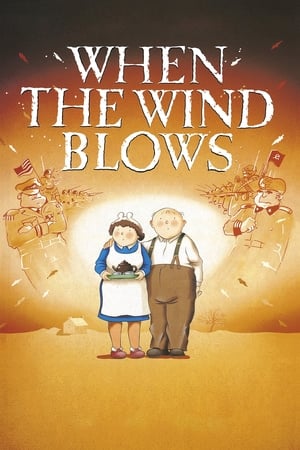
With the help of government-issued pamphlets, an elderly British couple build a shelter and prepare for an impending nuclear attack, unaware that times and the nature of war have changed from their romantic memories of World War II.
Adolfo Kaminsky started saving lives when chance and necessity made him a master forger. As a teenager, he became a member of the French Resistance and used his talent to save the lives of thousands of Jews. The Forger is a well-crafted origin story of a real-life superhero.
Short cartoon made for US military soldiers during World War Two.
A marching band of Germans, Italians, and Japanese march through the streets of swastika-motif Nutziland, serenading "Der Fuehrer's Face." Donald Duck, not living in the region by choice, struggles to make do with disgusting Nazi food rations and then with his day of toil at a Nazi artillery factory. After a nervous breakdown, Donald awakens to find that his experience was in fact a nightmare.
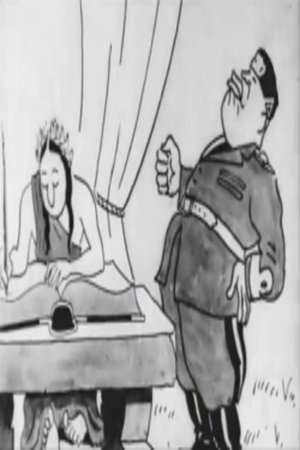
The first Greek animated film was shot by the cartoonist Stamatis Polenakis (1908-1997) with the title "The Duce tells...". The seven-minute "Mickey-Mouse-style" film, as its creator mentions in the credits, satirizes the Italian invasion of Greece on October 28, 1940, and especially Mussolini, who recounts his exploits, but reality constantly contradicts him. Stamatis Polenakis, one of the leading Greek cartoonists of the 20th century and a pioneer of animation in our country, began drawing the sketches for the film in 1942 in his hometown, Sifnos, where he had taken refuge during the Occupation. He worked under the boot of the Italian conqueror, risking arrest. The film was lost during the Civil War and it was not until 1980 that a negative was found and restored.
A Jewish North African middle-aged man's swim in the sea triggers memories of his earlier life as an Olympic swimmer before and after World War II.
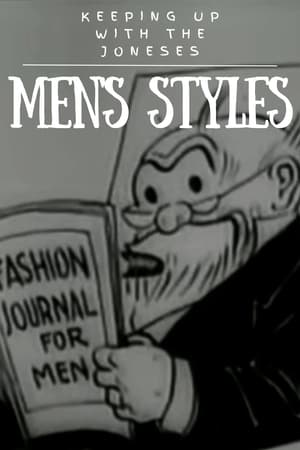
A domestic comedy about the McGinis family—husband Aloysius, wife Clarice, daughter Julie, and housemaid Belladonna. The simple story lines often parody society's concern with material goods as an indicator of social standing, but the series was not as narrowly focused as the title implies. The Joneses were the McGinis's neighbors, but were not depicted. They were referred to as objects of envy, with whom the McGinis family was "trying to keep up." In this film, Pa McGinis decides to buy a new hat.
The true story of Charlotte Salomon, a young German-Jewish painter who comes of age in Berlin on the eve of the Second World War. Fiercely imaginative and deeply gifted, she dreams of becoming an artist. Her first love applauds her talent, which emboldens her resolve. When anti-Semitic policies inspire violent mobs, she escapes to the safety of the South of France. There she begins to paint again, and finds new love. But her work is interrupted, this time by a family tragedy that reveals an even darker secret. Believing that only an extraordinary act will save her, she embarks on the monumental adventure of painting her life story.
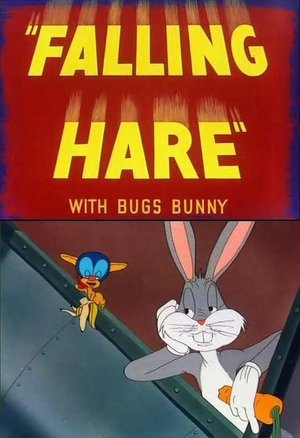
Relaxing with a carrot at a U.S. Army air field, Bugs is reading "Victory Through Hare Power" and scoffs at the notion of mentioned gremlins, little creatures who wreak havoc on planes with their diabolical sabotage.
This remarkable documentary dedicates itself to an extraordinary chapter of the second World War – the psychological warfare of the USA. America’s trusted cartoon darlings from the studios of Warner Bros., Paramount, and the “big animals” of the Disney family were supposed to give courage to the people at the homefront, to educate them, but also to simultaneously entertain them. Out of this mixture grew a genre of its own kind – political cartoons. Insightful Interviews with the animators and producers from back then elucidate in an amusing and astonishing way under which bizarre circumstances these films partially came into existence.
A propaganda film during World War II about a boy who grows up to become a Nazi soldier.
Two cops portrayed by Michelin Men chase an armed Ronald McDonald through the streets of a fictionalized, stylized city.
The infamous bandit Harimao hid a treasure, and to retrieve it, Lupin and the gang must gather three lost statues. When the Nazi-like group Neo-Himmel make a run for the goods, Lupin reluctantly partners with the aging "double-O" MI-6 agent Sir Archer and his granddaughter Diana to gather the statues first. Can this unorthodox team bond well enough to see this mission through?
Shielding the Flame
A scientist observes the sky through a telescope. He is discontent because the Moon has a delay. The scientist thus uses his telescope as a canon and shoots to alert the Moon in a house in the sky that something went wrong. The upset Moon charges his wife to find out what the correct time of moonrise was. And because it has indeed overslept and is behind the times, it rushes into the sky to rectify his mistake. On the way, he mightily puffs from his pipe, which provokes St Peter's disapproval - for the saint would not tolerate so much black smoke in the sky. He therefore strikes the Moon with lightning and the Moon, falling, loses his pipe. St Peter then recommends him to smoke cigarettes made with Abadie paper tubes.