An expansive Russian drama, this film focuses on the life of revered religious icon painter Andrei Rublev. Drifting from place to place in a tumultuous era, the peace-seeking monk eventually gains a reputation for his art. But after Rublev witnesses a brutal battle and unintentionally becomes involved, he takes a vow of silence and spends time away from his work. As he begins to ease his troubled soul, he takes steps towards becoming a painter once again.
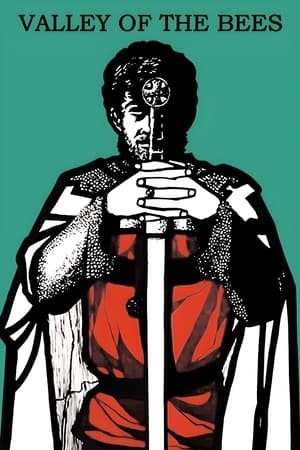
On his deathbed, the reigning king bestows power to an unexpected heir who must find strength within himself to unite his people against the violent crusades which threaten their freedom.
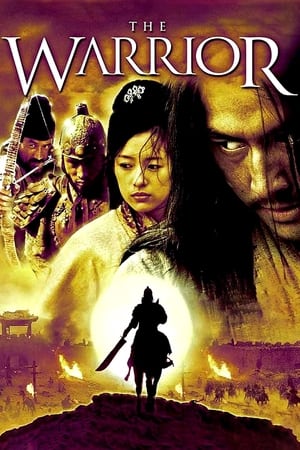
In 1375, China was in chaos between Yuan Dynasty and Ming Dynasty. Coryo (an ancient kingdom of Korea then) sent a delegation of many diplomats, soldiers and a silent slave to make peace with the new Chinese government. However, this delegation got charged as spies and sent in exile to a remote desert.
Пересвет и Ослябя
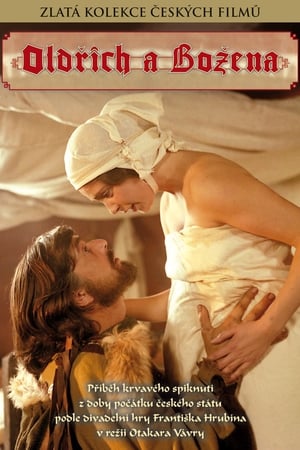
The musical version of the successful play of Oldřich Daněk was transferred to the screen by director Jiří Sequens in 1986. It takes place in the 14th century in Bohemia during the reign of King Wenceslas IV. Heroes of the story are three mercenaries who always fight on the wrong side and are always beaten, but they are moral winners of all conflicts and skirmishes.
Noc bez úsvitu
Dolf a 15 year old boy is sent back in time by a timemachine. Accidentally he is sent back to the Middle Ages. He is rescued by children who are part of a childrens' crusade, on their way to rescue Jeruzalem. During the trip Dolf finds out the danger is not coming from outside the crusade, but from within.
Rajputana, India, 13th century. The tyrannical usurper Alauddin Khilji, sultan of Delhi, becomes obsessed with Queen Padmavati, wife of King Ratan Singh of Mewar, and goes to great lengths to satisfy his greed for her.
Ash, a handsome, shotgun-toting, chainsaw-armed department store clerk, is time warped backwards into England's Dark Ages, where he romances a beauty and faces legions of the undead.
In his delirium from his return from war, Francesco Bernardone goes back in his memories to the days when he lived for parties and carnal pleasures. He slowly recovers, but after the illness he is no longer the Francesco that everybody knew. Instead of spending hours in taverns, he meditates on the beauty of God's creatures, soon renouncing his riches and his family with plans to rebuild an abandoned church and his life.
After the Hungarian army was annihilated by the Mongols at the battle of Mohi, only the castle of Esztergom stood in the Mongolians' way of invading the rest of Europe. Batu Khan, the grandson of Genghis Khan, reaches the walls of Esztergom with his invincible troops. The castle's defenders, led by Eusebius, the canon of Esztergom, and a Spanish mercenary, Captain Simon, are preparing for the final battle. The sudden arrival of Cardinal Cesareani, the Papal Legate, coinciding with the Mongol Lunar New Year celebrations and the mystical practices of Eusebius, combine to offer the defenders a small glimmer of hope.
In the early 1200s, Dogen brought Chinese Zen philosophy to Japan, and established the Japanese Zen school of Buddhism. He taught that a person was capable of realizing Buddhahood within himself, by way of Zazen. Zazen is extended hours of sitting and meditating to achieve a state of “Mu” (nothingness, or empty existence).
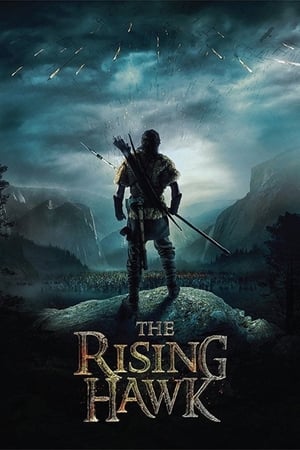
A new era is about to begin in Eastern Europe. Scythians, the proud warriors, are all but gone and most of the few remaining descendants have become ruthless mercenary assassins. Lutobor, a warrior who becomes involved in intertribal conflicts, sets off on a perilous journey to save his family guided by a captive Scythian.
In the year 1215, the rebel barons of England have forced their despised King John to put his royal seal on the Magna Carta, a seminal document that upheld the rights of free men. Yet within months of pledging himself to the great charter, the King reneged on his word and assembled a mercenary army on the south coast of England with the intention of bringing the barons and the country back under his tyrannical rule. Barring his way stood the mighty Rochester castle, a place that would become the symbol of the rebel's momentous struggle for justice and freedom.
Hans Müller finds himself on a trip in Thüringen, accompanied by his loving female friend, Moritz. Hans doesn't understand much about trust, which constantly leads to problems between the two of them. During one of their fights, Lady Venus intervenes and sends the young man back to the Middle Ages - so he can learn the true meaning of love. Disguised as Tannhäuser, he has to stand his ground against a horde of minstrels. At a singing competition, he blunders, without the support of Moritz, who had also been thrown back into the 13th century. And with the help of Frau Venus, his adventure will surely turn out even worse...
Ivanhoe, a worthy and noble knight, the champion of justice returns to England after the holy wars, and finds England under the reign of Prince John and his henchmen and finds himself being involved in the power-struggle for the throne of England.
On October 11, 1424, Hussite commander Jan Žižka breathed his last breath near the castle in Přibyslav. With a little exaggeration, it can be said that he never actually died, as he immediately entered national mythology as the prototype of a brilliant military leader and a true Czech. The revolutionary events then took a slightly different course than he would have liked, but his legacy remained ever-present among the Hussites. To this day, Žižka lives on in our society, with books written and films made about him. But even after 600 years of uninterrupted interest, a significant question mark remains over the Trocnov warrior: What was he really like? A deeply religious warrior of God, or just an ordinary medieval cutthroat? Leading Czech historians, headed by Professor Petr Čornej, are attempting to answer this question.
As the plague decimates medieval Europe, rumours circulate of a village immune from the plague. There is talk of a necromancer who leads the village and is able to raise the dead. A fearsome knight joined by a cohort of soldiers and a young monk are charged by the church to investigate. Their journey is filled with danger, but it's upon entering the village that their true horror begins.
Year 1100. Italy.The Northern lands are ruled by a German emperor: Fredrick aka "Barbarossa. His dream is to conquer also the lands in the Center and in the South so as to revive the Empire that was once of the one Charles Magno.But in the North a young man from Milan has formed an army of 900 young men coming from different cities: the "company of death". This young man's name is Alberto Da Giussano. His dream is to defeat the Emperor and to give back freedom to the Northern lands.
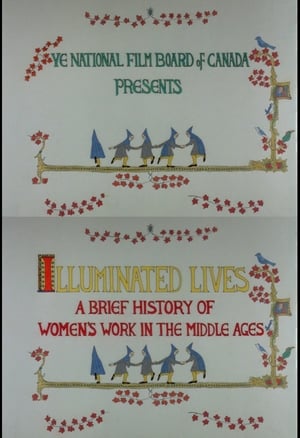
This animated short challenges enduring myths, spawned by fairy tales and romances, about women in medieval society. It explores the differences and similarities between that distant period and our own, and shows what medieval women’s lives were really like.