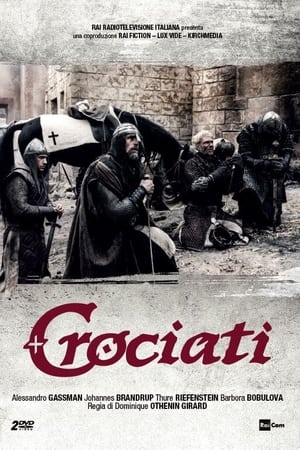
Towards the end of the eleventh century, Pope Urban II announces a crusade against the Saracens, who have occupied the holy city of Jerusalem. Three young friends Richard, Peter and Andrew set off to join the crusading army.
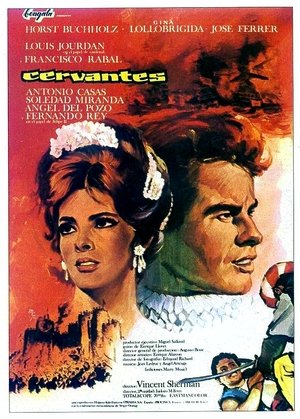
This epic Spanish biopic chronicles the life of Cervantes, Spain's great novelist, playwright and poet, during the 16th-century, when as a young man he goes to Italy to become a soldier for the Pope. Later he helps the Pope's emissary wage war against the Spanish Moors. His exploits win him great favor. He falls in love with a famous Italian courtesan and she with him. Unfortunately, the Pope splits them apart with his newest decree which demands that all prostitutes leave the city. Upset, Cervantes goes to fight in the famed sea battle of Lepanto and comes back a hero. Later he is captured by Barbary pirates and ransomed by Trinitarian friars.
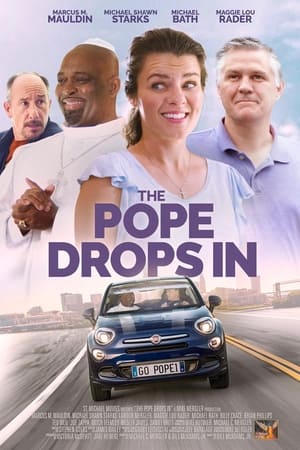
What would you do if your business partner stole your business and your wife, and then told you he wouldn’t become a Christian unless the Pope showed up at his house and asked him? You kidnap the Pope and take him on a road trip to end all road trips, to save him and your wife.
In the midst of trying to legitimize his business dealings in 1979 New York and Italy, aging mafia don, Michael Corleone seeks forgiveness for his sins while taking a young protege under his wing.
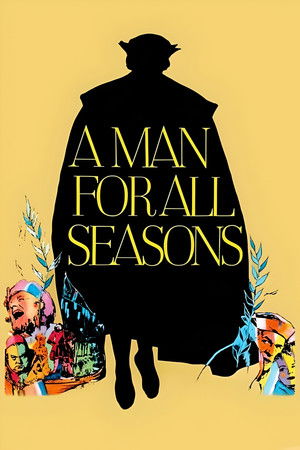
A depiction of the conflict between King Henry VIII of England and his Lord Chancellor, Sir Thomas More, who refuses to swear the Oath of Supremacy declaring Henry Supreme Head of the Church in England.
A chronicle of the first nine years of Pope Francis' pontificate, including trips to 53 countries, focusing on his most important issues - poverty, migration, environment, solidarity, and war - while also giving rare access to the public life of the pontifical.
Originally produced in 1997 on the threshold of the Third Millennium of the Christian Era, and in celebration of the Jubilee of the Year of Our Lord 2000, The Vatican Museums was the culmination of three years of research and filming, the collaboration of thirty-two scholars and historians from around the world, a crew of forty directors of photography, operators, and lighting technicians, state-of-the-art digital cinematography, lighting, animation, and computerized editing, and the work of a famous composer with original performances by master musicians. Now available on DVD for the first time, this historic three-disc collection features seven hours of magnificent documentary film that illuminates and chronicles the great journey of the human spirit. Here then is the world's most spectacular and sacred repository of art, history, and faith.
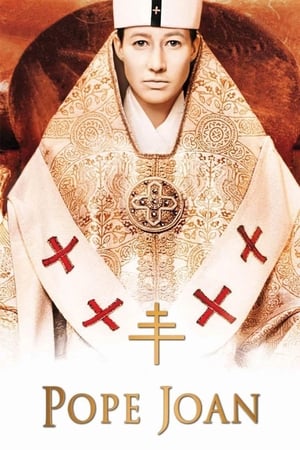
Based on the medieval legend of Pope Joan, who was made Pope for a brief period around 855 A.D. The movie presents her existence as fact, though it is questionable that Pope Joan really did exist, and portrays her relationships with other notables of the time.
Pope John Paul II's historic nine-day pilgrimage to Poland in June of 1979
A deep and unconventional friendship is formed between two, somewhat homophobic, priests serving the same church.
Geheimauftrag Pontifex – Der Vatikan im Kalten Krieg
The life of the pope John-Paul II, from his youth as a writer, actor, and athlete in war-torn occupied Poland to his election as Pope at the age of 58.
After having challenged the German Ottone to single combat for the hand of Leonza, the bishop's niece, the valiant knight Anselmo da Montebello, leaves for Rome where he must deliver a precious relic to the Pope and obtain a sum of twenty-thousand crowns in order to participate in the third crusade in the Holy Land. He is accompanied by Gian Puccio, his sluggish squire, drawn by the money and by the charm of ... Leonzia.
TANNHÄUSER UND DER SÄNGERKRIEG AUF WARTBURG is a grand opera by Richard Wagner in three acts. After experiencing boundless sensuality and freedom with the fun-loving Venus (soprano), the singer Tannhäuser (Tenor) finds it impossible to conform to the cultured setting of his betrothed Elizabeth (soprano), who loves him. During a singing contest, Tannhäuser describes the affair with Venus as the ultimate love experience and because of that, he is cast out from the established society. Thanks to Elizabeth's intervention, he is allowed to undertake a pilgrimage to the Pope to ask for the Holy Father's pardon. If the Pope accepts to forgive him, he would be allowed to take back his place in society. Tannhäuser accepts. But fate will not allow him to meet with his beloved Elizabeth again in this life. This is a recording of the legendary staging by Götz Friedrich for the 1978 Bayreuth Festival conducted by Sir Colin Davis.
The Pope is disturbed by the fact that today's youth are not as spiritually inclined as they should be, and so he decides to set up a Vatican television station and entice them back into the religion of their ancestors. In order to particularly grab the wandering flock, a priest invites the comedians from "The Other Sunday," an actual comedy program on Italian television, to perform on this new channel.
During the Italian Renaissance, Pope Julius II contracts the influential artist Michelangelo to sculpt 40 statues for his tomb. When the pope changes his mind and asks the sculptor to paint a mural in the Sistine Chapel, Michelangelo doubts his painting skills and abandons the project. Divine inspiration returns Michelangelo to the mural, but his artistic vision clashes with the pope's demanding personality and threatens the success of the historic painting.
Four erotic tales from in various historical eras. The first, 'The Tide', is set in the present day, and concerns a student and his young female cousin stranded on the beach by the tide, secluded from prying eyes. 'Therese Philosophe' is set in the nineteenth century, and concerns a girl being locked in her bedroom, where she contemplates the erotic potential of the objects contained within it. 'Erzsebet Bathory' is a portrait of the sixteenth-century countess who allegedly bathed in the blood of virgins, while 'Lucrezia Borgia' concerns an incestuous fifteenth-century orgy involving Lucrezia, her brother, and her father the Pope.
In an effort to end family feuding, a young gypsy travels back in time to kill mammoths to ensure Hungary becomes rich by killing mammoths in order to create a massive oil reservoir. Things don't go entirely according to plan...
William Hart McNichols is a world renowned artist, heralded by Time magazine as "among the most famous creators of Christian iconic images in the world". As a young Catholic priest from 1983-1990 he was immersed in a life-altering journey working as a chaplain at St. Vincent's AIDS hospice in New York city. It was during this time that he became an early pioneer for LGBT rights within the Catholic church. "The Boy Who Found Gold" is a cinematic journey into the art and spirit of William Hart McNichols. The film follows his colorful life as he crosses paths with presidents, popes, martyrs, and parishioners, finding an insightful lesson with each encounter. McNichols' message as a priest, artist and man speaks to the most powerful element of the human spirit: Mercy.
After the unexpected death of the Pope, Cardinal Lawrence is tasked with managing the covert and ancient ritual of electing a new one. Sequestered in the Vatican with the Catholic Church’s most powerful leaders until the process is complete, Lawrence finds himself at the center of a conspiracy that could lead to its downfall.