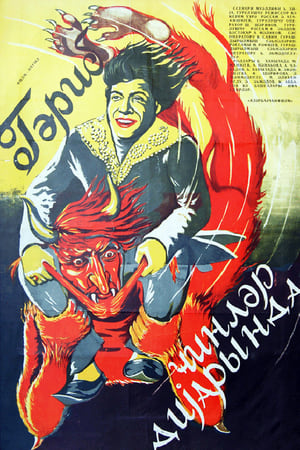
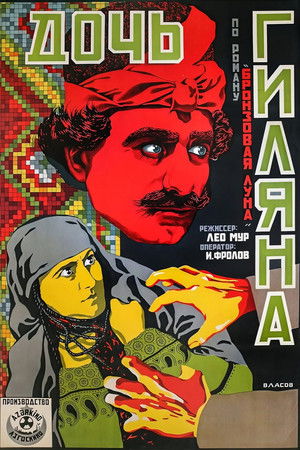
The twin brothers Sachib and Garib are cheerful and funny boys. They tend to their small farm and take care of their mother and sister. But Garib is no longer satisfied with this "simple" life. He wants to achieve prestige and prosperity. One day, while working in the fields, he is surprised by a demon who promises him wealth, fame, honor, and power if Garib works for him. Garib succumbs to the temptation and accepts the offer. His task now is to impart his knowledge and skills to the cave dwellers, called jinn. At first, Garib feels comfortable and succeeds in transforming the underworld into a fertile and flourishing landscape. But Garib is increasingly tormented by his longing for his family back home.
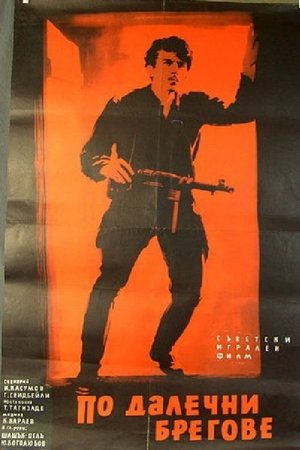
The film portrays the life of the legendary Azerbaijani guerrilla of the Second World War Mehdi Huseynzadeh, who fought the Nazi forces in the present-day Italy and Slovenia, hence the film's name On distant shores referring to the Adriatic Sea.
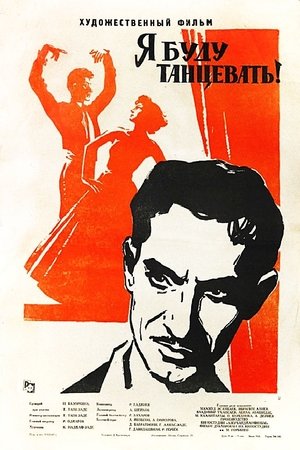
The film is about famous Chechen ballet and folk dancer Mahmud Essembayev's life.
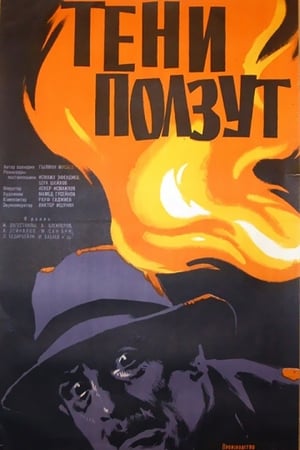
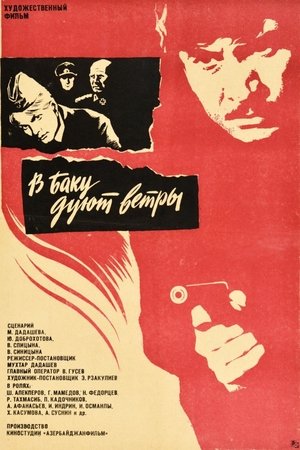
Summer 1942. Nazi troops storm the Caucasus. They are rushing to get their hands on Baku oil. An Abwehr special group called "Wartburg" has settled in the Nalchik area. In Baku, German spy Ziegel (Pavel Kadochnikov) heads to the oil fields from Maykop under the name of Soviet engineer Kashtanov. Tankers carrying gasoline begin to explode in the Caspian Sea. Soviet counterintelligence agent "Khazri" infiltrates "Wartburg"...
Based on a novel by Farman Karimzade, the movie shows the life in an Azerbaijani village under the Soviet rule in 1930s. Here two former "beys" (land owners) are opposing each other. One is loyal to the ideology of the past and can't reconcile himself to the new power, to second rejects the past and accepts the power of the Bolsheviks, believing that it will establish justice.
After the novel "Sahil Amaliyyati" (The operation of "Side") of the same name of Jamshid Amirov. The film is about foreign secret service's operation and it's revelation by security organs.
The film is about fellows spending time on the shore and about some events.
It is the story of an old man - Gulam - and the cherry tree which grew in his garden. As the story opens, the village children consider Gulam their best friend. But as the war wears on, Gulam directs his kindness and affection to his cherry tree, shielding the tree from the children who are starving. In the process, Gulam becomes very aggressive and eventually is seen as the enemy of the children. The movie shows how war can destory even the most tender and gentle feelings, as well as the most basic moral values of being human.
The chain of adventures of a young ten-year-old Baku boy Alik who ran away from home led him to Odesa. Here, the boy made friends with his peers and many other people, and learned his first life lessons. He returned home accompanied by his father and mother, for whom their son's escape became a test of the family's strength.
A historical film about the struggle in the 18th century of the young ruler of the Kuban Khanate, Fatali Khan, who sought to unite the scattered khanates into a single Azerbaijani state.
The film is about special sea expedition which put out to sea to deliver oil to Russia at the cost of their lifes.
The movie is based on Azerbaijani folk tale "Malikmammad and the Three Princes".
The film is about frontier-guards who averts the diversion in hydroelectric power station which was built by another state.
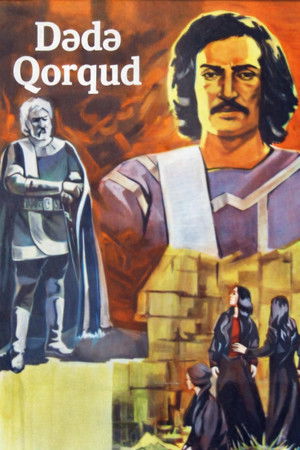
Legend of Azerbaijanian people "Kitabi Dada - Gorgud" is about damatic events, about Dada Gorgud.
The film is about dramatic revolutionary events happened in 1918 in Baku.
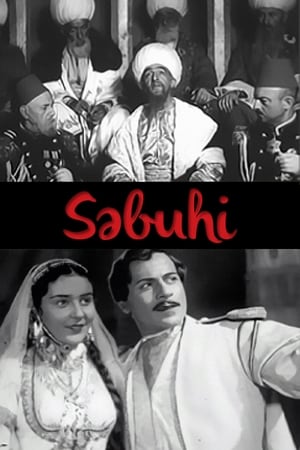
A historical revolutionary film depicting the struggle of peasants and the Baku proletariat against landowners and Musavatists in 1919.
Dedicated to the development of the oil industry of Soviet Azerbaijan in the background of the first half of the twentieth century, including their selfless work in strengthening the economic and military might of the USSR.
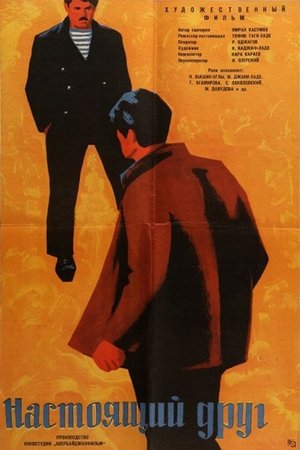
Murad, a young man, lives by the old ethical norms that are still valid in the suburbs of his city. He had promised Tofig, his childhood friend, to give him his sister as a wife, but Tofig is in love with another girl. He forgets the promise and takes the girl home. Murad is offended. According to the code of honor, he must take revenge. One of the first films ever produced in the Soviet Union to challenge the sociopolitical establishment.
Childhood friends Ahmet and Nuri, the sons of poor farmers, grew up together, studied together, and worked together in a factory. Together, they publish the magazine Light, which opposes the colonial policies of foreign capital and military pacts. After their first imprisonment, the friends' paths diverge: Nuri betrays his convictions and joins a reactionary newspaper. His life is now safe, but he finds no joy or peace. Meanwhile, Ahmet, having become one of the main enemies of the reactionaries, attracts more and more patriots to his side.
This film was based on Samad Vurgun's "Komsomol poem". Seven sons, like seven samurai become the seven komsomols (communist leaders) who were sent to a village to establish Soviet power. Seven sons become the romanticized images of people's heroes ready to take revenge.