A short film following the release of journalist and activist Barrett Brown from prison, and his drive across Texas to a halfway house. 'Relatively Free' is an examination of Brown's return to a very different world, post the election.
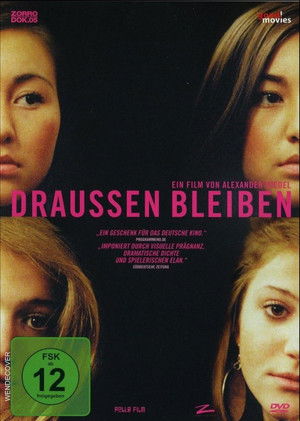
Twenty-one-year-old Julia had to leave her daughters under the care of a children's shelter house. Five years later, Julia keeps fighting to rebuild her life and get reunited with her daughters.
The driving force behind our transformations, an instrument of social affirmation, a weapon of emancipation: how did perfume, from a simple bottle, become both a reflection of our personal revolutions and an object of gender manipulation? Over the centuries, its notes have been in tune with those of history, clinging to the necks of struggles and the wrists of wars. Its bottles have perfumed wars and revolts and continue, even today, to reflect the social norms that surround and confine us. This film, like the book from which it is adapted, is a declaration of love for perfume.
American Herro is the remarkable story of a young Kurdish girl who comes to America as a refugee from Iraq and lives out the American dream. 30-years later, traveling the globe working for Condoleeza Rice, U.S. Diplomat Herro Mustafa invites her first American friend, filmmaker Kirk Roos, to visit Iraq and retrace her steps to freedom.
When World War II broke out, John Ford, in his forties, commissioned in the Naval Reserve, was put in charge of the Field Photographic Unit by Bill Donavan, director of the soon-to-be-OSS. During the war, Field Photo made at least 87 documentaries, many with Ford's signature attention to heroism and loss, and many from the point of view of the fighting soldier and sailor. Talking heads discuss Ford's life and personality, the ways that the war gave him fulfillment, and the ways that his war films embodied the same values and conflicts that his Hollywood films did. Among the films profiled are "Battle of Midway," "Torpedo Squadron," "Sexual Hygiene," and "December 7."
In the Bella Coola Valley, a haunting legend endures through generations as a filmmaker reckons with whether the stories of her ancestors can survive being held or if they were never meant to be captured.
Kindness, creativity, inclusivity, and a touch of magic makes the world a brighter place. Explore the story and impact of Canadian entertainer Ernie Coombs and his iconic series, Mr. Dressup, which enriched the lives of five generations.
The Movie Movie shows how the camera, editing techniques, make-up and sound can be used in film and video to deliberately manipulate our perceptions and emotions. Drama, action and slapstick humour are combined in a simple, family-oriented plot. There is no dialogue, but there is an explanatory song. Behind-the-scenes vignettes highlight the message that in a movie everything is not quite as it seems.
Xu Xin’s film “Dao Lu” (China 2012) offers an exclusive “in camera” encounter with Zheng Yan, an 83 year-old veteran of the Chinese Red Army, who calmly relates how he has navigated his country’s turbulent history over three-quarters of a century.Born to a wealthy family in a foreign concession, Yan joined the Chinese Communist Party (CCP) in 1941 because he sincerely believed in the socialist project, and in its immediate capacity to free China from the Japanese yoke and eradicate deep-rooted corruption.
Documentary about the making of Juzo Itami's film "Tampopo" (1985).
A short 1994 documentary that highlights the lives and experiences of a few LGBTQ+ residents of the Palouse. Filmed and narrated by Jeff Olson. Produced by the Latah/Nez Perce Voices for Human Rights. The film was digitized and provided by the Boise State University Special Collections and Archives.
Can a secret change who you are? Mysterious events unfold and reveal how Martha, a Polish holocaust survivor, managed to lead a double life in Australia. The vivacious Jewish artist and doting mother, died without ever revealing her secret. The film follows Martha’s daughter Eve, over a decade, as she unlocks the mystery behind the streets named Eve and Martha. Clues are found in old recordings and Martha’s home movies revealing a mystery man gazing into the lens. Eve’s investigation leads her to the Sobieski castle in the Ukraine, the site of a massacre where her grandmother died, and the Eichmann trial as she explores her parents’ holocaust survival and her father’s heroic escape from a concentration camp. When a ‘doppelgänger’ contacts Eve, her life is forever altered, as she uncovers lies, tracks down her mother’s young lover and reveals the family secret that led her to rewrite her entire life.
In 1967, experimental filmmaker Jorgen Leth created a striking short film, The Perfect Human, starring a man and women sitting in a box while a narrator poses questions about their relationship and humanity. Years later, Danish director Lars von Trier made a deal with Leth to remake his film five times, each under a different set of circumstances and with von Trier's strictly prescribed rules. As Leth completes each challenge, von Trier creates increasingly further elaborate stipulations.
With the help of Steve Bannon and Cambridge Analytica, Trump was groomed to appeal to those who have lost faith in media and politics. Bannon has admitted that he modeled his campaign on the one crafted for Hitler, who was a puppet of dark forces. Through meticulous investigation, John Hankey explores this, and how the media circus following Trump is a strategy for dividing a "United" States.
Conrad Brooks discusses "Hellborn," his unfinished movie with Ed Wood, and other projects
Les Lycéens, le Traître et les Nazis
Shaft: Still the Man
A detailed history of documentary filmmaking in the US and the UK from 1929 to 1945. The first part, Working for Change, focuses on 1929-1941 and the social movements of the times, The Great Depression, The New Deal, and the awakening of the Leftwing in the UK. The second part, The Strategy of Truth, focuses on 1933-1946 and explores the role of film as propaganda during World War II, and the different forms it took in the US, the UK, and Germany.
Scars Unseen is a ‘triumph of the human spirit’ documentary following three women who have overcome domestic violence and are paying it forward. Due to the COVID-19 pandemic, the statistic of 1 in 4 women affected by domestic violence went up to 1 in 3 women. This inspiring documentary highlights each individual’s experience involving domestic violence, focusing not on the grim details of their trauma but rather on the tools and techniques that helped them to persevere on their healing journey. Scars Unseen aims to illuminate the power of healing, de-stigmatize victimhood, and encourage open communication about the causes, treatment, and prevention of abuse. This documentary focuses on the resiliency of three phenomenal women and encourages us all to be more trauma-informed. Scars Unseen is changing the conversation around domestic violence.
A short documentary about a local Drogheda barbershop owner, detailing his history, taste in music and the history of the shop all while having a chat with an old colleague and regular customer.