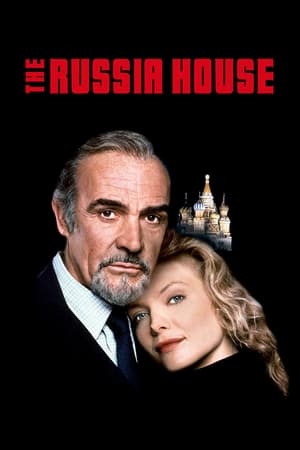
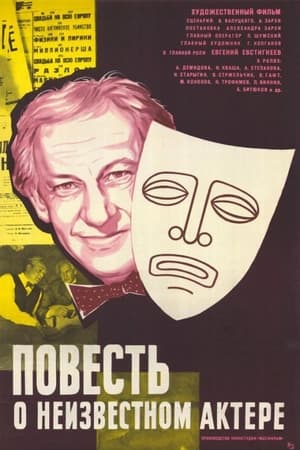
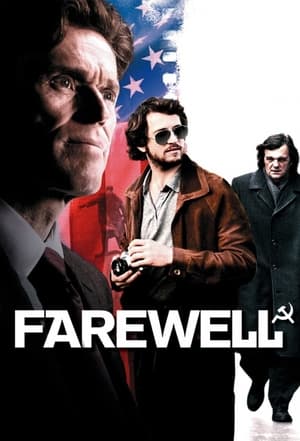
A nuclear warhead launched by Soviet insurgents protesting the waning Cold War destroys the Ukrainian city of Donetsk. The destruction sets off a race between American and Soviet politicians to prevent a nuclear holocaust. While the U.S. president feverishly works to keep the military and political machine from going into overdrive, various subordinates panic. When the president is believed to be killed in a helicopter crash, zealous advisers take over.
The 1975 film by Georgi Daneliya "Afonya" was an unexpected commercial hit in USSR. The main character "Afonya" Borshev is a plumber, who spends his life partying with "buddies", many of whom he doesn't even remember after nights of heavy drinking. His wife leaves him, his boss places him on probation, his whole life is falling apart, but he doesn't realize it. Afonya met Katya at a dance club, yet didn't pay her much attention. But she is the one, who can save him... In this movie Daneliya achieves a perfect balance of satire and drama. Quotes from the movie gained a cult status in USSR.
In 1991, the USSR is falling apart and Cuba enters its hardest economic crisis. Sergio, a professor of Marxism who can't provide for his family, and Sergei, a Soviet cosmonaut stranded in the Mir space station, share a common passion: amateur radio. Through this hobby, both men will be able to help each other in facing the dramatic changes of their countries.
Norwegian Ninja is the true story of how Commander Arne Treholt and his Ninja Force saved Norway during the Cold War. In 1983 the Ninja Force discovers that the sinister NATO force Stay Behind, who take charge in times of war and emergency, are planning a coup-d'état in peacetime. Treholt and the Ninjas see only one solution: a full can of whoop-ass.
In the summer of 1944, the Nazi Armies prepare a massive Tank Division named 'Viking" for the offensive on occupied Russian land. The Russian Army's special group of seven snipers named "Zvezda" is sent for a reconnaissance operation behind the enemy lines in the back of the Nazi Tank Division. Two previous Russian groups never came back. The seven Russians know that they are going to an almost certain Death for the sake of Victory.
It depicts the establishment of kolkhoz (collective farming) in Bukhara. Poor dehkans are oppressed by bays and emir. One of them, unable to bear the slave labor, flees from his native land. A few years later, the fugitive returns and becomes an activist of the collective farm movement. Kulaks kill him and try to flood the collective farm fields with water. However, collective farmers stop the sabotage and reveal the secret of the murdered activist. The perpetrators are justifiably punished.
In Soviet Azerbaijan, a divorced Armenian couple fights over the custody of their daughter, Ashen. Stolen from one parent to another, Ashen's guardians are tragically killed in the bloody war surrounding them. Will the arrival of a new savior finally bring Ashen freedom? Official selection of the Global Lens Collection presented by the Global Film Initiative.
Soviet Lithuania in 1972. A young theatre actress is trying to make a difference and tell the forbidden story of repression in a play.
A story about the clash of two cultures, two worlds - traditional Tajik culture and the new, invading and imperialist in its nature, Soviet culture, about the formation of self-awareness of the Tajik dekhkanin in the 1920s-1930s.... Poor Hasan thinks and experiences a lot before he is able to comprehend the changes in his life, to realize that old traditions and customs are no longer valued. Bent by need and disenfranchisement, he finds the strength to stand up against the Basmachi.
When Imeda’s father is killed in a blood revenge accident, the family moves him to the city where he is sheltered at his father’s friend. After fifteen year he gets back to Khevsureti. A talented painter, he spends most of his time doing sketches of nature and people. There he meets a local beauty, Mzekala and fells in love with her but finds out that Torghva is also in love with her. Enraged by Imeda’s impudence Torghva calls him for a sword fight and is killed by Imeda. To avoid another round of blood revenge, the villagers let Imeda and Mzekala out of the village but someone who wants Imeda’s blood finds it out and follows them.
A Ukrainian village must suddenly contend with the Nazi invasion of June 1941. Later re-edited and released as "Armored Attack."
During the Cold War, the Soviet Union captures U.S. pilot Francis Gary Powers after shooting down his U-2 spy plane. Sentenced to 10 years in prison, Powers' only hope is New York lawyer James Donovan, recruited by a CIA operative to negotiate his release. Donovan boards a plane to Berlin, hoping to win the young man's freedom through a prisoner exchange. If all goes well, the Russians would get Rudolf Abel, the convicted spy who Donovan defended in court.
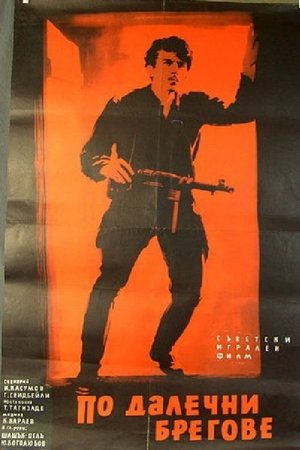
A small band of multicultural convicts stages a daring escape from a WWII-era Siberian gulag, and embarks on a treacherous journey across five countries in a desperate race for freedom and survival.
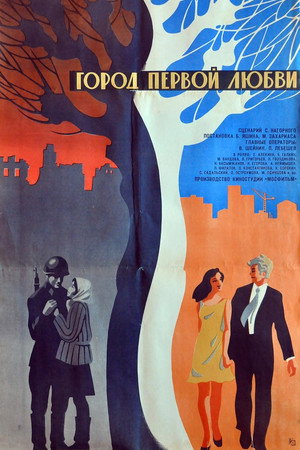
The film tells about the inhabitants of the Russian city of Tsaritsyn-Stalingrad-Volgograd. The film consists of three novellas, united by the theme of love and the scene - a city on the Volga.
Mid 20th century. Industry is developing rapidly and the need for workers in factories is growing. After graduating from the tenth year, Viktor Chernyshyov, now a city dweller, did not bother to continue his education and went to the plant as a turner. He considered it quite normal that the guys enthusiastically listened to the stories of his peer Kolya, a lounger who boasted of victories over women, and participated in his dubious amusements. Only one of them, Pyotr — a real worker, a doctor, tried to reason with Kolya and the others.
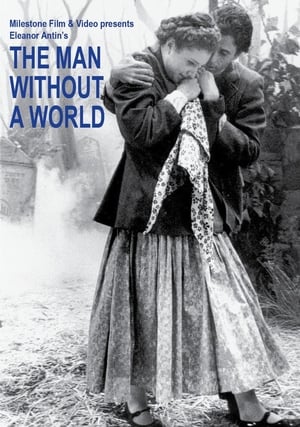
The Man Without a World is credited to the legendary (and imaginary) 1920s Soviet director, Yevgeny Antinov. But the film is anything but old. In fact, Antinov himself is the creation of contemporary filmmaker Eleanor Antin. Her film is a moving, comic melodrama set in a typical shtetl (village) in Poland. The Jews’ struggle against poverty and racial hatred is complicated by their own division into hostile political factions of the religious orthodoxy, assimilationists, socialists, Zionists, anarchists and survivors. While the Jews of the shtetl pursue their loves, politics, religion, business and dreams for the future, the Angel of Death is ever near...
The love story in the remote village. Lyuba has a child, Nikolai has a wife. Nikolay, having become a projectionist, now, once a week, brings cinema to the village of Babino, where Lyuba lives. Once they loved each other, but Nikolai, unexpectedly for everyone, married another and since then tried not to be in this village. And now feelings have surged again, and both are unable to resist this love.
During a freezing WWII winter, two Soviet partisans on a mission to gather food contend with the temperature, the occupying Germans, and their own psyches.
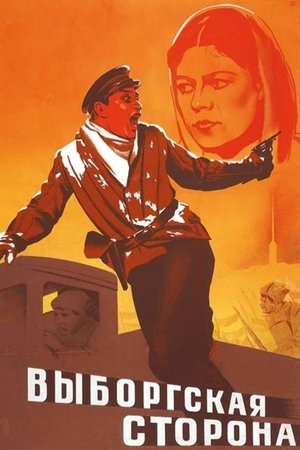
Soviet "proletarian" film about anti-war strike at St Petersburg factory, 1914. Resembles Pudovkin's classic "End of St. Petersburg," made 4 years earlier: backward lad (Poslavsky) from poor village comes to town desperate for work. He's hired as replacement ("scab") worker at big metallurgical factory, which is in the throes of a strike organized by the Bolsheviks (communists). The Bolshevik strikers are led by Ivan Shtraukh (brother of the more famous Russian actor Maxim Shtraukh). At first, the deceitful industrialist's son (Fedosev) involves the naive Poslavsky in an attempt to murder Shtraukh, but the attempt only wounds the heroic organizer. Will Poslavsky follow through with the planned killing, or will he redeem himself by going over to the side of the strikers?
The life and career of the brutal Soviet dictator, Josef Stalin. Through the eyes and memories of Anna Aliluyeva, Stalin’s granddaughter, the film traces the rise of the Bolshevik tyrant from Lenin’s return from exile to his brutal struggle with Trotsky, the creation of his feared secret police and the merciless inner workings of his regime. As Anna recounts her grandfather’s life, viewers gain an intimate, personal perspective on the paranoia and purges that left even his closest circles living in constant fear.