Richard Martin buys a gift, a new NDR-114 robot. The product is named Andrew by the youngest of the family's children. "Bicentennial Man" follows the life and times of Andrew, a robot purchased as a household appliance programmed to perform menial tasks. As Andrew begins to experience emotions and creative thought, the Martin family soon discovers they don't have an ordinary robot.
A Polish-Jewish family comes to the U.S. at the beginning of the twentieth century. There, the family and their children try to make themselves a better future in the so-called promised land.
Imprisoned journalist Joseph Michaels faces a government execution during a future American Revolution.
Rudolf Diesel, one of history’s greatest inventors, vanished into thin air on the eve of World War I. His revolutionary invention, the Diesel engine, was highly sought after by global industries and political figures around the world. It had the power to threaten empires and change the fate of nations, turning him and his technology into both a prized asset and a potential threat.
Paris, France, during the First World War. While thousands of soldiers die every day on the battlefields, Henri Landru, a seemingly respectable furniture dealer, married and father of four children, relentlessly feeds his own sinister factory of death.
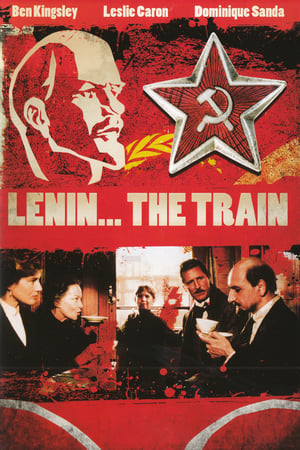
March/April 1917. The first world war is already a couple year to pace. A sealed train with Russian emigrants keeps on driving from Zürich Germany and Sweden to Sint-Petersburg. The outlaws stand under the guidance of Vladimir J. Lenin. Two senior officers support the revolutionary bomb "to ensure that everything runs smoothly. Yet there are some unpleasant clashes between Socialists and enthusiastic workers who are worried about the war. During train travel there comes an end to Lenin's affair with the gracious Inessa, and his wife Nadja is prepared take back him. The triumphant entrance in St. Petersburg will exceed all expectations....
Based on an autobiographical novella by Ivan Olbracht, the film tells the story of Hanele Safarová, who grows up just after the First World War in a little Ruthenian schtetl which, in true Hassidic fashion, awaits the arrival of the Messiah. But Hanele decides to follow the Zionists instead. She moves to the city to prepare for her departure to the Promised Land, where she meets a successful businessman named Ivo Karadzic, who has renounced Judaism to become a free-thinker. Their love for each other doesn’t only drive Hanele’s parents to distraction, it also threatens to destroy the entire community in the schetl.
Young Ursula plays in a tree and ruins her fancy dress. Her elderly mother teaches her a cruel lesson about whether things can ever be mended; what Ursula learns about how to behave may not be what her mother intended.
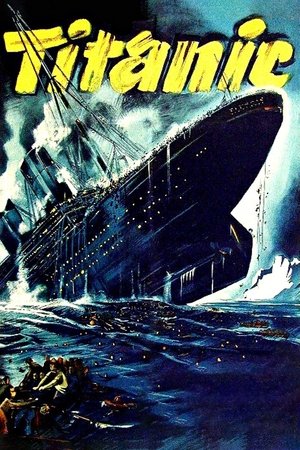
In 1912, the Titanic embarks on its inevitable collision course with history. In the wake of the over-spending required to build the largest luxury ship in the world, White Star Line executive Sir Bruce Ismay schemes to reverse the direction of his company's plummeting stock value. Onboard the Titanic, brave German 1st Officer Petersen struggles to convince his self-important British superiors not to overexert the ship's engines.
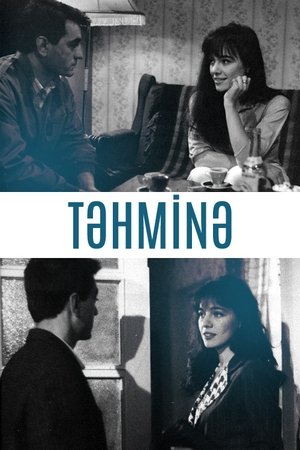
This Azerbaijani romantic drama depicts the love affair between Zaur, a man from an affluent family, and Tahmina, a divorced woman doing her best to survive in a conservative society.
Psychological drama about a university dean who leads a double life.
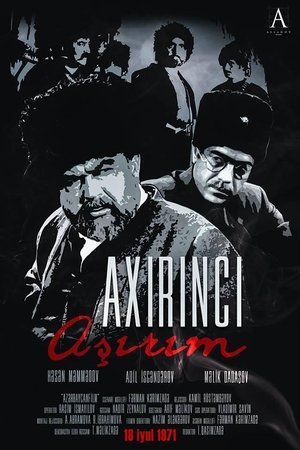
Based on a novel by Farman Karimzade, the movie shows the life in an Azerbaijani village under the Soviet rule in 1930s. Here two former "beys" (land owners) are opposing each other. One is loyal to the ideology of the past and can't reconcile himself to the new power, to second rejects the past and accepts the power of the Bolsheviks, believing that it will establish justice.
A woman named Agnes who emigrated to the USA returns to her home village with her new husband Algot. When Agnes' childhood friend David turns up it's the start of a love triangle.
The setting is the east shore of the Caspian Sea (today's Turkmenistan) where the Red Army soldier Fyodor Sukhov has been fighting the Civil War in Russian Asia for a number of years. After being hospitalised and then demobbed, he sets off home to join his wife, only to be caught up in a desert fight between a Red Army cavalry unit and Basmachi guerrillas. The cavalry unit commander, Rahimov, "convinces" Sukhov to help, temporarily, with the protection of abandoned women of the Basmachi guerrilla leader Abdullah's harem. Leaving a young Red Army soldier, Petrukha, to assist Sukhov with the task, Rahimov and his cavalry unit set out to pursue fleeing Abdullah.Sukhov and women from Abdullah's harem return to a nearby shore town. Soon, looking for a seaway across the border, Abdullah and his gang come to the same town...
Young Native American man Thomas is a nerd in his reservation, wearing oversize glasses and telling everyone stories no-one wants to hear. His parents died in a fire in 1976, and Thomas was saved by Arnold. Arnold soon left his family, and Victor hasn't seen his father for 10 years. When Victor hears Arnold has died, Thomas offers him funding for the trip to get Arnold's remains.
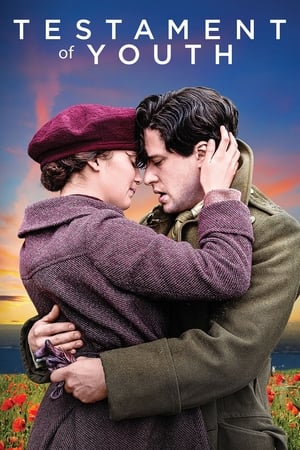
Testament of Youth is a powerful story of love, war and remembrance, based on the First World War memoir by Vera Brittain, which has become the classic testimony of that war from a woman’s point of view. A searing journey from youthful hopes and dreams to the edge of despair and back again, it’s a film about young love, the futility of war and how to make sense of the darkest times.
It's just another day in the small town of Hamlin until something disastrous happens. Suddenly, news breaks that a series of nuclear warheads has been dropped along the Eastern Seaboard and, more locally, in California. As people begin coping with the devastating aftermath of the attacks — many suffer radiation poisoning — the Wetherly family tries to survive.
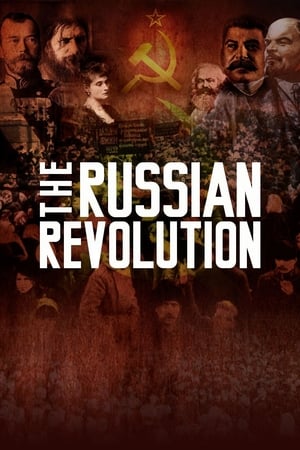
Starting in 1881 this film shows the personal battle between Lenin's Ulyanov family and the royal Romanovs that eventually led to the Russian revolution.
A chronicle of dramatic events capturing the fates of people living in a Slovak village just after World War II. Thirty years later, the main character Anna recalls a decision that fundamentally changed her life. During the period of incipient collectivization, she chose happiness and a difficult life with a poor man founding a cooperative in the village, although this significantly weakened her relationship with her own mother and at the same time interrupted a long-standing tradition in relation to the preservation of family property.
Malý pán Friedemann