A father-to-be tries to figure out what is happening with all this AI insanity, and explores the most powerful technology humanity has ever created... and what's at stake if we get it wrong.
Memoirs of a Spectrum Addict is a full length documentary feature film which takes a detailed look at the ZX Spectrum, its history, developers, games and fans. The film is a unique tribute to the Sinclair ZX Spectrum. Memoirs of a Spectrum Addict has re-enactments, interviews like you’ve never seen before with major Spectrum industry figures, and features real people who grew up influenced by the Sinclair ZX Spectrum!
A college student searches for justice after she discovers deepfake pornography of herself circulating online.
Charles Babbage (1791-1871), computer pioneer, designed the first automatic computing engines. He invented computers but failed to build them. The first complete Babbage Engine was completed in London in 2002, 153 years after it was designed. Difference Engine No. 2, built faithfully to the original drawings, consists of 8,000 parts, weighs five tons, and measures 11 feet long. We invite you to learn more about this extraordinary object, its designer Charles Babbage and the team of people who undertook to build it. Discover the wonder of a future already passed.
“A Song Reborn” reveals the extraordinary 1994 reunion of Paul, George and Ringo, 24 years after The Beatles parted ways. A true collaboration became possible when Yoko Ono handed them an unfinished John Lennon composition. Crafted from never-before-seen studio footage, this short film captures the three Beatles rediscovering their bond as they shape John’s song into the GRAMMY-winning “Free As A Bird.”
Anna, editor-in-chief of a news magazine, and her husband Daniel, founder of an AI-centered home security company, are threatened by a mysterious house guest as they expect their first child.
In 1772, Englishwoman Mary Delany wrote to her niece: “I have found a new way of imitating flowers.” The imitation in question was the art form called decoupage, based on cut-outs and reshuffling of pictures. The charm and botanical precision of these works attracts attention of even today’s artists, among others by an anonymous programmer who is trying to invent a way of capturing the flowers’ vivacity in pictures. With this aim in mind, she has created an algorithm, which would combine science and beauty, similarly to Delaney’s efforts, whose illustrations it is meant to animate.
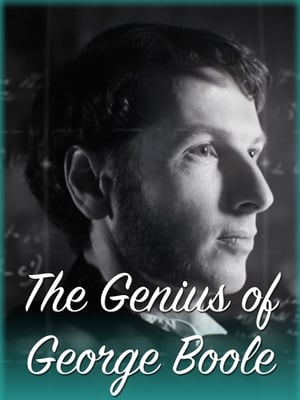
Narrated by Oscar-winning actor Jeremy Irons, The Genius of George Boole assembles academics and industry leaders from across the globe to explore the life and importance of one of the world’s greatest unsung heroes.
The search for René Descartes’ daughter Francine leads an internet user into the depths of an AI’s mental space. This intelligence generates limitless images from words given by humans, until it starts working by itself. An alternative, fleshless new world, containing all the world's memory, emerges.
Director Adam Bhala Lough sets out to better understand the technology and people at the center of the AI boom. His quest sends him on a path towards the father of AI, OpenAI CEO, Sam Altman. When he isn’t able to sit down with Altman himself, Adam travels to India to create an AI version of him to interview instead.
It may look like a Labubu unboxing, but it is actually an unpacking of socioeconomic trends...
A young pianist is shocked when she witnesses a strange chess tournament with a robot. Could there be a gruesome secret behind this exhibition?
The Hypergaussian Wars is an AI-generated feature-length audiovisual work exploring algorithmic warfare, obsolete media and the transformation of images through repetition, saturation and collapse. Built from thousands of generated images, synthetic landscapes and references to 14th–16th century painting, the film stages a continuous conflict between historical visual culture and contemporary computational systems. Fragments of obsolete video games, ruined architectures, military simulations and post-human figures circulate through increasingly unstable environments. Rather than telling a linear story, the film operates as an image system in which visual excess progressively erodes meaning. The Hypergaussian Wars reflects on memory, obsolescence, artificial intelligence and the persistence of images after their original function has disappeared.
Filmmaker Krishita Desai explores AI grief technology that lets people interact with digital versions of their deceased loved ones. Through families and experts, the film asks whether it brings comfort or complicates grief and healing.
With the rapid advancements in artificial intelligence, the line between humans and machines continues to blur, and everything is evolving at an astonishing pace as this technology offers tantalizing promises. However, some researchers, including 2024 Nobel Prize in Physics laureate Geoffrey Hinton, warn about its exponential power. A deep dive into the dizzying complexities of AI.
A group of billionaire friends get together against the backdrop of a rolling international crisis.
Egypt, nicknamed "the mother of the world" by its people, is unrecognizable. Gigantic construction sites have sprung up in the desert at an exponential rate, including roads, bridges, and megaprojects on the Mediterranean coast. This new Egypt is an illusion: in 10 years, the population has sunk into unprecedented poverty. The regime shows no mercy to the poor. Abdel Fattah el-Sisi, the new pharaoh, and his army have set up a pyramid-shaped financial system, built on subsidies from major international institutions—including the European Union—and foreign investment. The most populous nation in the Arab world finds itself on the brink of collapse.
Futurists Martine and Bina Rothblatt commission an advanced humanoid AI named Bina48 to transfer Bina’s consciousness from a human to a robot in an attempt to continue their once-in-a-galaxy love affair for the rest of time.
Startups are using AI to create avatars that allow relatives to talk with their loved ones after they have died. An exploration of a profound human desire and the consequences of turning the dream of immortality into a product.
“Fear AI!” – “ warns Elon Musk back in 2014, joining other opinion leaders like Steve Wozniak, Noam Chomsky and Stephen Hawking in backing a petition against the development of autonomous weapons. As Vladimir Putin stated in 2017, “Whoever leads in AI, rules the world.”