As co-created by environmentalists Stephan Poulle and Nicolas Koutsikas, the documentary Gulf Stream and the Next Ice Age argues and provides evidence for the idea that mankind is wreaking permanent and potentially irreversible damage on the ecosystem by interfering with the natural course of the Gulf Stream. Koutsikas and Poulle suggest that this interference, in turn, will prompt a new Ice Age that virtually destroys the modern world.
Antarctica is the most extreme continent on our planet—higher, colder, and even drier than any other on Earth, and although it is thousands of miles away, what happens here affects every single one of us.
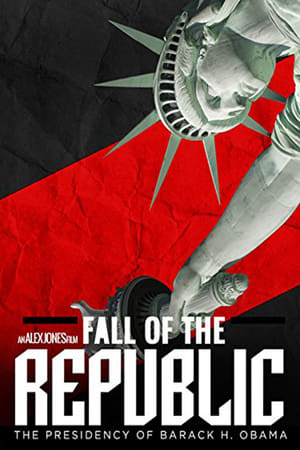
Fall Of The Republic documents how an offshore corporate cartel is bankrupting the US economy by design. Leaders are now declaring that world government has arrived and that the dollar will be replaced by a new global currency.
Greenland
'The Forgotten Pacific' travels to five Pacific islands to discover how communities are weaving indigenous knowledge into the modern-day fight to adapt, rebuild and save their islands from climate change.
L. M. Guerra, Knight of the University of Oxford; he tries to save our world, spreading the secrets that have been revealed to him.
Follow the Manhattan-based Beavan family as they abandon their high consumption 5th Avenue lifestyle and try to live a year while making no net environmental impact.
Too hot! The spawning fish do not come at the right time and the pepper plants end up dying in this heat. "This is a very different weather that not even the spirits can understand." From their gardens, homes, and backyards, the indigenous women of the Amazon involve us in their vast universe of knowledge while they observe the impacts of climate change in their ways of life.
Professional snowboarder and POW founder Jeremy Jones has always had a deep connection to the outdoors. It’s not just his escape—it’s his identity, his passion and his legacy. Growing up in New England, Jeremy carved out his beginnings in the mountains, but in the years since, he’s witnessed troubling changes: wilder weather, fewer snow days and mountain towns struggling to survive.
With unprecedented access to the nuclear industry in France, Russia, and the United States, Nuclear Now explores the possibility for the global community to overcome the challenges of climate change and energy poverty to reach a brighter future through the power of nuclear energy. Beneath our feet, Uranium atoms in the Earth’s crust hold incredibly concentrated energy. Science unlocked this energy in the mid-20th century, first for bombs and then to power submarines. The United States led the effort to generate electricity from this new source. Yet in the mid-20th century as societies began the transition to nuclear power and away from fossil fuels, a long-term PR campaign to scare the public began, funded in part by coal and oil interests.
The bleakness of Antarctica is a fallacy. The ice continent is full of life and offers a biodiversity of which only about two percent are known. Much of it is under water and could determine the future of human beings. When the northern lights cover the ice landscape in summer, the animals in the Antarctic are in a paradisiacal state. Whales blow their fountains in the sky, penguins fly like small rockets into the water, seals dive for crabs under the glittering ice floes. From the bay of the Ross Sea to the ice shelf, from the huge penguin colonies to steaming volcanoes, a life in rhythm with the ice. But the consequences of climate change are slowly becoming apparent here too. While some species are dying, others are spreading. They could bring new viruses and bacteria with them, and new dangers for humans too. The structure of nature has gotten off course. How many generations will still be able to experience the magic of Antarctica?
The story of the Mohanas, an indigenous fisherfolk community on Manchar Lake, as they face the sorrow of bidding farewell to a unique heritage that has sustained them for centuries.
Le jour d'après : Un retour à l'ère glaciaire est-il possible ?
The Guarani people have searched for a land without shadows for a hundred years. The beauty in their home is precious and undeniable, but climate change threatens to ruin this special place.
Anita Chitaya has a gift: she can help bring abundant food from dead soil, she can make men fight for gender equality, and maybe she can end child hunger in her village. Now, to save her home in Malawi from extreme weather, she faces her greatest challenge: persuading Americans that climate change is real. Traveling from Malawi to California to the White House, she meets climate sceptics and despairing farmers. Her journey takes her across all the divisions that shape the USA: from the rural-urban divide, to schisms of race, class and gender, and to the American exceptionalism that remains a part of the culture. It will take all her skill and experience to help Americans recognise, and free themselves from, a logic that is already destroying the Earth.
Photographer and visual artist Sammy Baloji’s fascinating film essay explores the Democratic Republic of Congo’s colonial history and its ecological significance. Drawing on research from the 1930s, the film highlights the Congo Basin’s vital role in consuming carbon dioxide and shaping global environmental balance over a century.
A young film crew searches for ways out of the climate crisis. In different cities they meet people who commit their lives to preserving our environment in different ways. In inspiring conversations they talk about their thoughts, motivation and hope and why we have to break out of our comfort zone. 8 protagonists try to reach out for solutions for climate justice in our future and open up perspectives of hope.
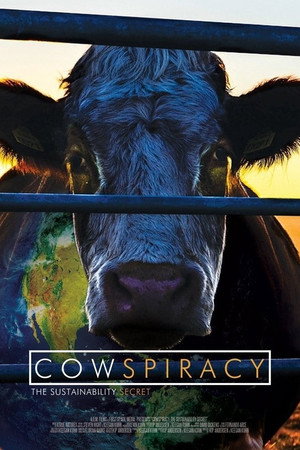
It's death on an unimaginable scale, when a majority of Earth's species quickly die out. It's called "mass extinction," and it's happened at least five times before. Cataclysms, such as supervolcanoes or asteroids, are thought to cause these events, but some experts believe a manmade mass extinction could be next. Is our planet in trouble? And if so, is there anything we can do to stop the next catastrophic annihilation? Experts are traveling the world, performing groundbreaking scientific detective work to answer these very questions.
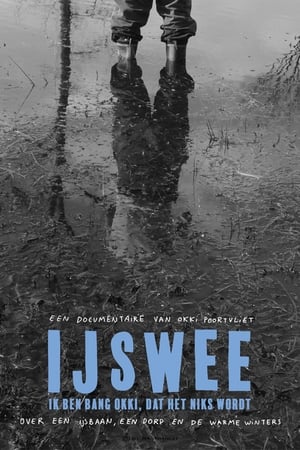
The decision to move to Holland doesn't sound like a wise idea. Why move to a country that could be flooded at any moment? For the last 25 years, the political climate has shifted. The public debate on migration has become harsher, more heated, and polarized. What would have been considered right-wing xenophobia back then, is now considered mainstream. Populists simplify complex realities into good and evil, victims and perpetrators: ‘us’ versus ‘them’. Their rhetoric often consists of dehumanizing words and metaphors. One of these is ‘water’. In reality, water is not an immediate threat to the average Dutch person; but it is a huge threat to the thousands trying to reach the Netherlands. People trying to survive the Mediterranean Sea in rubber boats. Trying to survive winter on the Aegean coast in primitive tents. To them, water really is deadly.
The story of a brilliant ecologist with a plan to save the world by restoring the planet's forests. His original work was hijacked by corporations and politicians with disastrous effect. Now he's using science to fight back.