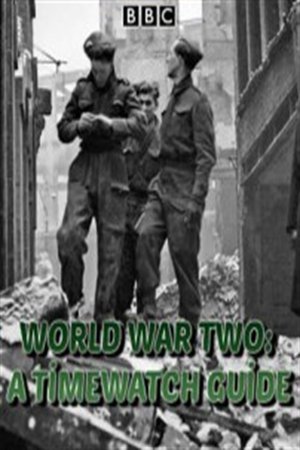
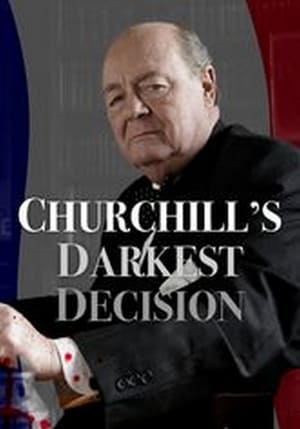
Account of one of the most critical periods of World War II. In the spring of 1940, Holland, Belgium, and France fell to Hitler's army. The Soviet Union was Germany's ally, and the United States stood on the sidelines. At this time of peril, it was Britain alone that faced the Nazi army. Thanks to Britain's two great assets: its indomitable leader, Winston Churchill, and the courage and resilience of its people--ordinary citizens who accomplished extraordinary things, a nation's darkest hour became its finest. Through months of intense air bombardment, including the "Blitz" of London, and under permanent threat of invasion, the British people exemplified heroism under fire. The peoples of occupied Europe, and those of the United States, came to see that resistance to Hitler was indeed possible.
Made famous by the 1957 Hollywood movie, the bridges of the River Kwai emblematize one of the most misunderstood events in history. Contrary to the romanticized film version, the structures represent a period of terror, desperation, and death for over 16,000 POWs and 100,00 local slaves. The Thailand - Burma Railway was the vision of the Japanese Imperial Army: a 250-mile track cut through dense jungle that would connect Bangkok and Rangoon. To accomplish this nearly impossible feat, the fanatical and ruthless Japanese engineers used POWs and local slaves as manpower. Candid interviews with men who lived through the atrocity - including Dutch, Australian, British, and American POWs - illuminate the violence and horror of their three-and-a-half-year internment. From Britain's surrender of Singapore the enduring force of friendship, The True Story Of The Bridge On The River Kwai narrates a moving and unforgettable account of a period in history that must be remembered.
On the 29th September 1945, the incomplete rough cut of a brilliant documentary about concentration camps was viewed at the MOI in London. For five months, Sidney Bernstein had led a small team – which included Stewart McAllister, Richard Crossman and Alfred Hitchcock – to complete the film from hours of shocking footage. Unfortunately, this ambitious Allied project to create a feature-length visual report that would damn the Nazi regime and shame the German people into acceptance of Allied occupation had missed its moment. Even in its incomplete form (available since 1984) the film was immensely powerful, generating an awed hush among audiences. But now, complete to six reels, this faithfully restored and definitive version produced by IWM, is being compared with Alain Resnais’ Night and Fog (1955).
On December 20, 2023, at the age of 84, Jack Lang was reappointed for a fourth term as head of the Arab World Institute. Proof, if any were needed, of the incredible longevity of a man who has embodied culture in motion for more than sixty years. From the creation of the Nancy Festival in 1963 to his legendary tenure as Minister of Culture on Rue de Valois, Jack Lang has moved through the decades without ever stopping. Professor, mayor, deputy, minister in all Mitterrand governments... he has remained a central figure in cultural and political life, always in action. Jack Lang tells his story, recounting his decisive encounters, his great achievements, his failures, and his personal dramas.
This exceptional documentary gives a voice to those who knew Jean Moulin, his friends and comrades-in-arms and fellow resistance fighters. The valuable testimonies of Lucie and Raymond Aubrac, Claude Bourdet, Jean-Pierre Lévy, and Daniel Cordier, among others, bring to life this young prefect steeped in republican values, recounting his difficult but decisive task of unifying the resistance movements, his actions and role within Free France, until his arrest on June 21, 1943.
A surprisingly intimate portrait of how the dream of running one’s own business can take on monstrous contours. Managed by the father of one of the singers, over the course of five years the girl band 5Angels had reached the gates of pop fame. But it is a path paved not only with the songs of Michal David, but also with the dogged determination of a man who loses any notion of where his role as manager ends and his role as parent begins. An emotionally moved Karel Gott, five angelic girls, and one overly involved father, thanks to whom the behind-the-scenes pre-Christmas atmosphere melts away just as rapidly as the fat should disappear from the belly. “A singer can’t be a lard bucket!”
In 1935, German scientists dug for bones; in 1943, they murdered to get them. How the German scientific community supported Nazism, distorted history to legitimize a hideous system and was an accomplice to its unspeakable crimes. The story of the Ahnenerbe, a sinister organization created to rewrite the obscure origins of a nation.
Whether famous or anonymous, stars or prisoners, models or sex workers, women have always been at the center of Bettina Rheims' photographic work since her debut in 1978. Both subversive and glamorous, trashy and sophisticated, her photographs mark and bear witness to the upheavals of the era, which this leading photographer both anticipated and accompanied.
A remarkable film that takes a special look at the first war to be truly reported and recorded by one of the more unsung heroes of World War II: the combat photographer. Through the unflinching eye of their camera's lenses, these courageous soldiers continually risked their lives in their brave attempts to capture history.
In May 1943, Ernst Kaltenbrunner, the new head of the Reich Central Security Office, gave Hitler a report describing in detail the organization of the French Resistance. Indeed, during the Second World War, most of the Resistance networks had been infiltrated by traitors, the "V Man" (trusted men) in the service of the occupier. The Germans had established treason as a system and recruiting Frenchmen ready to inform on them was one of their priorities. It was these Frenchmen, whose number is estimated at between 20,000 and 30,000, who dealt terrible blows to the Resistance.
On Dec. 5, 1944, American soldiers, led by Harry Stuts, put their guns down for one day and organized a party celebrating the town's centuries-old Saint Nick tradition. Soldiers made hot chocolate from their D-rations, company cooks made donuts and cookies for the children, and 22-year-old corporal Richard Brookins from Rochester, NY played the role of Saint Nick. An emotional and heartfelt story, THE AMERICAN SAINT NICK illustrates how American soldiers and residents of the hamlet were able to bond over a moment in time, creating a tradition that continues to this day.
The greatest taboo of the Battle of Okinawa were Guerrilla units composed of boy soldiers. Until now, not even the Japanese people knew the full scope of these secret troops, and survivors have been afraid to share their tragic details. Okinawa became the bulwark to protect the Japanese mainland toward the end of World War II. After the Americans landed, a violent battle ensued resulting in the loss of over 200,000 lives – many of them civilian. This documentary uncovers Japan’s deepest secrets concerning the Battle of Okinawa, and also sounds alarms about modern Japan’s recent steps toward remilitarization.
Søren Kam: Nazisten, der aldrig fortrød
Nino Ferrer has had several lives: hits that made him famous; a dark but artistically fruitful period; a hidden life -of his own making- breaking away from showbiz. All these facets are concentrated in a brilliant, complex, skinned character. "It looks like Nino Ferrer" is a film rich in international archives (TSR, RTSI, Rai...), rare documents (Super 8 films of the Ferrer family) and even unpublished films (Nino Ferrer as an actor in an advertisement for Italian cheese). The film is also punctuated by the memories of famous musicians such as Manu Dibango as well as by the singer's successes and his live performances (L'Olympia, L'Arche de Noé).
In 1945, two young American soldiers, brothers Budd and Stuart Schulberg, are commissioned to collect filmed and recorded evidence of the horrors committed by the infamous Third Reich in order to prove Nazi war crimes during the Nuremberg trials (1945-46). The story of the making of Nuremberg: Its Lesson for Today, a paramount historic documentary, released in 1948.
Father Edward J. Flanagan is a familiar name to many Americans, often for the Oscar-winning 1938 film starring Spencer Tracy about Flanagan’s groundbreaking child welfare organization. But the story extends far beyond that, to a man whose name and legacy are still well-known as far as Germany and Japan. Flanagan gained influence and admiration over the course of his life from Presidents, CEOs, celebrities and more, but none mattered more to him than that of the children for whom he tirelessly worked. A sobering reminder of this was during WWII, as Flanagan saw droves of former Boys Town citizens go off to war. In fact, so many former Boys Town boys named Flanagan as their next of kin that the American War Dads Association named him as America’s No. 1 War Dad.
This short documentary is the portrait of an 88-year-old woman who lives alone in a log cabin without running water or electricity in the Williams Lake area of British Columbia. The daughter of a Shuswap chief, Augusta lost her Indian status as the result of a marriage to a white man. She recalls past times, but lives very much in the present. Self-sufficient, dedicated to her people, she spreads warmth wherever she moves, with her songs and her harmonica.
Mike Tyson escaped a life of poverty and petty crime to make a name for himself, becoming the youngest Heavyweight Champion of the World and a household name—but his rise was followed by a very public fall. In this remarkably candid portrait, the boxer addresses his controversial past, including the rape charge that sent him to prison and his struggles with substance abuse, while also detailing his ultimate recovery and comeback.
German war documentary about Yugoslavia from 1941.
Nazi troops massacre 30,000 Jews over a three-day period in September 1941. Babyn Yar ravine in Kyiv, Ukraine.