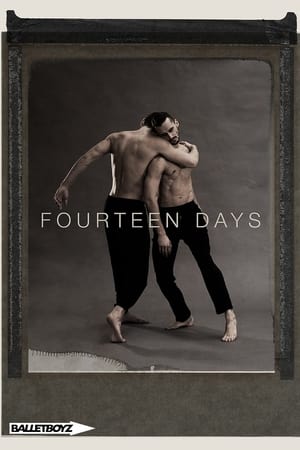
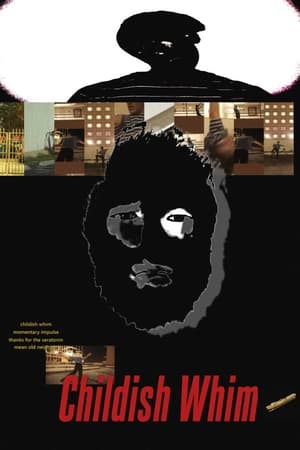
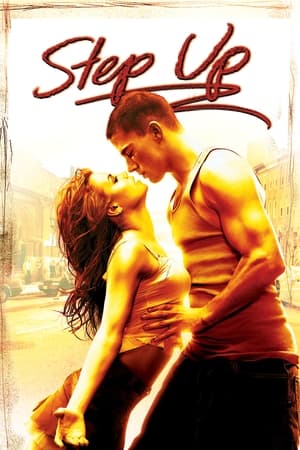
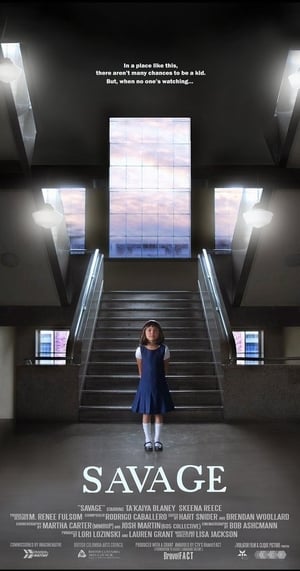
A pair wander the streets of Warsaw, meeting famous Polish musicians.
Kylie: Greatest Hits 87-97
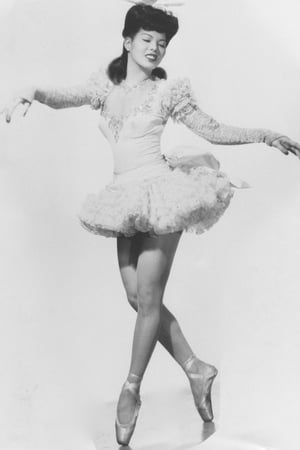
A short documentary following Paulette Harwood, a 90-year-old former Radio City Music Hall Corps de Ballet soloist, as she teaches the final classes in a school she's run for sixty years.
A funny, cruel exploration of the male psyche, Enter Achilles is set in a typical British pub, a shabby, nicotine-stained boozer. Pop songs tumble out of the jukebox, there is football on the TV, and the eight men lark around, pint glasses in hand. But their blokish fun is balanced on a knife-edge of tension, for beneath the mateyness lurks a disturbing undercurrent of paranoia and insecurity, where weakness is brutally exploited and violence covers up vulnerability.
The first revival of Wayne McGregor’s critically acclaimed ballet triptych to music by Max Richter, inspired by the works of Virginia Woolf.
A provocative and wholly unique hybrid of dance, theatre and music, FELA! explores the world of Afrobeat legend Fela Anikulapo-Kuti. Winner of three 2010 Tony Awards including Best Choreography (Bill T. Jones). Featuring many of Fela Kuti’s most captivating songs and Bill T. Jones’ visionary staging, FELA! – an original new creation – comes via Broadway to London and the National Theatre. FELA! explores the extravagant, decadent and rebellious world of Fela Anikulapo-Kuti. Using his pioneering music (a blend of jazz, funk and African rhythm and harmonies), FELA! reveals Kuti’s controversial life as an artist and political activist.
A filmed version of Aaron Copland's most famous ballet, with its original star, who also choreographed.
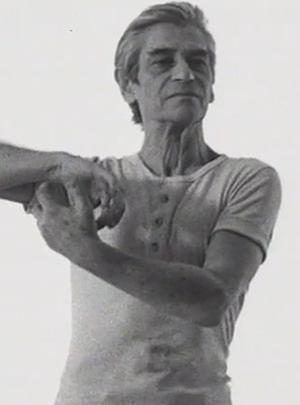
Anma (The Masseurs) is a representative and historical work by the creator of Butoh dance, Tatsumi Hijikata in his early period in the 1960s. The film is realized not only as a dance document but also as a Cine-Dance, a term made by Iimura, that is meant to be a choreography of film. The filmmaker "performed" with a camera on the stage in front of the audience. With the main performers: Tatsumi Hijikata and Kazuo Ohno, the film has the highlights such as Butohs of a soldier by Hijikata & a mad woman by Ohno. There is a story of the mad woman, first outcast and ignored, at the end joins to the community through her dance. Inserted descriptions of Anma (The Masseurs) are made for the film by the filmmaker, but were not in the original Butoh. The film, the only document taken of the performance, must be seen for the understanding of Hijikata Butoh and the foundation of Butoh.
The senior year of a girls’ high school step team in inner-city Baltimore is documented, as they try to become the first in their families to attend college. The girls strive to make their dancing a success against the backdrop of social unrest in their troubled city.
A photographer is murdered just outside a college dance. The body is found by Lee Watson, but promptly disappears, as it's being whisked from one point to another on campus by an ex-con night watchman. However, he isn't the killer, and Freddie, Dodie, Betty and Lee set out to find the culprit who put a big damper on their big event.
A former professional dancer volunteers to teach dance in the New York public school system and, while his background first clashes with his students' tastes, together they create a completely new style of dance. Based on the story of ballroom dancer, Pierre Dulane.
Released on DVD as part of The Criterion Collection's "Martha Graham: Dance on Film" collection.
Piel dolor (Skin Pain) explains how power is structurally sustained in violence. Its nature and the relationships it establishes in society are based more on the imposition and use of force than on building consensus, dialogue, and respect for diversity. In that sense, power is a behavior that seeks dominance through force and man as a gender, becomes an instrument of violence that is exercised against the weakest. Extinguishing the socially constructed violence means eliminating the current power and its historical sustenance, questioning the source of origin, religion, ideology, the system and its values. Is that utopia possible?
With her dream of pursuing a professional dance career shattered, Nizzy, an upscale British Pakistani, must now fight the odds to keep it alive in a society she never wanted to be a part of.
Suzuki Shizuka is an office lady at a conglomerate who is hypnotized at a local amusement park and left under the spell. Now she is compelled to sing and dance whenever she hears any melody whatsoever. She heads back to the hypnotist for relief, but he is nowhere to be found. So Shizuka sets off on a journey around Japan to find him and break the spell.
Documentary on the great American Ballerina Wendy Whelan
An Austrian director followed five successful African music and dance artists with his camera and followed their lives for a year. The artists, from villages in Ghana, Gambia and Congo, were the subjects of Africa! Africa! touring across Europe, but they have unbreakable roots to their homeland and their families. Schmiderer lovingly portrays his heroes, who tell their stories about themselves, their art and what it means to them to be African with captivating honesty. The interviews are interwoven with dance scenes and colourful vignettes set to authentic music.
The daughter of a preacher becomes the centerpiece for a conservative political campaign but finds herself falling in love with a woman.
A light grey room. A slender woman of 50 and a 12 year old boy. Joined together like the links of a chain. Changing positions at a constant rate. One flowing movement. Never losing touch with each other. A game played by a mother and her child. A kind of tango. Sound of feet. Breathing. Faint smiles. Until suddenly the woman's hands let go of each other.
Hotel Armada is a curated portrait of dance and expression showcasing talents in the world of contemporary, vogue, and ballet. It is an integration of time, space, movement and sounds highlighting each performer's rawness in their power and beauty.