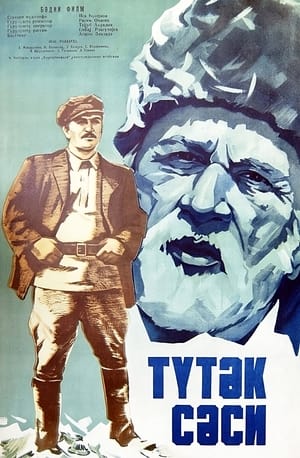
Biopic about general Hazi Aslanov, who died fighting Germans in WW2.
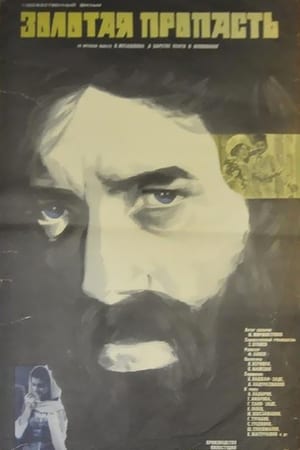
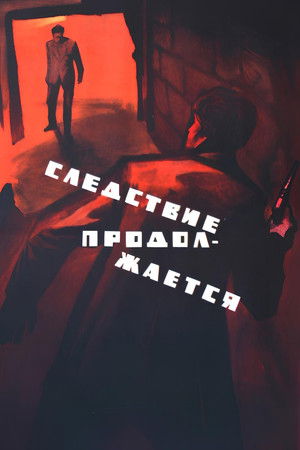
The investigator Seyfi Ganiyev runs the case of an illegal mercery shop's head Murad Abiyev, who confessed in embezzlement of one million rubles from public funds. Abiyev is also accused of the murder of an underage girls that occurred in Riga shortly after Abiyev saw her. He denies his guilt, but does not name the perpetrators though he knows them, despite the fact that he is facing the death penalty. The investigator understands that some high-ranking officials stand behind Abiyev, but he has no proof. Ganiyev seeks to obtain from the prisoner the whole truth to bring the criminals to justice.
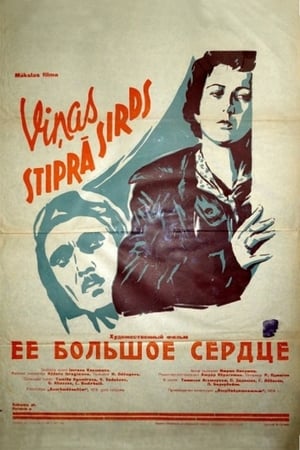
The story is set during an upsurge in the Nagorno-Karabakh conflict and revolves around an old, sick ex-forestry worker and his wife Nabat, whose son has died in battle.
A journalist is investigating a group of poachers who are illegally selling the huge amounts of fish
The film portrays the life of the legendary Azerbaijani guerrilla of the Second World War Mehdi Huseynzadeh, who fought the Nazi forces in the present-day Italy and Slovenia, hence the film's name On distant shores referring to the Adriatic Sea.
While looking for a job, a group of people end up in a private residence where they are forced to become dogs.
The film is about famous Chechen ballet and folk dancer Mahmud Essembayev's life.
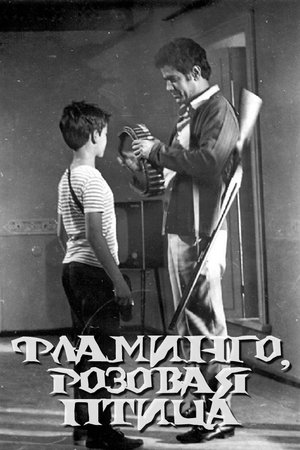
Matteo Falcone is an Azerbaijani short drama film based on Prosper Merimée's like-named story from 1829. Matteo Falcone is a successful Corsican, who lives with his wife Giuseppa and 10-year-old son Fortunato. One day he leaves home with Giuseppa, leaving Fortunato alone.
Inspired by Anton Chekhov's The Cherry Orchard, the film follows a prodigal son who returns after 12 years. His reappearance at the family home in rural Azerbaijan significantly alters their way of life.
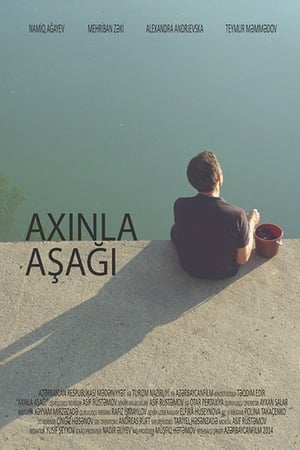
A young girl is trying to save an island which is endangered by nearby construction.
This Azerbaijani romantic drama depicts the love affair between Zaur, a man from an affluent family, and Tahmina, a divorced woman doing her best to survive in a conservative society.
Psychological drama about a university dean who leads a double life.
In a Azerbaijan, in the beginning of this century, the first films made in the history of cinema are shown.The characters meet each other in a room. Three characters who will witness the linking up of their destinies through their common love for this new captivating art.
The twin brothers Sachib and Garib are cheerful and funny boys. They tend to their small farm and take care of their mother and sister. But Garib is no longer satisfied with this "simple" life. He wants to achieve prestige and prosperity. One day, while working in the fields, he is surprised by a demon who promises him wealth, fame, honor, and power if Garib works for him. Garib succumbs to the temptation and accepts the offer. His task now is to impart his knowledge and skills to the cave dwellers, called jinn. At first, Garib feels comfortable and succeeds in transforming the underworld into a fertile and flourishing landscape. But Garib is increasingly tormented by his longing for his family back home.
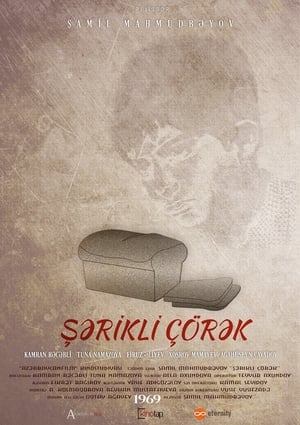
Murad, a young man fails the entrance exam to the Institute and starts working at the meat factory. His cousin Rustam, a worker on a building site, fights with him against the dishonest people who sell pieces of meat from the factory. After a series of dramatic situations, Murad and Rustam manage to uncover the thieves.
During the late 1980s and early 1990s the Armenian minority in Nagorono-Karabakh attempted to break away from Azerbaijan, one of the former Soviet republics. Overnight these former neighbors became enemies, and simple village folk were suddenly made hostages in a complex power game. One of the Azerbaijani villages right on the border is home to the family of the peasant farmer Kerim, who has just been captured by the Armenians. The village council decides to take an Armenian in order to arrange a hostage exchange. They imprison the wounded man in the barn next to Kerim's house, where his wife and three children desperately await the husband's return. The captive from the other side of the border finds himself in exactly the same situation - he, too, has three children, he finds it hard to scrape a living together, he has never done anything to harm anyone and, like Kerim, he just wants to go back home. But life in Karabakh is far more complex now. Blood calls for blood.
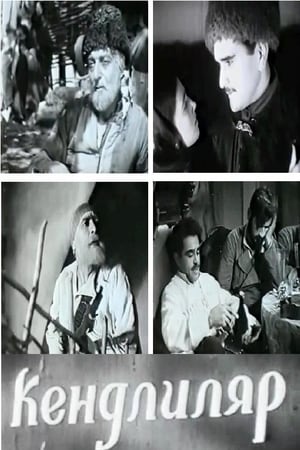
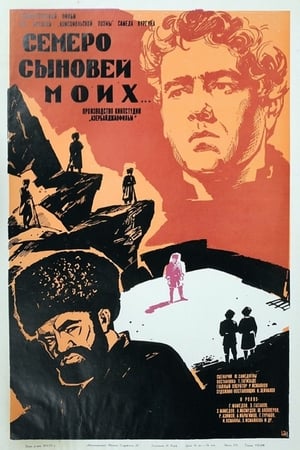
This film was based on Samad Vurgun's "Komsomol poem". Seven sons, like seven samurai become the seven komsomols (communist leaders) who were sent to a village to establish Soviet power. Seven sons become the romanticized images of people's heroes ready to take revenge.
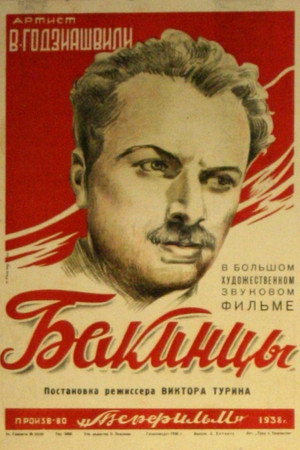
A historical revolutionary film depicting the struggle of peasants and the Baku proletariat against landowners and Musavatists in 1919.
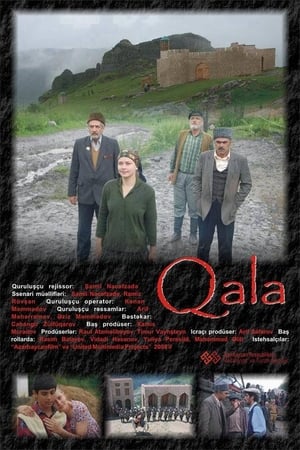
A drama about a film crew making a movie in an isolated mountain town famous for its ancient fortress, and what happens when the town is threatened by a modern-day foreign invasion.
Young scientist Jamal Zakhidov is convinced that the ruins of the ancient city of Aran are located in Azerbaijan. Zakhidov is seeking to organize an expedition to the area where he believes Aran is located. Zahidov's friend, a young archaeologist named Jalil, is also well versed in geology. He believes that the rocks he accidentally found at the foot of Gyzyl-Gaya contain valuable materials. But Imam-zade, a secret agent of a foreign intelligence service, steals these samples. The expedition members meet an old man named Murtaz. The old man recognizes Imam-zade as the son of Suleiman-bek, the former ruler of these lands, who killed geologist Karimov, who was conducting research here in 1920. Realizing that he has been exposed, Imam-zade blows up the cave in an attempt to destroy the expedition. But the locals rescue the expedition members. Imam-zade is detained by MGB officers. Uranium is found in the rocks discovered by Jalil at the excavation site...