The personal stories lived by the Uncle, the Father and the Son, respectively, form a tragic experience that is drawn along a line in time. This line is comparable to a crease in the pages of the family album, but also to a crack in the walls of the paternal house. It resembles the open wound created when drilling into a mountain, but also a scar in the collective imaginary of a society, where the idea of salvation finds its tragic destiny in the political struggle. What is at the end of that line? Will old war songs be enough to circumvent that destiny?
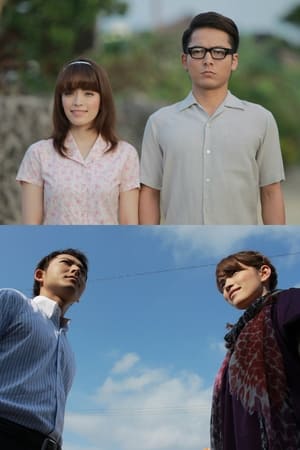
Satoshi returns to Taketomi Island to take part in his grandmother's 97th birthday 'mandala' party, a special celebration that's unique to this island. Just as he arrives at her house, he learns that she has just passed away. The next day from his grandmother's diary, they discover a long kept secret...
An old man needs a plastic toilet stool by the bed at night, but the health center can't deliver it, so the old man has to pick it up by himself.
A young boy and his young sister are playing on a rubbish dump, acting out their parents' divorce. For this they use their father's things which their mother brought to the dumping ground out of anger. The girl only wants to use their fathers things, but the boy finds something that he finds much more interesting.
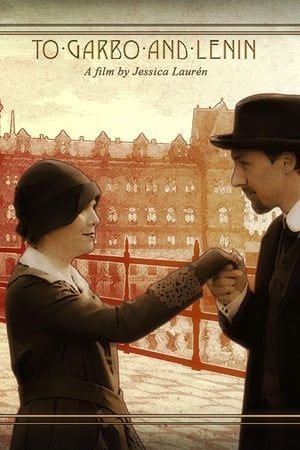
Greta Garbo and Vladimir Lenin meet at PUB department store in Stockholm in 1917. They both have lost a dream, and they start a conversation that remains all day while they are walking through the city.
In a country where everyone conceals their true face behind a mask, two children living in such a country fall in love. One of them breaks the prohibition to show thier face, The other did not have that courage. Those who have broken the prohibition must fight to the death. Whoever survives shall receive a reward.
The conflict between Dole Food Company and Swedish filmmaker Fredrik Gertten unfolds dramatically in the documentary "BIG BOYS GONE BANANAS!" as the corporation attempts to suppress Gertten's earlier film, "BANANAS!"—chronicling Nicaraguan workers' lawsuit against Dole. Initially selected for the 2009 Los Angeles Film Festival, "BANANAS!" was abruptly removed from competition, followed by a negative article in the Los Angeles Business Journal and legal threats from Dole's attorneys. Gertten captures this saga of corporate intimidation, media manipulation, and legal challenges in his documentary, showcasing the struggles documentary filmmakers face and highlighting the threat to freedom of speech posed by powerful corporations protecting their reputations.
Scenes from the life of composer Zdeněk Fibich accompanied by excerpts from his work in a poetic documentary... The story of the Czech artist is embodied in a single day in the life of his collaborator and lover Anežka Schulzová (Iveta Rálková). Between waking up in the morning and falling asleep at night, she brings fragments of her beloved man's life experiences to life in her memories. It is a drama of emotions that draws her into its trap. Fibich left the safe haven of his family for her love, seeking inspiration in passion and eroticism. This clearly tense human situation is complicated by Anežka's rival and Fibich's wife Betty.
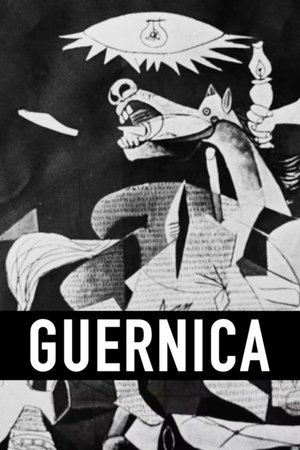
Alain Resnais & Robert Hessen use the famous Picasso mural "Guernica" in combination with newspaper headlines in an anti-war cry against the Spanish Civil War. Narration by Jacques Pruvost highlights the Guernica atrocity of April 1937, followed by a poem by Paul Eluard read by María Casares to a discordant score by Guy Bernard.
A graffiti artist in his early 20s, begins a 3½ year prison sentence for vandalism. He must attempt to cope with the struggles of his new life on the inside: sharing a cell with an aggressive murderer, being moved to high security, living 23 hours a day alone. An unlikely allay soon teaches him how to survive. Questions then begin to arise. Who can he trust? Will he ever find solace?
The day begins with an exchange of favours. An interview, a football game, cigarettes after cigarettes. Routine fragments of those who live in an isolated space which labels and conditions life choices.
When David Smallbone's successful music company collapses, he moves his family from Australia to the United States in search of a brighter future. With nothing more than their six children, their suitcases, and their love of music, David and his pregnant wife Helen set out to rebuild their lives from the ground up. Based on a remarkable true story, a mum's faith stands against all odds; and inspires her husband and children to hold onto theirs.
Introducing Horsin Dickler, who introduces the fundamental concepts surrounding the idea of explicit television.
Swanee River is a 1940 American biopic about Stephen Foster, a songwriter from Pittsburgh who falls in love with the South, marries a Southern girl, then is accused of sympathizing when the Civil War breaks out. Typical of 20th Century Fox biopics of the time, the film is more fictional than factual biography.
This biopic follows the story of Shakespearean actor Edwin Booth and his rise to fame. Edwin's career begins when he replaces his alcoholic father, the great actor Junius Brutus Booth, in a production of "Richard III" after Junius forgets his lines. As an adult, Edwin performs many lead roles and sparks a rivalry with his brother, John Wilkes. But after his brief time as a celebrity, Edwin's career is cut short by family tragedy.
A Russian flag bearer in World War II questions his will to fight. With a Russian flag as his weapon, he charges into machine guns. As war engulfs him, he must ask himself why he continues to wave his flag.
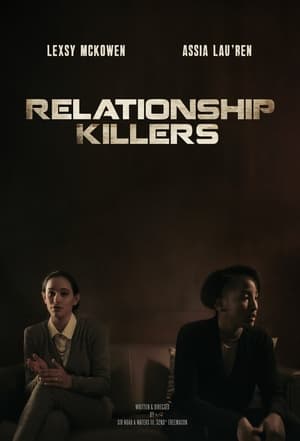
“Relationship Killers” is a dark, character driven, romantic suspense thriller about two women with a dark secret. They are nearing the end of their second year of marriage, and though they still love each other, the excitement of being newlyweds is starting to wear off. Now they are stuck with the knowledge of each other’s hot button locations and areas of sensitivities while growing increasingly fed up with each other’s idiosyncrasies.
Aryam receives a call from her employer, asking her to care for someone on her day off. Aryam reluctantly agrees, as it was her late father's birthday and she had plans. Aryam arrives at the Boyle's home and is faced by comments judging her ethnicity and religious attire, as she is a Muslim who always wears a headscarf. As Boyle's comments turn more discriminatory and reveal his disgust about his foreign neighbours, Aryam's patience reaches breaking point and she considers calling her employer to leave caring duties; however Aryam decides to stay put. Boyle lets slip his son ran away with an Asian woman, the reason for his discriminatory views, and Aryam reaches an understanding. Boyle's son's birthday was on this day too, and Aryam wonders if Boyle's son might be her father. Aryam decides to look after Boyle with greater affection, and offers to bake a cake for Boyle's son's birthday. She wheels him outside for the first time in several years, Boyle no longer alone.
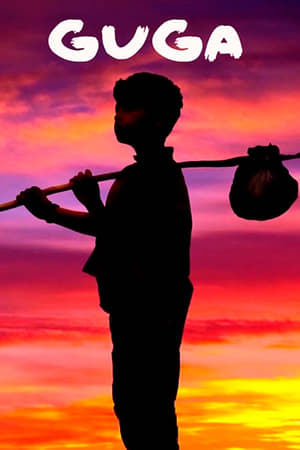
Guga
Prager Legende