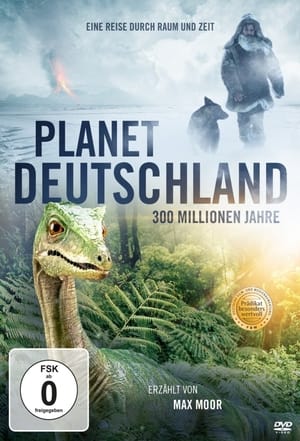
Documentary tells the story of Germany's origins from the Carboniferous period to the present day. It leads from the highest Alpine peaks to the rugged North Sea coasts - from the craters of the Eifel to the river labyrinth of the Spreewald. Back then - around 300 million years ago - giant dragonflies, for example, buzzed through dozens of meter-high fern forests. In the course of the Earth's history, however, we also encounter dying dinosaurs, meet rhinos and elephants on the Rhine and come across what is probably the first human in Heidelberg. Later, the Neanderthals appear and suddenly disappear again - for reasons that are still unknown. And finally, modern humans gradually spread and began to shape their environment.
Polish educational cartoon about dinosaurs
A mechanic discovers the fossil of a huge carnivorous dinosaur, unleashing a war between scientists, mayors and neighboring towns to keep “the biggest dinosaur in the world.” Among bone thefts, replicas and a mayor obsessed with creating Dinolandia, anything goes when it comes to surviving.
Les Dinosaures du pôle Sud
Avant jurassic park, L'apocalypse des dinosaures
Dinosaurs Vs. Apes: DINOSAUR MOVIES and HOLLYWOOD GOES APE! have been hailed as the definitive documentaries on the prehistoric and anthropoid creatures that have appeared on the silver screen. Filled with rare movie clips, behind-the-scenes footage and interviews.
In this documentary, we go back to the beginning and tell the origin story of Scotty the T. Rex and how it was discovered on that fateful day in 1991. We also showcase the lasting impact the discovery had on the town of Eastend and the Paleo world in Canada. In 2019, Scotty was proclaimed the biggest in the world. Believed to be a female, she measured over 13 m or just over 42.6 feet long and weighed over 8.8 metric tons. Discovered in the dinosaur-rich Frenchman Formation, Scotty's bones have been carefully preserved and are stored at the T. Rex Discovery Centre in Eastend, Saskatchewan.
Complete Anatomy: Tyrannosaurus
La fabuleuse histoire des oiseaux, des dinosaures parmi nous
Dallas Campbell delves in to the Horizon archive to discover how our ideas about dinosaurs have changed over the past 40 years. From realising that lumbering swamp dwellers were really agile warm blooded killers, astonishing new finds, controversial theories and breakthrough technology have enabled scientists to rethink how they lived and solve the mystery of their disappearance. And they can even reveal whether dinosaurs might still be with us today.
While dinosaurs may have been some of the mightiest creatures ever to have walked the earth, they also could have been among the most bizarre. With extreme, exaggerated body parts, some predators were loaded with outlandish or disproportionately sized appendages. Join world-renowned paleontologists and travel the globe to unearth some of the lesser-known but most surprising members of the dinosaur family: Mamenchisaurus, whose neck alone was longer than the rest of its body; Chasmosaurus, adorned with a fashionable crown of frilly spikes to attract the eyes of potential suitors; Spinosaurus, with massive extensions from its vertebrae that could have supported a sail or a hump; and Parasaurolophus, whose tube-like head crest may look odd to us, but was a mating magnet back in the day. Why did these animals ever adopt such strange appendages? What was their purpose - and why did these evolutionary changes die out?
The hunt for a mythic animal once thought to have been extinct for 65 million years: the coelacanth. It can be found 120 metres beneath the ocean off the wild coast of South Africa. French scientists and South African scientists teamed up with experienced Trimix divers, including Peter Timm, who discovered the coelacanths in Sodwana Bay in 2000 and award-winning underwater photographer Mr Laurent Ballesta and his advanced technical dive team to bring you this eye-opening documentary. Click on the play button above to watch a preview.
A documentary examining what the Tyrannosaurus Rex was really like - both appearance and behaviour - using the recent palaeontological and zoological research.
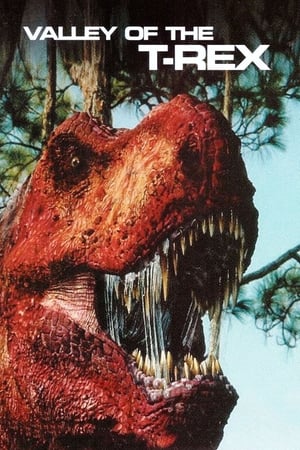
Valley of the T. rex is a Discovery Channel documentary, featuring paleontologist Jack Horner, that aired on September 10, 2001. The program shows Horner with his digging team as they travel to Hell Creek Formation in search for dinosaur fossils, while also following Horner as he presents his view of the theropod dinosaur Tyrannosaurus rex as a scavenger rather than a predator, as it is often portrayed in popular culture. Paleontologist Jack Horner finds the skeletons of five T-Rex dinosaurs in the badlands of Montana in a single summer, yielding fresh clues about T-Rex behavior.
T. Rex: Ultimate Survivor
Bigger than T. Rex
David Attenborough discovers that the descendants of the dinosaur age still thrive today. But how did they survive the cataclysmic events that wiped out their ancient ancestors?
A BBC miniseries about Nigel Marvin's quest to bring the extinct dinosaurs through time to Prehistoric Park.
A dinosaur-obsessed teen and his filmmaker father travel the world interviewing paleontologists about the latest discoveries, tracking down the crew of Jurassic Park, digging up 150-million-year-old bones, and meeting dino fanatics of all walks of life.
Sir David Attenborough investigates the discovery of a 200 million year old Ichthyosaur on the Jurassic Coast in southern England. Using state of the art technology and CGI David brings the story of the fossilised ichthyosaur out of the rock and shows us what this creature was really like as it lived during the Jurassic time period.