Filmed in the heart of the Gaza Strip in the spring of 2025 and produced by WeWorld as part of a project funded by the European Union, in collaboration with Save the Children, the film tells everyday stories of resistance and humanity: a barber who continues to welcome his clients amid the rubble, restoring dignity and beauty; Wafa, a woman who dedicates her life to children with disabilities or those who have been orphaned, offering care, education, play, and a sense of normalcy. An intimate narrative that illuminates the strength of the community even in one of the world's most fragile and war-torn contexts, like Gaza, where the population has been under constant attack for two years and under blockade for over 18 years.
Zdobyć miasto
The Blackprint explores what it means to be Black and British. will.i.am traveled the UK to meet civil rights heroes, schoolchildren and technology trailblazers while also exploring issues they face because of their race. A basic look at racial discrimination experienced by young Black men and women but also, where it began with the slave trade in the 1800s.
The film is based on a real story that happened in 1943 in the Sobibor concentration camp in German-occupied Poland. The main character of the movie is the Soviet-Jewish soldier Alexander Pechersky, who at that time was serving in the Red Army as a lieutenant. In October 1943, he was captured by the Nazis and deported to the Sobibor concentration camp, where Jews were being exterminated in gas chambers. But, in just 3 weeks, Alexander was able to plan an international uprising of prisoners from Poland and Western Europe. This uprising resulted in being the only successful one throughout the war, which led to the largest escape of prisoners from a Nazi concentration camp.
Upon Canada's entry into World War II, the RCMP rounded up thousands of people it considered fascist sympathizers. Among them, 700 Italian-Canadians were held for up to three years in internment camps. None were ever charged with a criminal offence.
An unconventionally seen story from the period of the Slovak National Uprising will especially interest you with the character of the village lad and brawler Vince Kucek, played by Ivan Romančík. Hours and hours spent in the pub, riots with friends, scenes of jealousy towards his old rival Petr Chuťek, now a partisan commander, hostile memories of the strict teacher Machoň – all this fills the seemingly carefree days of the self-confident farmer, father of two small children, husband of the faithful, devoted Eva. However, the situation in the village is getting worse. Some of the men go to fight in the mountains, but the stubborn Kucek refuses to go with them.
In the small town of Rechnitz a terrible crime against humanity was performed during the holocaust. Until now, no-one dares to talk about it.
"Long Dark Night" follows the life of the fictional character Iva Kolar: his experiences as a Croatian University student, his role as a Partisan fighting Hitler's troops during W.W. II, his involvement in his nation's post-war government, and his eventual downfall.
Biography of Admiral John Hoskins' efforts to retain active command despite WW2 injury.
October 2003, Alma and Lila Levy are excluded from the Lycée Henri Wallon in Aubervilliers solely because they were wearing a headscarf. What follows is a deafening political and media debate, justifying in most cases the exclusion of girls wearing head-scarves to school. February 2004, a law was eventually passed by the National Assembly. "A thinly veiled racism" is about this controversy since the affair of Creil in 1989 (where two schoolgirls were excluded for the same reasons) and attempts to "reveal" that maybe what hides behind is the desire to exclude these girls. This film gives them a voice as well as others - teachers, community activists, feminists, researchers - gathered around the group "A School for You-All" fighting for the repeal of this law they consider sexist and racist ... This movie was censured in Septembre 2004 in France.
Bardhi, an orphan boy, goes to the city to work in the house of a rich man, where he learns how to play the violin.
Nazi soldiers committed atrocities even when sober – and if they got drunk, they did even worse. The inhabitants of a Slovak village during the national uprising learn this when they have to accept an arrogant Hitlerite guard. When two soldiers go missing, the unit commander threatens to have five hostages executed for each of them as a warning. And he refuses to change his order, even when it turns out that drunkenness is to blame for the unfortunate incident. But the villagers get justifiably angry and take up arms.
After many years of confrontation, the treasures of Spain and France are empty. In 1721, the regent of France draws up an ambitious plan to inaugurate an era of peace and prosperity that will heal the economies of both nations: his intention is to build a solid network of marriage alliances that will involve four children of very different ages who know nothing of betrayals and power games…
A tribute to the important work of female nurses during World War II.
It's the hope that sustains the spirit of every GI: the dream of the day when he will finally return home. For three WWII veterans, the day has arrived. But for each man, the dream is about to become a nightmare.
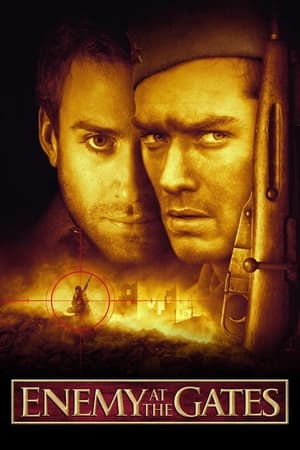
A Russian and a German sniper play a game of cat-and-mouse during the Battle of Stalingrad in WWII.
This often confronting documentary observes a Māori restorative justice model through the eyes of straight-talking Mike Hinton, manager of Restorative Justice at Manukau Urban Māori Authority. The bringing together of victims (including wider whānau) and offenders may offer an alternate way forward for "a criminal justice system failing too many and costing too much”. Restoring Hope kicked off Māori Television’s 2013 season of Sunday night documentaries. In a Herald On Sunday preview, Sarah Lang argued it was “enough to restore hope in local documentary-making.” I’m in an arena where people have high emotions, they get stressed and pressured. I’m reasonably confident that I can avoid situations where I’ll be unsafe. I don’t have any death wish — I’ve got a game of golf tomorrow. – Mike Hinton, on the dangers of the job
A commanding officer defends three scapegoats on trial for a failed offensive that occurred within the French Army in 1916.
For more than a decade, Reichsmarschall Hermann Goering, Adolf Hitler's right-hand man during the infamous Third Reich, assembled a collection of thousands of works of art that were meticulously catalogued.
In the early years of the 20th century, Mohandas K. Gandhi, a British-trained lawyer, forsakes all worldly possessions to take up the cause of Indian independence. Faced with armed resistance from the British government, Gandhi adopts a policy of 'passive resistance', endeavouring to win freedom for his people without resorting to bloodshed.