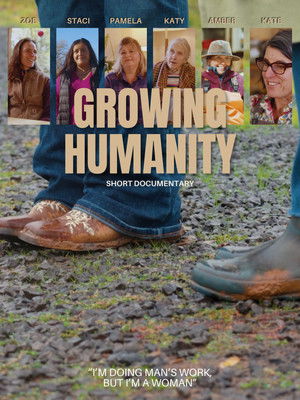
In a country ravaged by generational trauma, a psychiatrist trains grandmothers to treat depression within their communities.
The Bridge is a controversial documentary that shows people jumping to their death from the Golden Gate Bridge in San Francisco - the world's most popular suicide destination. Interviews with the victims' loved ones describe their lives and mental health.
Zuzia, a very sensitive teenager with an artistic talent, is struggling with a drug addiction. Her brother, the film director, decides to take a closer look at the family to understand what might have caused this difficult situation.
Incarcerated participants in a mental health experiment watch videos of sunset-soaked beaches, wildflowers and forests on loop, prompting them to reflect on isolation and wilderness. Equal parts meditation and provocation, Blue Room identifies the damage done by withholding access to the outdoors and how we are all prisoners when the essential human need for communion with nature is denied.
Using a variety of sources, SPYRAL follows one bipolar woman and the impact it has on her family.
When Harvard PhD student Jennifer Brea is struck down at 28 by a fever that leaves her bedridden, doctors tell her it’s "all in her head." Determined to live, she sets out on a virtual journey to document her story—and four other families' stories—fighting a disease medicine forgot.
ME: A Journey Within
This documentary follows the lives of several extraordinary people who have been diagnosed with social anxiety disorder. Through personal interviews, viewers learn about the symptoms, emotions, and challenges these people face and about the treatments available to help people on their road to recovery.
Around the world there has been a huge increase in the number of children being referred to gender clinics. Increasingly, parents are encouraged to adopt a 'gender affirmative' approach - fully supporting their children's change of identity. But is this approach right?
Crownsville Hospital: From Lunacy to Legacy is a feature-length documentary film highlighting the history of the Crownsville State Mental Hospital in Crownsville, MD.
The Wait to Nowhere: When a Crisis Goes Untreated reveals an unspeakable reality: children living in the ER for days, weeks and even months at a time, awaiting dedicated care. This film explores the issue and touches on solutions. True stories are told by those living this nightmare, including hospitals that are caught up in a failed system, while lawmakers help lay out a plan to address the crisis before even more children’s lives are lost.
In Fear, documentary filmmaker Michiel van Erp creates a collage of inhabitants of the city of Amsterdam who struggle with various anxiety disorders. Today, more patients with anxiety disorders seek professional help than those who suffer from depression, making anxiety the number one mental illness in the Netherlands. This film will show how a small number of those patients attempt to overcome their fears, in order to get on with their lives in the crowded cosmopolitan city that Amsterdam is today.
In "Diana: The Mourning After" Christopher Hitchens sets out to examine the bogusness of "a nation's grief", tries to uncover the few voices of sanity that cut against the grain of contrived hysteria. His findings suggested that the collective hordes of emotive Dianaphiles sobbing in the streets were not only encouraged but emulated by the media. In the aftermath of Diana's death a three-line whip was enforced on newspapers and on TV, selling the sainthood line wholesale. The suspicion was that journalists, like the public, greeted the death as a chance to wax emotional in print, as a change from the customary knowing cynicism, to wheel out all those portentous phrases they'd been saving up for the big occasion. Sadly, they just seemed to be showboating; the eulogies, laments and tear-soaked platitudes ringing risibly hollow.
Is there a mental health crisis in agriculture in Colorado? Farming and ranching has become increasingly difficult over the years. An industry that is typically viewed as romantic, hardworking, and "salt-of-the earth" is actually a job full of tremendous stress outside of anyone's control. Combine that with the enormous generational pressure to continue the family farm, and you have a large group of people that are suffering silently. How do we take care of those that are taking care of us?
In the French music world, the beginning of the 2000s was marked by the arrival of a young rapper, Diam's. Over the course of three albums, she has become a phenomenon in France, as well as in many countries around the world. Diam's has won some of the most prestigious awards in French music, graced the covers of countless magazines, and sold millions of records. However, in 2010, at the height of her fame, Diam's made a life choice that shocked the French: she converted to Islam. How did a tortured and suicidal artist find her way to peace? For the first time Diam's, known to her family as Mélanie, tells us the real story.
We are in a room where people tell each other experiences that are not actually told to each other. These are experiences that they have had themselves and experiences of people who are very close to them. It's about fear and violence. It's about families that are destroyed. It is about existence.
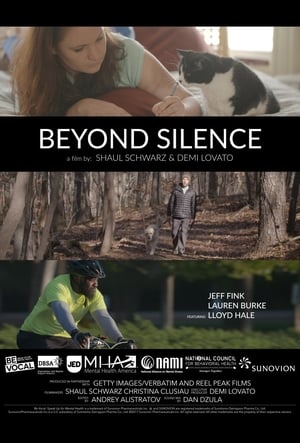
The lives of Jeff, Lauren and Lloyd—three very different people who share one common experience—have been transformed by speaking up for mental health. These inspiring stories depict what mental health in America really looks like and highlights just how important it is to speak up and seek help.
David Harewood had a psychotic breakdown and was sectioned in his 20s. David traces his steps, meeting young people living with psychosis and the NHS professionals who treat them.
Alastair Campbell candidly talks about his experience living with depression and explores if radical new treatments can make a difference.
Using home videos recorded by her voice coach, Diana takes us through the story of her life.