This is the legendary meeting between a young filmmaker and one of the masters of surrealism: the spanish painter Óscar Domínguez, born in La Laguna, Tenerife, in 1906, died in Paris in 1957. In the "Visite," the artist -admirer of Picasso, rebellious disciple of Breton- is presented in solitude, far from the tumult of the exhibitions and parisian circles. An austere approach, almost “povera”, with no audio, nor flashy camera movements, but rarely attractive. Why Resnais could not finish his movie? Hope one of our experts help us to solve the mystery.
Iggy Pop reads and recites Michel Houellebecq’s manifesto. The documentary features real people from Houellebecq’s life with the text based on their life stories.
Taking its lead from French artists like Renoir and Monet, the American impressionist movement followed its own path which over a forty-year period reveals as much about America as a nation as it does about its art as a creative power-house. It’s a story closely tied to a love of gardens and a desire to preserve nature in a rapidly urbanizing nation. Travelling to studios, gardens and iconic locations throughout the United States, UK and France, this mesmerising film is a feast for the eyes. The Artist’s Garden: American Impressionism features the sell-out exhibition The Artist’s Garden: American Impressionism and the Garden Movement, 1887–1920 that began at the Pennsylvania Academy of the Fine Arts and ended at the Florence Griswold Museum, Old Lyme, Connecticut.
Roger Boussinot directed this episode of the French television show Italiques, which features an overview of the art and career of Fantastic Planet illustrator Roland Topor. It aired on August 8, 1974.
Klaus Kinski has perhaps the most ferocious reputation of all screen actors: his volatility was documented to electrifying effect in Werner Herzog’s 1999 portrait My Best Fiend. This documentary provides further fascinating insight into the talent and the tantrums of the great man. Beset by hecklers, Kinski tries to deliver an epic monologue about the life of Christ (with whom he perhaps identifies a little too closely). The performance becomes a stand-off, as Kinski fights for control of the crowd and alters the words to bait his tormentors. Indispensable for Kinski fans, and a riveting introduction for newcomers, this is a unique document, which Variety called ‘a time capsule of societal ideals and personal demons.’
A remarkable walk through the life and work of the French artist Marcel Duchamp (1887-1968), one of the most important creators of the 20th century, revolutionary of arts, aesthetics and pop culture.
Hans Haacke is a key figure in contemporary art whose work intersects with conceptual, pop, minimal and land art. The artist is particularly known for his research into the hidden economies and politics of the art world and the repressed histories of places and peoples. Haacke's strong political, cultural and social concerns are reflected in his installations, texts and sculptures.
In the 50 years since he carved his first totem pole, Robert Davidson has come to be regarded as one of the world’s foremost modern artists. Charles Wilkinson (Haida Gwaii: On the Edge of the World) brings his trademark inquisitiveness and craftsmanship to this revealing portrait of an unassuming living legend. Weaving together engaging interviews with the artist, his offspring, and a host of admirers, Haida Modern extols the sweeping impact of both Davidson’s artwork and the legions it’s inspired.
William Hart McNichols is a world renowned artist, heralded by Time magazine as "among the most famous creators of Christian iconic images in the world". As a young Catholic priest from 1983-1990 he was immersed in a life-altering journey working as a chaplain at St. Vincent's AIDS hospice in New York city. It was during this time that he became an early pioneer for LGBT rights within the Catholic church. "The Boy Who Found Gold" is a cinematic journey into the art and spirit of William Hart McNichols. The film follows his colorful life as he crosses paths with presidents, popes, martyrs, and parishioners, finding an insightful lesson with each encounter. McNichols' message as a priest, artist and man speaks to the most powerful element of the human spirit: Mercy.
A short documentary illustrating how art can influence public perception towards environmental issues. Green Patriot Posters is a highly acclaimed multimedia design campaign that challenges artists to deepen public understanding and ignite collective action in the fight against climate change. So far, it has reached five million people through print media, public space and digital culture. The film features interviews with key Green Patriot Posters contributors (Shepard Fairey, Michael Bierut, DJ Spooky, Mathilde Fallot) and its founders (The Canary Project, Dmitri Siegel).
Writer and artist Matthew Collings reveals the use of light by artist JMW Turner, through a biography of the artist's life-long fascination with the River Thames, London.
With his soaring falsetto and magnetic yet understated stage presence, Jimmy Somerville burst onto the 1980s new wave scene, making the world dance to songs rooted in struggle and resilience. From the harsh realities of Glasgow’s working-class neighborhoods to the challenges of growing up gay in a hostile world, and the devastating impact of the AIDS crisis, Somerville transformed pain into anthems of freedom. First with Bronski Beat, then The Communards, and later as a solo artist, he became both rebel and diva—the unmistakable voice of a generation fighting for equality. Through intimate stories from those who have stood by him for four decades, this portrait reveals a rare artist who has never wavered in his convictions.
A documentary-style capturing of the life of Ab, a young struggling artist trying to find her way, all while dealing with unwanted company.
The feature-length documentary Fakir portrays the success of fakirism in Brazil, Latin America and France. This circus art origin show is presented and analyzed through archives that reveals the success of these presentations with their pain resistance championships and the great public presence, including politicians and government officials. Fakir spans current footage from contemporary artists who keep this art alive in performances and shows.
A short documentary about Patrick Noze, his art and journey as a migrant in America.
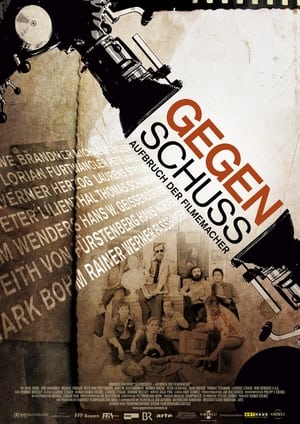
Documentary about filmmakers of the New German Cinema who were members of the legendary Filmverlag für Autoren (Film Publishing House for Authors). Among them are Werner Herzog, Rainer Werner Fassbinder, and Wim Wenders.
Describing herself as a 'street queen,' Johnson was a legendary fixture in New York City’s gay ghetto and a tireless voice for LGBT pride since the days of Stonewall, who along with fellow trans icon Sylvia Rivera, founded Street Transvestites Action Revolutionaries (S.T.A.R.), a trans activist group based in the heart of NYC’s Greenwich Village. Her death in 1992 was declared a suicide by the NYPD, but friends never accepted that version of events. Structured as a whodunit, with activist Victoria Cruz cast as detective and audience surrogate, The Death and Life of Marsha P. Johnson celebrates the lasting political legacy of Johnson, while seeking to finally solve the mystery of her unexplained death.
A personal, accessible look at an artist - Kevin Barnes, frontman of the endlessly versatile indie pop band of Montreal - whose pursuit to make transcendent music at all costs drives him to value art over human relationships. As he struggles with all of those around him, family and bandmates alike, he's forced to reconsider the future of the band, begging the question - is this really worth it?
Traces the life and mental illness of New York artist and photographer Ruth Litoff, and her sister's struggle to come to terms with her tragic suicide.
An intimate portrait of David Hockney, featuring interviews with the artist - one of Britain's most beloved painters - in London and Normandy, and exclusive new footage of a master at work.