Documentary about what makes a house a home.
Angie, a poverty-stricken young mother, is taking care of her son and alcoholic mother when she is evicted from her house. Now she has to get money from the only person she knows with any - the man who abused her as a child.
Egypt, nicknamed "the mother of the world" by its people, is unrecognizable. Gigantic construction sites have sprung up in the desert at an exponential rate, including roads, bridges, and megaprojects on the Mediterranean coast. This new Egypt is an illusion: in 10 years, the population has sunk into unprecedented poverty. The regime shows no mercy to the poor. Abdel Fattah el-Sisi, the new pharaoh, and his army have set up a pyramid-shaped financial system, built on subsidies from major international institutions—including the European Union—and foreign investment. The most populous nation in the Arab world finds itself on the brink of collapse.
The story of Shaista, a young man who—newly married to Benazir and living in a camp for displaced persons in Kabul—struggles to balance his dreams of being the first from his tribe to join the Afghan National Army with the responsibilities of starting a family. Even as Shaista’s love for Benazir is palpable, the choices he must make to build a life with her have profound consequences.
A boy living in an abandoned cinema meets a young girl. As their friendship develops, the boy entertains the other cinema residents with stories and shadow puppets.
The introvert Russian girl Nadia goes on holiday to Belgrade, inhabited by extrovert Serbians. She lives according to a plan, while the Belgraders live for joy. At first, Nadia is involved with the local guy Nesha, and then with his relaxed, semi-vagrant way of life. She takes the impulsive decision to give up her dull job and Moscow for the sake of love, freedom and Belgrade. Both this love, and this freedom must undergo the test of reality, which is always more difficult than our expectations.
In 1843, despite the fact that Dickens is a successful writer, the failure of his latest book puts his career at a crossroads, until the moment when, struggling with inspiration and confronting reality with his childhood memories, a new character is born in the depths of his troubled mind; an old, lonely, embittered man, so vivid, so human, that a whole world grows around him, a story so inspiring that changed the meaning of Christmas forever.
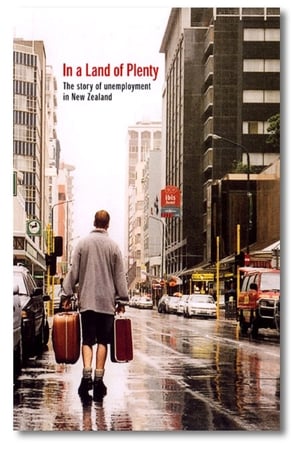
The story of unemployment in New Zealand and In A Land of Plenty is an exploration of just that; it takes as its starting point the consensus from The Depression onwards that Godzone economic policy should focus on achieving full employment, and explores how this was radically shifted by the 1984 Labour government. Director Alister Barry's perspective is clear, as he trains a humanist lens on ‘Rogernomics' to argue for the policy's negative effects on society, as a new poverty-stricken underclass developed.
A near-penniless drifter's journey to Alaska in search of work is interrupted when she loses her dog while attempting to shoplift food for it.
Tony, Pol and Baby are three friends that get together to search a solution to their project for the future, at a standstill. They criticize constantly the system and the other people's precariousness, without realizing that they share the same feeling of poverty.
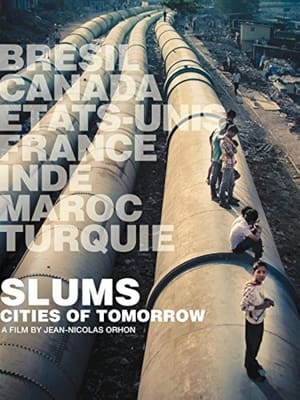
One billion people on our planet—one in six—live in shantytowns, slums or squats. Slums: Cities of Tomorrow challenges conventional thinking to propose that slums are in fact the solution, not the problem, to urban overcrowding caused by the massive migration of people to cities. (Lynne Fernie, HotDocs)
When a precious little girl dies tragically of a rare heart condition, her grieving parents are left to pick up the pieces of their once perfect life. In a sequence of events influenced by faith (and perhaps miracles), they are guided to a homeless girl on the streets, and a battle ensues to reunite as a family and heal their broken hearts.
小さな橋で
Kaj is a stubborn man with a great deal of pride. The former chef lives in a council flat. He has wasted his life and is now on a council job training scheme for the long-term unemployed, where he refuses to let the foreman of the activation project boss him about. When Kaj's daughter, with whom he has not been in touch for nineteen years, moves into the same council estate on the run from her violent husband, a change comes over Kaj. His initial instinct is to avoid her, but by chance he ends up helping to look after Jonas, her six-year-old son. For the first time for years Kaj need not survive on his own devices. Now he has responsibilities and a family of his own.
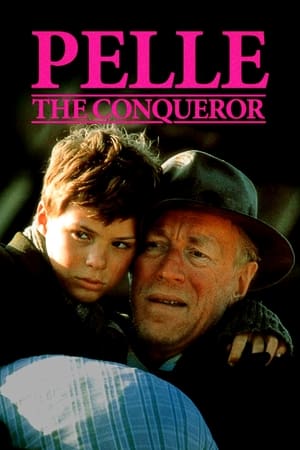
In the late 19th century, two Swedish emigrants, Lasse Karlsson and his son Pelle, arrive on the Danish island of Bornholm hoping to find work on a farm and save enough money to travel to the United States of America.
Young, impulsive Rosetta lives a hard and stressful life as she struggles to support herself and her alcoholic mother. Refusing all charity, she is desperate to maintain a dignified job.
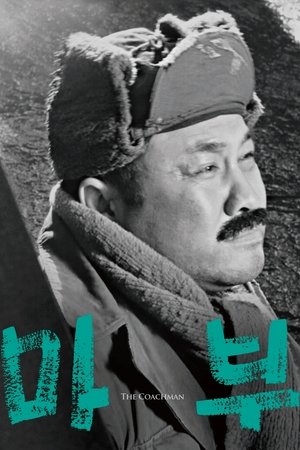
A man tries to raise his two sons and two daughters under some of the most adverse conditions known to man. The father operates a horse-drawn cart, but in a city that is modernizing after the destruction of the Korean War, automobiles are making carts obsolete. The children are experiencing difficulties as well. The eldest son has flunked the bar exam twice and is not hopeful of passing it a third time to become a lawyer. The eldest daughter is mute and married to an abusive husband. The younger daughter tries to pose as a rich university student to move up in life. The youngest son has a penchant for petty theft.
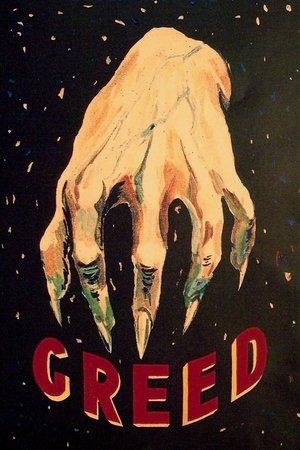
When housewife Trina wins the lottery, her comfortable life with her dentist husband John slowly deteriorates, in part by her own increasing paranoia and partly by the machinations of villainous acquaintance Marcus.
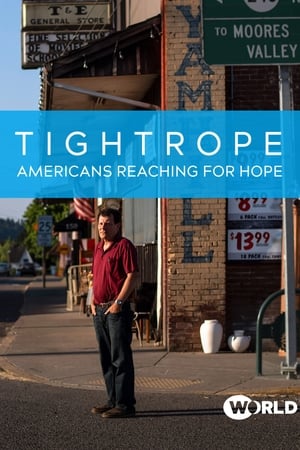
Pulitzer Prize-winning journalists Nicholas Kristof and Sheryl WuDunn explore the causes and costs of addiction, poverty and incarceration plaguing America, from the inner city to small towns like Kristof's hometown of Yamhill, Oregon. While pockets of empathy and aid exist, are they enough to rescue the thousands of Americans in despair, for whom the American Dream of self-reliance is impossibly out of reach?
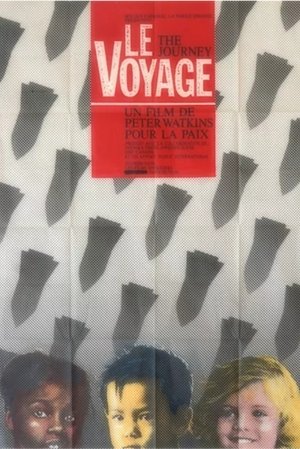
Peter Watkins' global look at the impact of military use of nuclear technology and people's perception of it, as well as a meditation on the inherent bias of the media, and documentaries themselves.