Produced for Epcot Educational program. Short animated film telling of the geological and meteorological aspects of the ocean
Slated for inclusions on the Boston based Infinity Factory educational program alongside Map Projections, Digging to China explores a familiar childhood activity on a global scale.
Magie Venezuely
Joseph Vallot, geographer, naturalist and mountaineer born in 1854 in Lodève, was a visionary man, full of humor and whose curiosity was insatiable. He had spent some forty years of his life studying the Mont Blanc massif, sacrificing a good part of his fortune to this multifaceted passion. He was notably the first to demonstrate that one could sleep, work and even do science at an altitude of over 4000 meters, at a time when ascents to the summit of Western Europe were still adventurous expeditions. This documentary tribute follows in his footsteps, via the route taken at the time, on foot from Chamonix via the Grands Mulets refuge to the summit of Mont Blanc to the Joseph Vallot observatory nestled at an altitude of 4400m, with a team of guides, journalists and scientists.
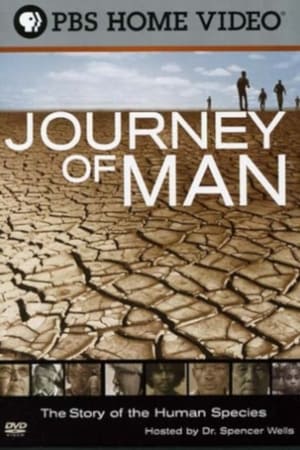
Many geneticists and archaeologists have long surmised that human life began in Africa. Dr. Spencer Wells, one of a group of scientists studying the origin of human life, offers evidence and theories to support such a thesis in this PBS special. He claims that Africa was populated by only a few thousand people that some deserted their homeland in a conquest that has resulted in global domination.
It shows the Neretva river from its source to the shores of the Adriatic Sea. The document also captures the original four-hundred-year-old bridge in Mostar.
Take to the sky and come face-to-face with Washington states majestic mountains, including one of the Pacific Northwests most well-known symbols: Mount Rainier. Celebrate the diversity of the states landscapes in Over Washington, from the glittering Puget Sound in the west to the rolling Palouse in the east. Stunning aerial cinematography and original music bring these spectacular images to life.
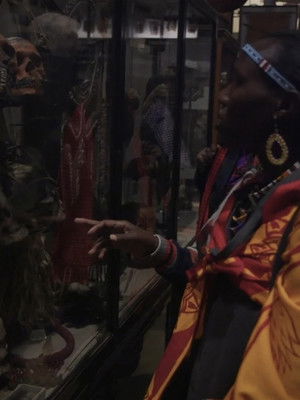
Decolonising the Curatorial Process is a forty-minute documentary which explores decolonial strategies in an academic and curatorial context. The film features academics, activists and practitioners, and contains case studies of institutions that are deploying critical, self-reflective forms of curatorial practice. The Museum of London Docklands exhibition on slavery and the sugar industry is examined as an example of how an institution can decolonise the curatorial process, utilise the work of artists in a museum context, and critically examine East London's imperial history. The Pitt Rivers museum in Oxford, who are working with Maasai activists from Kenya and Tanzania on a project centred on repatriating the museum's collection of sacred Maasai artefacts, also features in the film.
Tábor
A New Yorker journeys to the jungle in the Darien Gap of Panama to reconnect with an indigenous tribe he met and photographed 20 years ago. Their reunion highlights the profound power of photos and the human connection that transcends cultural barriers.
This short-length documentary takes us to Agadir, a city in Morocco that was struck by an earthquake in 1960. The film, made by an expatriate Moroccan who lost family and friends in the disaster, is a memorial to that tragedy and to the past he left behind when he came to North America. Partly allegorical, it employs varying techniques to offset reality from fantasy sequences.
Take an unprecedented visual journey into Planet Water. Water Life captures extraordinary locations and intimate animal behavior never before seen on film. Two years in the making, this groundbreaking series takes viewers on an unprecedented visual journey to aquatic ecosystems on five continents to reveal how water shapes and sculpts the landscape and provides food and refuge for an astonishing array of species. This epic series tells water's story as never before to engage viewers in vital discussions about how water must be conserved and preserved. Learn the impact of climate change, pollution and other factors that are changing the environment and affecting each and every one of us.
A group of people setting out to find a previously assumed land and upon reaching it, not knowing how to deal with the customs of the place, have to deal with all the consequences.
Echoes from the Tian Shan
Píseň jižních Čech
The Zambezi is one of the world's great rivers, yet apart from the spectacular Victoria Falls, large parts of its course are virtually unknown. Never before has this mighty river been portrayed so comprehensively on film as in this two-part series. The Zambezi flows through the continent's most magnificent ecosystems and offers a glimpse of all the classic African animal species. It forms a lifeline through Africa's most impressive landscapes and determines the fate of the indigenous people and all other forms of life.
This first co-production of the Soviet and Indian cinematographers is dedicated to the Tver merchant Afanasy Nikitin who in 1466-1472 blazed the trade way from Europe to India. The film is based on Nikitin’s travel notes. Starring in the film are popular Russian actor Oleg Strizhenov and India’s 1950s movie star Nargis.
Minnesota: A History of the Land vividly brings to life the epic story of the people and landscapes of Minnesota. From the retreat of the last ice sheets to the growth of today’s suburbs – the series seeks to entertain as it enriches our understanding of Minnesota’s past, present, and future. A visually stunning and groundbreaking 4-part documentary series featuring nature videography from across the state, never before seen historic images, state-of-the-art animations and historic recreations. Original soundtrack by award-winning composer, Peter Ostroushko.
In 2013, the world's media reported on a shocking mountain-high brawl as European climbers fled a mob of angry Sherpas. Director Jennifer Peedom and her team set out to uncover the cause of this altercation, intending to film the 2014 climbing season from the Sherpa's point-of-view. Instead, they captured Everest's greatest tragedy, when a huge block of ice crashed down onto the climbing route...
The interview, held on January 4, 2001, was the last given by Professor Milton Santos, who died from cancer on June 24 of the same year. The geographer is gone, but his thoughts remains. Its political and cultural ideals inspire the debate on Brazilian society and the construction of a new world. His statement is a true testimony, a lesson that the world can be better. Based on geography, Milton Santos performs a reading of the contemporary world that reveals the different faces of the phenomenon of globalization. It is in the evidence of contradictions and paradoxes that constitute everyday life that Milton Santos sees the possibilities of building another reality. He innovates when, instead of standing against globalization, proposes and points out ways for another globalization.