New York Times reporter Sydney Schanberg is on assignment covering the Cambodian Civil War, with the help of local interpreter Dith Pran and American photojournalist Al Rockoff. When the U.S. Army pulls out amid escalating violence, Schanberg makes exit arrangements for Pran and his family. Pran, however, tells Schanberg he intends to stay in Cambodia to help cover the unfolding story — a decision he may regret as the Khmer Rouge rebels move in.
Documentary of the S-21 genocide prison in Phnom Penh with interviews of prisoners and guards. On the search for reasons why this could have happened.
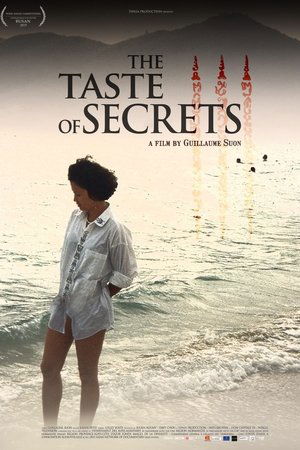
Two decades after forging an unlikely alliance in Pol Pot's Cambodia, a French ethnologist and a former Khmer Rouge official meet again after the latter is arrested for crimes against humanity.
Through daily routines in a rural village, an indigenous elder couple recall their strange marriage to their grand-daughter, and sometimes to each other, in the changing rhythm of nature around them.
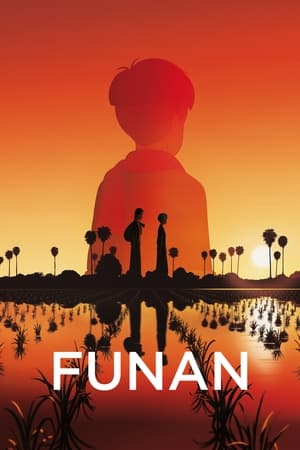
Cambodia, once the ancient kingdom of Funan, April 17th, 1975. The entire country falls under the tyranny of Angkar, the communist party of the Khmer Rouge. The cities are abandoned, the population is thrown to the roads and forced to walk towards an uncertain future…
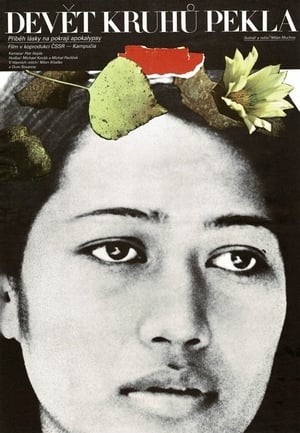
As the Khmer Rouge carves a path of death throughout the land, a Czech doctor falls in love with a Cambodian woman. Their relationship, though sorely strained by the war's horrors, produces a child. The doctor is separated from his family once Pol Pot assumes control.
A lost film, buried beneath Cambodia's killing fields, reveals different versions of the truth. A contemporary story about love, family and the ghosts of Cambodia's past.
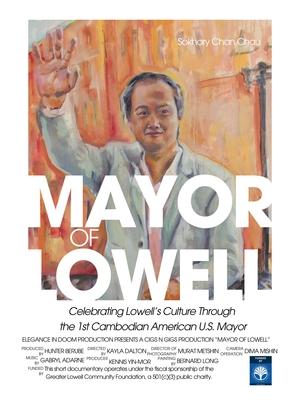
This short documentary chronicles the culture and arts of Cambodian Americans and the Lowell, MA community through the eyes of Sokhary Chau, the first Cambodian American Mayor in the United States. Chau immigrated to the U.S. at seven years old to escape the Khmer Rouge genocide. Through this unique story that showcases the best of Lowell—immigrant success, assimilation, history, and the development of the arts—we see a man born into a war-torn country who comes to America to be a first-in-the-nation leader.
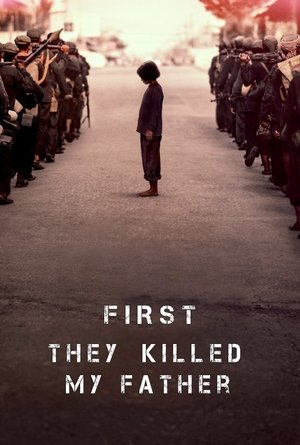
A 5-year-old girl embarks on a harrowing quest for survival amid the sudden rise and terrifying reign of the Khmer Rouge in Cambodia.
A fictionalised account of the brutal oppression experienced by a family living in a labour camp headed by malicious cadres.
Tut is a 52-year-old fisherman living in Kampot. In spite of the language barrier, he recounts for the first time and without any words his past during the Khmer Rouge regime, demonstrating the torture he experienced in prison the year he turned fifteen.
A moving psychological portrait of Cambodia decades after a devastating genocide, examining how baksbat (Khmer for "broken courage") continues to impact modern Cambodia.
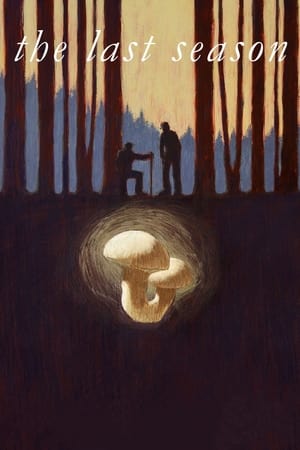
In search of the lucrative matsutake mushroom, two former soldiers discover the means to gradually heal their wounds of war. Roger, a self-described 'fall-down drunk' and sniper in Vietnam, and Kouy, a Cambodian refugee who fought the Khmer Rouge, bonded in the bustling tent-city known as Mushroom Camp, which pops up each autumn in the Oregon woods. Their friendship became an adoptive family; according to a Cambodian custom, if you lose your family like Kouy, you must rebuilt it anew. Now, however, this new family could be lost. Roger's health is declining and trauma flashbacks rack his mind; Kouy gently aids his family before the snow falls and the hunting season ends, signaling his time to leave.
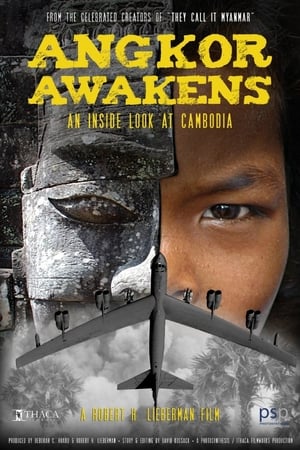
Documentary about Cambodia featuring a long interview with Pol Pot
Based upon documentation of forced confessions made during the Khmer Rouge era in Cambodia, this film reconstructs the relationship of a young woman, Hout Bophana, and Ly Sitha before they were tortured in executed in 1977.
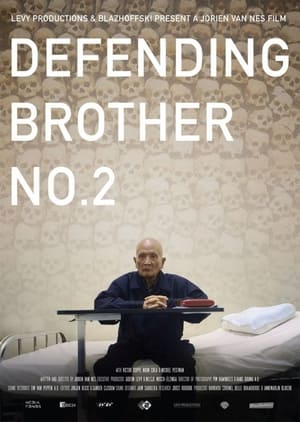
Two Dutch lawyers, Michiel Pestman and Victor Koppe, travel to Cambodia in 2011 to defend Nuon Chea in an international tribunal. Nuon Chea, also known as Brother No. 2, was the second man after Pol Pot in the Khmer Rouge regime. He is being charged with mass murder and crimes against humanity. For four years, the documentary follows the lawyers in their attempt to give this man a fair trial, but the UN tribunal is beset by local interests and a government which consists partly of other former members of the Khmer Rouge who would really like all of the blame to rest solely on the defendant. What should've been the crowning achievement in the careers of the lawyers turns out very different.
The story of Thun Chay, a Cambodian who was left behind by his mother in a refugee camp during their escape from the Red Khmer and the civil war in their home country.
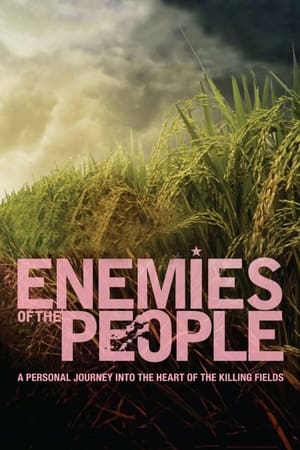
The Khmer Rouge slaughtered nearly two million people in the late 1970s. Yet the Killing Fields of Cambodia remain unexplained. Until now. Enter Thet Sambath, an unassuming, yet cunning, investigative journalist who spends a decade of his life gaining the trust of the men and women who perpetrated the massacres. From the foot soldiers who slit throats to Pol Pot's right-hand man, the notorious Brother Number Two, Sambath records shocking testimony never before seen or heard. Having neglected his own family for years, Sambath's work comes at a price. But his is a personal mission. He lost his parents and his siblings in the Killing Fields. Amidst his journey to discover why his family died, we come to understand for the first time the real story of Cambodia's tragedy.
My mother always refused to speak about her childhood during the Cambodian genocide. Upset by her silence, my brother and I decide to follow Antoine, a grandson of Armenian genocide survivors, photographing the ghosts of his ancestors in the Middle East.
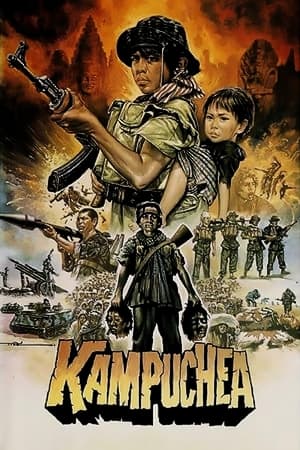
After seeing his parents and grandmother killed by the Vietnamese, a 12 year old Khmer boy flees with his baby sister in an attempt to reach safety in Thailand. On the way he befriends a group of Khmer fighters.