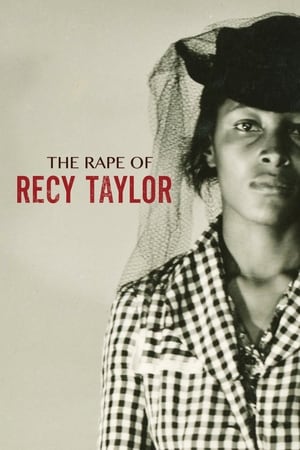
Recy Taylor, a 24-year-old black mother and sharecropper, was gang raped by six white boys in 1944 Alabama. Common in Jim Crow South, few women spoke up in fear for their lives. Not Recy Taylor, who bravely identified her rapists. The NAACP sent its chief rape investigator Rosa Parks, who rallied support and triggered an unprecedented outcry for justice. The film exposes a legacy of physical abuse of black women and reveals Rosa Parks’ intimate role in Recy Taylor’s story.
Die Lust der Frauen
FOR MY SISTERS is a movie about black culture or rather: black women, specifially: a movie about black singers. Alberta Hunter, Sarah Vaughan, Carmen McRae, Nina Simone. They are the four "Big Sisters", singer Carole Alston follows through to the age of jazz. Alston, "a voice as dark and sweet as molasses", as described by the Financial Times, was born in Washington, DC and has been living in Vienna for almost 30 years. She is sure: "Those four icons help you explain what jazz is and even the history of jazz right along."
This documentary tells the story of three grandmothers who earn a living as prostitutes. Christel, Paula and Karolina either work in their own apartment, in a brothel, or receive clients at a dominatrix studio. They have no desire to justify what they do, nor do they make a show of their profession. These three women are engaged in a constant merry-go-round of slipping into different identities, selling dreams and trying to manage their own private life. Their multifaceted personalities make it clear just how differently they go about their trade, and what made them choose to earn their bread as a sex worker. The film provides an insight in to the lives of Christel, Paula and Karolina and their sometimes surprisingly middle-class routine.
A plea for the liberation of female sexuality in the 21st century. The film questions millennial patriarchal structures, as well as todays omnipresent porn culture. It accompanies five extraordinary women around the globe, reveals universal contexts and shows the successful fight of these courageous women for a self-determined female sexuality and an equal, passionate relationship between the sexes.
A documentary about slutshaming.
The Truth About Female Desire
In 2018, can we speak freely about female sexuality? It all begins with a bold question: “What do French women do in bed?” The interviewees describe their sexual practices, their desires, and their boundaries. Are they more fulfilled and uninhibited than the generations before them?
In Pakistan, the public space is dominated by men. The confidence with which they walk the streets or weight train quickly disappears once they are confronted with female sexuality. Off-screen, several anonymous women talk about their sexuality. The images of the conventional partiarchal society are in sharp contrast to the liberating explicitness of the accounts of clit stimulation, sex with multiple partners, pissing, abortions, and rape.
With candor, humour and courage, a group of African-Canadian women challenge cultural taboos surrounding female sexuality and fight to take back ownership of their bodies. Combining her own journey with personal accounts from some of her radiant, endearing friends, co-director Habibata Ouarme explores the phenomenon of female genital mutilation and the road to individual and collective healing, both in Africa and in Canada.
Even now, in times of an ubiquitous sexualisation of everyday life, the female orgasm continues to remain a mystery. In the documentary essay LA PETITE MORT, women of different ages and with different sexual preferences share how they experience orgasms, describe what it feels like and open up about a failed climax. Removed from pornography and excessive eroticism, they open up in indirect conversation with director-narrator Annie Gisler, who illustrates the sensual narratives of her protagonists with poetic, abstract and metaphorical images. Driven by the desire to overcome taboos and expectations that still overshadow female sexuality, the young Swiss filmmaker provides a sensitive and humorous examination of feminine intimacy in all its multifaceted richness. A dialogue among women, for women. And men.
“I don’t want to feel like it’s only me. I know it’s not only me, because there are others out there…” ‘I Don’t Protest, I Just Dance In My Shadow’ is a short visual essay film by artist animator, Jessica Ashman, about navigating the visual art and animation world as a black face in a white space. Using animation and recorded interviews of eight other women of colour artists, ‘I Don’t Protest, I Just Dance In My Shadow’ is an abstract confessional from the director herself: a visualisation of the joy, frustration, wishes and dreams of what it feels like to be a black women and a woman of colour artist, creating and existing.
Topics about female sexuality are growing in popularity. Magazines and talk shows all discuss it. Yet a fair percentage of women are said to suffer from female sexual dysfunction. While male sexual problems have traditionally received the most publicity, only recently has research begun into the problems that plague female sexuality. This film looks at the medical, cultural, psychological and relational reasons for women's dysfunction, and explores female arousal and its anatomical basis.
The sexual revolution of the '70s has allowed women to claim their right to pleasure and to better know their body. However, 30 years later, the female orgasm remains mysterious to a lot of people - both men and women. During the 1970's the sexual revolution enabled women the ability to lay claim to a right of pleasure in the bedroom; for the first time in public society, women were able to better understand their own bodies and discover what it actually is that enables/causes the orgasm. However, we are now 40 years since that revolution and for many men the onset and occurrence of feminine orgasm remains a total mystery.
A portrait of the dancer Hanna Väätäinen, a friend of the artist, experiences her body after her hand was paralysed in childhood following a neck fracture.
In 1810, 20 year old Sara Baartman got on a boat from Cape Town to London, unaware that she would never see her home again, or that she would become the icon of racial inferiority and black female sexuality for the next 100 years. Four years later, she became the object of scientific research that formed the bedrock of European ideas about BFS. She died the next year, but even after her death, Sara remained an object of imperialist scientific investigation. In the name of Science, her sexual organs and brain were preserved and displayed in the Musee de l'Homme in Paris until as recently as 1985. Using historical drawings, cartoons, legal documents, and interviews with noted cultural historians and anthropologists, this documentary deconstructs the social, political, scientific, and philosophical assumptions that transformed one young woman into a representation of savage sexuality and racial inferiority.
An intimate statement about the filmmaker’s need for self-expression through her own nudity and simultaneously an effort to reject the taboo of patriarchal society. Using diary entries, anger-filled personal reflections, and discussions with a mother painting her nude daughter, the film opens the topic of overcoming shame for one’s own physicality and female sexuality.
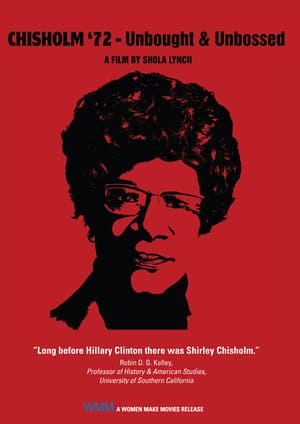
In 1968, Shirley Chisholm becomes the first black woman elected to Congress. In 1972, she becomes the first black woman to run for president. Shunned by the political establishment, she's supported by a motley crew of blacks, feminists, and young voters. Their campaign-trail adventures are frenzied, fierce and fundamentally right on!
Althea Gibson’s life and achievements transcend sports. A truant from the rough streets of Harlem, Althea emerged as a most unlikely queen of the highly segregated tennis world in the 1950s. Her roots as a sharecropper’s daughter, her family’s migration north to Harlem in the 1930s, mentoring from Sugar Ray Robinson, David Dinkins and others, and fame that thrust her unwillingly into the glare of the early Civil Rights movement, all bring her story into a much broader realm of the American story.
Ebony Goddess: Queen of Ilê Aiyê follows three women competing to be the carnival queen of Ilê Aiyê, a prominent and controversial Afro-Brazilian group with an all-black membership. The selection is based on Afro-centric notions of beauty, in counterpoint to prevailing standards of beauty in Brazil, a country famous for slim supermodels and plastic surgery. Contestants for the title of Ebony Goddess dress in flowing African-style garments, gracefully performing traditional Afro-Brazilian dances to songs praising the beauty of black women.