Twelve talented young mountaineers, five geologists from the University of Lausanne and four mountain guides take an unprecedented risk in Patagonia. Trained by the great climbers Ralf Weber, Ueli Steck, Denis Burdet and David Fasel, the young people are collecting rock samples from the granite walls of the Paine Towers, which are up to 1000 meters high, on behalf of science. The challenges are enormous: Climbing a big wall at the highest level of difficulty, cloudy weather, relentless wind that tears at material and nerves - and an urgency that also pushes the group to their emotional limits. "Flying High" not only documents an extraordinary undertaking, but also shows up close what happens when something happens that can happen after every meter of altitude climbed: a fall.
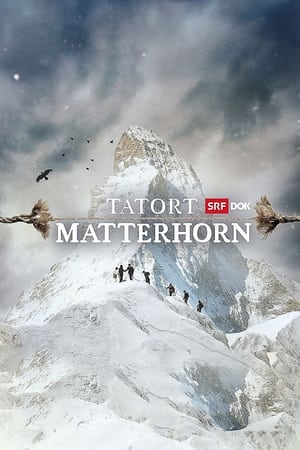
The first filmed winter ascent of the north face of the Matterhorn. To set the scene, the tragic story of Edward Whymper's first ascent is skillfully pieced together. The modern expedition, a team of three British climbers, is also plagued with epics: Eric Jones is hit by an avalanche and can only come to a dangerous stop at the edge of a 1000 foot drop. Then the worst storm ever recorded in Zermatt hits the Matterhorn. With time and weather against them, the team is forced to climb in the dark as thunderstorms rumble around them. This adventure captures the skill and courage of the climbers, their agony and tension, and the beauty of the assault on this spectacular mountain. Grand Prize at the Les Diablerets festival (Switzerland) in 1976.
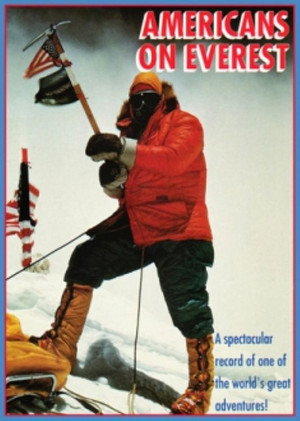
The French High Mountain Military Group (G.M.H.M.) expedition to Everest in 1981, led by General Pierre Astorg, took place on the north face of the mountain. Fifteen military climbers participated in this expedition, which lasted approximately ninety days. Their goal was to reach the summit by following a siege approach, but despite their efforts, the expedition failed to reach the summit. The French military, engaged since the beginning of March on the north face of Everest (8,848 meters), gave up less than 300 meters from the summit. The climbers, Jean-Claude Mosca, Hervé Sachetat, and Hubert Giot, gave up on setting up Camp 7, the last planned intermediate camp, at 8,600 meters. Poor weather conditions and the physical condition of the expedition members were the reasons for the failure of this meticulously prepared expedition...
REEL ROCK cranks it up to 11 with our latest collection of electrifying climbing films showcasing the sport's biggest stories and athletes. Featuring Ashima Shiraishi, Will Stanhope, Matt Segal, Brette Harrington, Kai Lightner, Mike Libecki and the Wild Bunch.
"Verso L'Ignoto" (Towards the Unknown) is an Italian documentary that follows mountaineer Daniele Nardi and his team in their attempt to achieve the first winter ascent of Nanga Parbat, an 8,000-meter peak in Pakistan, nicknamed the "killer mountain" due to its exceptional danger. For three years, the camera follows the preparation and several successive expeditions, showing the extreme cold, avalanches, fatigue, and the setbacks that constantly force the climbers to choose between continuing their quest for the summit or preserving their lives. More than just a story of sporting achievement, the documentary highlights doubt, defeat, and human fragility, showing that the "unknown" is not only the mountain, but also the element of risk, desire, and need for self-transcendence that each of us carries within.
A group of Welsh settlers decided to emigrate to Argentine Patagonia in 1865. Among them, a woman named Catherine Roberts, her husband, and their three children. Aboard the ship Mimosa they arrived at the current Puerto Madryn, Chubut, on July 28, 1865. Catherine died on August 21 and was buried near the coast, but her traces were lost until 1995 when some bones were discovered by chance. Argentine scientists Silvia Dahinten, Julieta Gómez Otero and Fernando Coronato have been working for twenty years to determine if the remains found are those of Catherine. In 2015, the arrival in Puerto Madryn of a Welsh descendant of Catherine, and new scientific advances, allow us to confirm that the bones found in 1995 are those of Catherine.
Record of the first ascent of Everest made without the use of oxygen equipment, made in May 1978 by Reinhold Messner and Peter Habeler. Could it be done? Would their blood vessels burst? Would they suffer brain damage leading to madness? Nobody was sure. Messner: 'I would never come here for trying Everest with oxygen. That is not a challenge for me.' A fascinating piece of history, well filmed by Leo Dickinson and Eric Jones (above the South Col Messner used a cine camera to continue the filming), featuring Messner and Habeler's thoughts. The film follows the usual sequence from Namche to Base Camp, through the Icefall, to Camps I, II and III. It also shows historical footage of the pioneering Mallory and Shipton expeditions.
July 2022. Two high mountain guides, Frédéric Dégoulet and Benjamin Ribeyre embark on a journey around the Mer de Glace via the most legendary peaks of the Mont-Blanc massif.
Solving for Z explores IFMGA guide and father Zahan Billimoria’s relationship to the intoxicating highs and crushing blows of a life in the high-consequence environment of big mountain skiing.
Movie about David Lama climbing the Patagonian mountain Cerro Torre for the first time free, a mountain that has been dubbed the most difficult to climb in the world.
A story told with no words but with the power of sound and visuals of unspoiled Patagonia.
History of the first ascent of Aconcagua by the south face in February 1954 by the French shock team led by René Ferlet and composed of Lucien Bérardini, Adrien Dagory, Edmond Denis, Pierre Lesueur, Robert Paragot and Guy Poulet. In seven days of combat, they extricate themselves from the mountain in a pitiful state; all except Robert Paragot will be victims of severe frostbite which earned them amputations, some important as for “Lulu” Bérardini who lost part of his left hand.
In 1953, Sir Edmund Hillary & Tenzing Norgay made history as the first people to reach the top of Everest. Now, 50 years later, three sons of Everest's most celebrated climbers return to the mountain to challenge it again. Join their journey as they brave the elements and face death to climb 29,000 feet of wind-blasted rock and ice. And, relive the dramatic history of Everest from great triumphs to deadly tragedies, enduring rivalries and the unsung role of the Sherpa people—as National Geographic exposes the untold stories that lurk in the mountain's epic shadow and takes you on the ultimate Everest experience.
This documentary follows the feats of high-altitude climber Jerzy Kukuczka and his ascent to higher heights before his death in 1989.
The true story of Joe Simpson and Simon Yates' disastrous and nearly-fatal mountain climb of 6,344m Siula Grande in the Cordillera Huayhuash in the Peruvian Andes in 1985.
Cervino - La montagna del mondo
Alex Honnold is the most accomplished free climber in the world. Angola is a southwest African country that recently emerged from 27 years of bloody civil war. What brings together these strange bedfellows you ask? Some of the most epic unclimbed rocks in the world, and a community needing help to diffuse the hidden land mines leftover from the conflict. (Plus a shadowy local hotel magnate, but we'll get into that later). This is Alex Honnold in Angola, for one of the most unique adventures of his storied climbing career this far.
May 25, 1996 - Bruce Herrod, a South African mountaineer reached the summit of Everest at 5 p.m. On the radio, we urge him to come down as soon as possible because the descent is dangerous in the middle of the night. A few hours later, no news from him. From this South African expedition which turned into a fiasco and another expedition carried out in parallel, the testimonies of the members of these expeditions show to what extent the thirst for climbing to the top of certain mountaineers, combined with the lack of oxygen , can alter the lucidity of climbers to the point of changing their relationship to death and thus lead them to neglect other expedition members in order to ensure their victory or save their own life.
Grand Libre au Grand Cap
Deceased but not forgotten. In 2017, Switzerland's most famous mountaineer, "Swiss Machine" Ueli Steck, fell to his death in the Himalayas when he was just 40 years old. Three close friends travel again to the Everest region where he died. His family in Emmental has to deal with premature death.