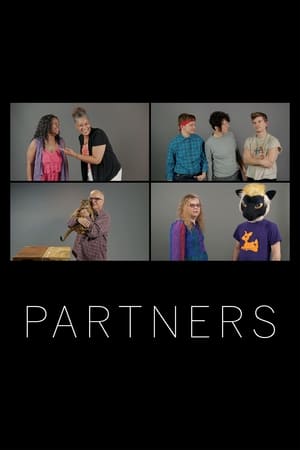
An award-winning, ground-breaking TV documentary dealing sensitively with the topic of sex and intimacy within the disabled community.
18 partners discuss the choices they’ve made in deciding on their mates. At its heart, this unscripted documentary film is about acceptance; a gentle message that we shouldn’t judge the choices of others, even if they seem a little different.
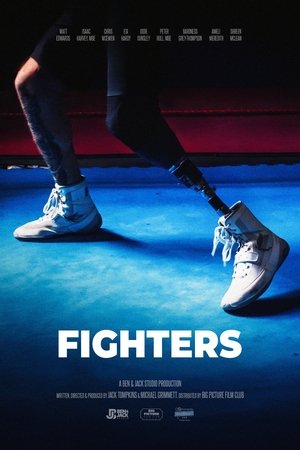
Meet Matt Edwards, a lower-limb amputee boxer determined to break barriers and obtain his amateur boxing license—the crucial first step toward his dream of becoming a professional fighter. But the real fight isn’t just in the ring; it’s against a system that continues to put up obstacles, reflecting the everyday struggles disabled people face simply to be included in society.
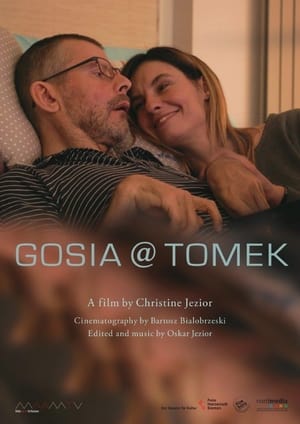
What happens to a relationship if a partner suddenly becomes severely disabled after an accident? For Gosia it is clear that she will stand by her boyfriend Tomek no matter what in order to let him live as normal and fulfilled a live as possible. But time and again she becomes painfully aware of her own limits, as well as of those of a society that talks a lot about inclusion but often does not seem to be ready for it. GOSIA@TOMEK is based on more than 3000 emails that Gosia has been writing to Tomek daily since his accident.
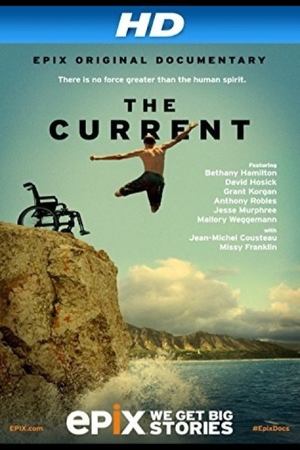
This is the face of someone the world assumes was stripped of her potential at the age of 18. But tragedy is not Mallory Weggemann's reality. Suddenly paralyzed from the waist down, she was turned loose to become a Paralympic Champion and activist. As Mallory's story unfolds, we come to understand that it was because of, not in spite of, that moment that she discovered who she really is.
Sima Shimony, age 69, embarks on a mission to find her friends and staff from the "ALYN" Institute for Children with Disabilities, which was situated in the secluded San-Simon monastery in Jerusalem, during the 1960s. Armed with a small camera attached to her wheelchair, she sets off on a journey across the country together with her friend Pini Newirth, also a polio child, to unfold and reclaim the story of the children affected by the Polio epidemic. In a futile attempt to rebuild their bodies so they could walk, the children were subjected to excruciating medical procedures with no parents or family at their side. But growing up together forged a group of remarkable, self-driven women and men with disabilities who eventually launched the Disability Rights movement in Israel.
Madeline Stuart is a fashion celebrity who has walked the runway at the New York Fashion Week, has 700 000+ followers on Facebook and is covered by international media world wide. This documentary follows Madeline on her journey to becoming the world's first professional supermodel with Down syndrome, challenging our perception of identity, beauty and disability.
We all share the same kind of brain yet everybody has a different view of the world around us. As a very intriguing example, Carlotta vividly explains how a world without faces does look like. She suffers from the miswiring of a tiny brain region that makes it impossible for her to see and remember faces as a complete construct, called prosopagnosia or face blindness.
David Vandenbrink seems like a healthy 21-year-old, bright and articulate young man. There is little to suggest that while in his mother's womb, he suffered permanent brain damage. His condition, fetal alcohol syndrome (F.A.S.), went undiagnosed for the first 18 years of his life, causing confusion, anger, and pain for both David and his non-Indigenous adoptive family. Fetal alcohol syndrome is a term used to describe a set of symptoms seen in some children born to women who drank alcohol during pregnancy. The damage can be subtle or severe, resulting in a wide range of symptoms in the areas of slowed growth, disfigurement, and damage to the brain. Associated behavioural problems include impulsiveness, poor judgment, and an inability to grasp the consequences of actions. This personal story, using video footage shot by David himself, along with the experiences of members of his family, is a hard look into the serious consequences of a little-known, but widespread, health problem.
Every now and then, we get a teacher who doesn't just connect with us -- they make us a better person in the world. Jeffrey Wright of Louisville, Ky. is one of those teachers. He uses wacky experiments to teach high school kids about science and the universe. But it's his own personal story about his relationship with his disabled son that shows his students the true meaning of life.
Connection | Isolation presents eight intimate portraits of trans and post-gender individuals navigating the challenges of the COVID-19 pandemic. Amidst moments of connection and isolation, these participants reveal a deepening awareness of gender, their bodies, and trans community. Created by an all trans and queer crew, this hybrid documentary film interlaces portraits with reenactments, integrating archival material documenting what so many experienced and many still do.
Ramba Zamba: a theater with handicapped and non-handicapped people/actresses and actors, which has been living and working on inclusive integrative togetherness impressively every day for thirty years now. The film accompanies the mentally and physically impaired actresses and actors for six months through the theatrical production of the play GOLEM, from the beginning of rehearsals to the premiere. In doing so, the film is also partly influenced by the portrayed persons themselves, quasi inclusively co-determined, by them capturing their own view and perception, their view of reality itself on film.
Frans Bromet follows scoot drivers of different ages about their lives. He talks to them about what has changed since they got a mobility scooter, about how their living space has increased, about the limitations of the vehicle and about what is and is no longer possible in private.
Follows the lives of 6 adults with a disability in a care center. Over a year's time, each of them share their view of the world and how they cope with moods and looks.
‘Voices from the Shadows’ shows the brave and sometimes heartrending stories of five ME patients and their carers, along with input from Dr Nigel Speight, Prof Leonard Jason and Prof Malcolm Hooper. These were filmed and edited between 2009 and 2011, by the brother and mother of an ME patient in the UK. It shows the devastating consequences that occur when patients are disbelieved and the illness is misunderstood. Severe and lasting relapse occurs when patients are given inappropriate psychological or behavioural management: management that ignores the severe amplification of symptoms that can be caused by increased physical or mental activity or exposure to stimuli, and by further infections. A belief in behavioural and psychological causes, particularly when ME becomes very severe and chronic, following mismanagement, is still taught to medical students and healthcare professionals in the UK. As a consequence, situations similar to those shown in the film continue to occur.
Nathan Quinell is a fully trained chef… he also happens to be legally deaf and blind. That’s never stopped him from chasing his dreams to become a full-time cook, but now Nathan must prove himself to his peers, his students and potential employers.
While navigating daily discrimination, a filmmaker who inhabits and loves her unusual body searches the world for another person like her, and explores what it takes to love oneself fiercely despite the pervasiveness of ableism.
Motherhood is a short documentary film about a single mother trying to secure a future for her severely disabled son.
À la canne blanche
A compelling British documentary following ten amateur athletes as they train for and compete in Ironman 70.3 Swansea. With themes of resilience, inclusion, and mental strength, the film is directed by Raymond Mouzon and edited by 18-year-old autistic filmmaker Sean Smith.