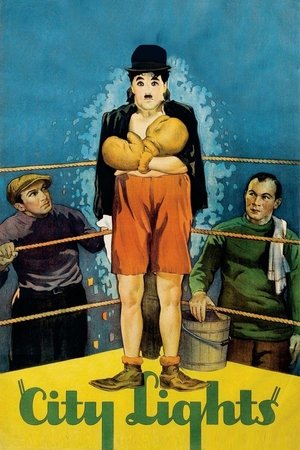
A gangster falls for a blind violinist, only for his mobster rivals to kidnap her.
Madrid, Spain. A mutilated man, a war veteran, walks, leaning on a crutch, through the stadium of the Ciudad Universitaria, a place that still preserves in walls and buildings the terrifying traces of one of the bloodiest battles of the Spanish Civil War.
Venice, 1596. Bassanio begs his friend Antonio, a prosperous merchant, to lend him a large sum of money so that he can woo Portia, a very wealthy heiress; but Antonio has invested his fortune abroad, so they turn to Shylock, a Jewish moneylender, and ask him for a loan.
In Renaissance Italy, a gifted painter becomes entranced by a merchant's wife when commissioned to paint her necklace. Their forbidden connection fuels a creative fire, resulting in a masterpiece that transcended art as we know it.
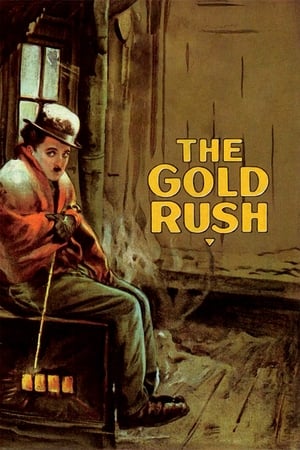
A hobo takes revenge to a miller who didn't give him something to eat.
The film depicts the marriage between the mad Charles VI of France and his wife Queen Isabeau.
Based on the novel by Charles de Coster "The Legend of Thyl Ulenspiegel and Lamme Goedzak, and their Adventures Heroical, Joyous and Glorious in the Land of Flanders and Elsewhere." First part: "The Ashes of Claes". XVI century. The freedom-loving and cheerful people of the Netherlands under the rule of the Spanish king: persecution, torture, bonfires of the Inquisition, encouraging scammers. The fearless Thyl Uhlenshpiegel and his faithful girlfriend Nele have to go through many trials. Second part: "Viva Beggars!". The people of the Netherlands, tormented by cruel royal decrees, taxes, heresy, torture and executions, began a war of liberation against Spanish rule. Many feats will be performed by the national hero Tilbert (Thyl) Ulenspiegel and his friend Lamme Gudzak before peace returns to their homeland.
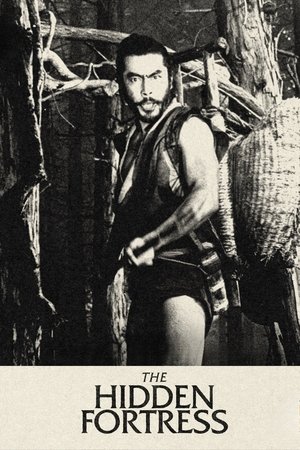
Akira Kurosawa's lauded feudal epic presents the tale of a petty thief who is recruited to impersonate Shingen, an aging warlord, in order to avoid attacks by competing clans. When Shingen dies, his generals reluctantly agree to have the impostor take over as the powerful ruler. He soon begins to appreciate life as Shingen, but his commitment to the role is tested when he must lead his troops into battle against the forces of a rival warlord.
This film begins with the invocation of 'almighty god' at a river where several people are gathered. The child god Krishna rises out of the water astride the demon snake Kaliya. Then we see Yashoda as she rocks the sleeping Krishna's crib and imagines the god as Gopala. The next scene shows Kamsa fantasizing about Krishna threateningly duplicated many times around him. Kamsa then imagines himself dead as his severed head rises up and descends again. People of all castes pay obeisance to the deity with the title-card: 'may this humble offering be accepted by the Lord'.
A sumptuous and sensual tale of intrigue, romance and betrayal set against the backdrop of a defining moment in European history: two beautiful sisters, Anne and Mary Boleyn, driven by their family's blind ambition, compete for the love of the handsome and passionate King Henry VIII.
Against the backdrop of New York City of the early 1850s, a young woman -- naively seeking to win the love she reads about in the romance novels she devours -- finds one prospect in an earnest denizen of the Bowery, and another in an elegant young aristocrat. Focusing on the bygone era's fashions, the novelty of the bicycle-built-for-two, and an inventor's quest for the horseless carriage, the film gently stirs the audiences' nostalgia for simpler times.
A man with an umbrella emerges from his grave to be momentarily reunited with his lost loved one.
Los opositores
In 16th century Japan, peasants Genjuro and Tobei sell their earthenware pots to a group of soldiers in a nearby village, in defiance of a local sage's warning against seeking to profit from warfare. Genjuro's pursuit of both riches and the mysterious Lady Wakasa, as well as Tobei's desire to become a samurai, run the risk of destroying both themselves and their wives, Miyagi and Ohama.
During a game of hide and seek, a new bride hides in a chest and remains undiscovered until a strange visitation thirty years later.
1952 reconstruction of Gelabert’s Café Brawl (1897). This remake is the only surviving version, recreating the original lost film’s café fight scene.
The film tells the story of a man and woman who don't know each other. After being matched by a matchmaker, after going through a series of red tape, they were sent to the bridal chamber and began a difficult life as a couple. Despite the primitive shooting methods and lack of training of the actors, the film has a very important place in the history of Chinese film.
Japan's Imperial system is said to have over 2,000 years of history. A closer look at the history reveals how the Imperial institution has shifted with the times, and with the people. At a time when there are only three heirs to the throne, a look is taken at what this could mean for the people of Japan and their Imperial system.
In the near future, an isolated man is tortured by his beloved memories.
Carmine Gallone and Amleto Palermi’s The Last Days of Pompeii 1926 stages in sumptuous colour tinting the epic fall of the ancient city buried by Mount Vesuvius’ eruption. Adapted from Edward Bulwer-Lytton’s love story, the film was innovative in its special effects and an early major box-office hit. A beautiful tinted restoration print was prepared using photochemical processes by Centro Sperimentale di Cinematografia-Cineteca Nazionale in the mid-1990s and the premiere screening of the restoration print was held in the amphitheatre in Pompeii, followed by a screening at the major restoration festival ‘Il Cinema Ritrovato’ in Bologna in 1998.