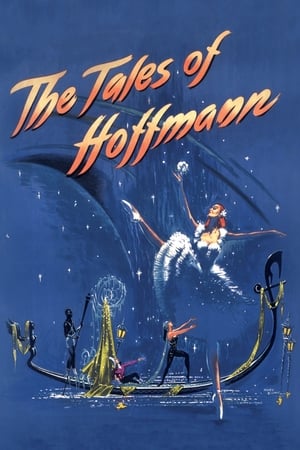
A melancholy poet reflects on three women he loved and lost in the past: a mechanical performing doll, a Venetian courtesan, and the consumptive daughter of a celebrated composer.
An American reporter falls in love with a Russian ballet dancer.
The Royal Ballet Company brings Squirrel Nutkin, Tom Thumb, Hunca Munca, Jemima Puddle-Duck, Jeremy Fisher, Pigling Bland, and Pigwig to the screen doing pirouettes and pas de deux in this filmed ballet production directed by Reginald Mills. The film more properly belongs, however, to choreographer Frederick Ashmore, composer John Lanchbery, and costume designer Rostislav Douboujinsky. This literal adaptation concerns the shy Beatrix Potter and how, when all of the toy animals in her room come to life, she emerges from her shell and begins to enjoy life. Sequences include a rowdy dance with Tom Thumb and Hunca Munca destroying a collection of plaster food, a midnight pas de deux between Pigling Bland and Pigwig, and a corps de ballet of dancing mice.
During a brief summer vacation, a lonely woman recalls her first love thirteen years earlier.
The ballet of the National Opera of Ukraine stands for ballet artistry at the highest level. The company has become a cultural ambassador for Ukraine. The ensemble presents this unique, daring performance at the National Opera in Kyiv. The centerpiece of the evening is Wartime Elegy by Alexei Ratmansky, one of the most important choreographers of our time.
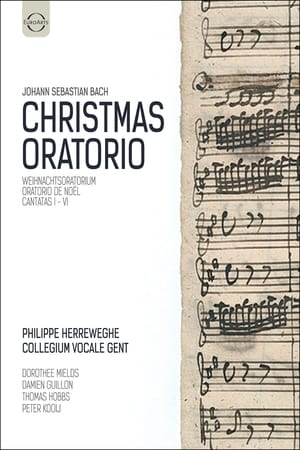
This recording of all six cantatas from the Salle Henry Le Bœuf in the Palais des Beaux-Arts in Brussels, Belgium, in December 2012 features internationally renowned Bach expert Philippe Herreweghe and the Collegium Vocale Gent.
Lis Jepessen dances the lead role of La Sylphide -- a beautiful forest sprite who entrances Scottish farmer James (Nikolaj Hubbe) with her radiance -- in this memorable stage adaptation of August Bournonville's most enduring work, a piece he created for the Royal Danish Ballet in 1836. Sorella Englund co-stars as Madge, a vengeful witch and fortune-teller who, after being spurned by James, resolves to destroy his future.
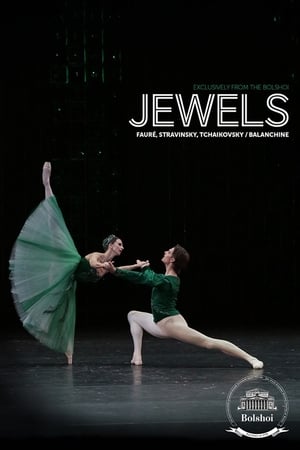
George Balanchine's jewel-themed triptych, strikingly choreographed to the music of Faure, Stravinsky and Tchaikovsky. This three act masterpiece is renowned as the world's first full-length abstract ballet. The Russian-born co-founder of the New York City Ballet, Balanchine was inspired by the artistry of jewellery designer Claude Arpels to create a trio of distinct movements revealing the essence of each precious stone. Each part also evokes three different cities: Paris, New York and St. Petersburg. 'Emeralds' was conceived as a tribute to the French romantic school, with music by Gabriel Faure. The fiery and energetic 'Rubies' taps into the rich tradition of Broadway musicals, with music by Stravinsky. 'Diamonds' honours the grandeur of Imperial Russia and the Maryinsky Theater, choreographed to the music of Tchaikovsky. With its jewel-like costumes, this is a celebration of the influences on the choreographer who was described as the father of American ballet.
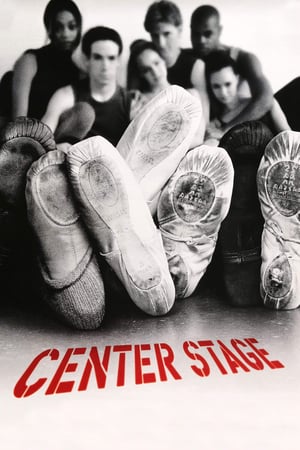
A group of 12 teenagers from various backgrounds enroll at the American Ballet Academy in New York to make it as ballet dancers and each one deals with the problems and stress of training and getting ahead in the world of dance.
A dance story about Tchaikovsky, illuminating the long-hidden moments of his life. Through his compositions, Pyotr Ilyich Tchaikovsky influenced and shaped classical ballet like few other composers. The myth of his music remains unbroken to this day. Cayetano Soto draws an engaging portrait of a man who could not live his life the way he wanted to. In "Tchaikovsky", the view behind the glorious moments of a biography is revealed - in brokenness, courage and genius. Recorded at the Leipzig Opera.
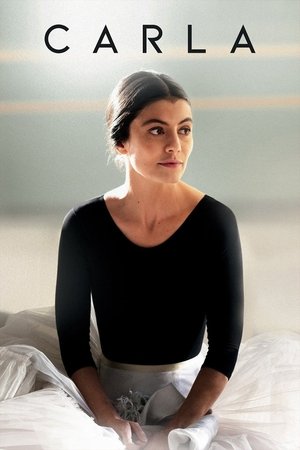
The extraordinary life of Carla Fracci, the greatest Italian ballerina of all time, told from her first steps at the Accademia del Teatro alla Scala in Milan to the stages of the most prestigious international theaters, passing through the controversial choices, difficult sacrifices, and important satisfactions that marked her rise. Freely inspired by the autobiography “Passo dopo passo – La mia storia” (Step by Step – My Story).
"Music is a dream from which the veils have been lifted. It's not even the expression of a feeling, it's the feeling itself." This quote from Claude Debussy describes the musical world of this programme, made up of his own works and works by Maurice Ravel. In the choreography of Ravel's and Debussy's music by Jeroen Verbruggen and Sidi Larbi Cherkaoui, fluid lines, dream and atmosphere are strongly present.
London's Royal Ballet performs two of Igor Stravinsky's classic works in this pair of performances choreographed by dance legend Nijinska. Zenaida Yanowsky and David Pickering star in "Les Noces," the stark, percussion-centric tale of a Russian peasant wedding that incorporates traditional folk music into its score. "The Firebird" stars Leanne Benjamin as the mythical creature who brings both a blessing and a curse upon her captors.
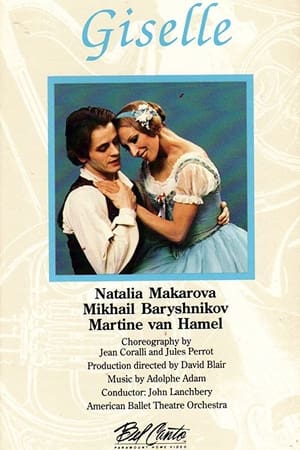
The ballet tells the story of a peasant girl named Giselle whose ghost, after her premature death, protects her lover from the vengeance of a group of evil female spirits called Wilis
The story follows the destruction of a marriage through consuming jealousy, the abandonment of a child and a seemingly hopeless love. Yet, through remorse and regret – and after a statue comes miraculously to life – the ending is one of forgiveness and reconciliation. Wheeldon continues his highly successful collaboration with designer Bob Crowley and composer Joby Talbot, the team behind Alice, in one of the highlights of The Royal Ballet Season.
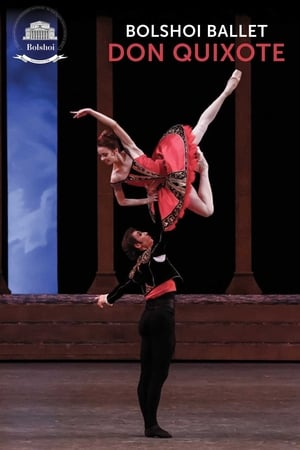
Inspired by heroic stories of brave knights, Don Quixote of La Mancha and his faithful servant Sancho Panza set out on an adventure to meet his ideal woman, Dulcinea. Cervantes’ hero comes to life in the Bolshoi's critically acclaimed staging of this exalting performance. With panache and sparkling technique, principal dancers Ekaterina Krysanova and Semyon Chudin lead the spectacular cast of toreadors, flamenco dancers, gypsies, and dryads in virtuosic dancing that is quintessential Bolshoi. Captured live on April 10, 2016
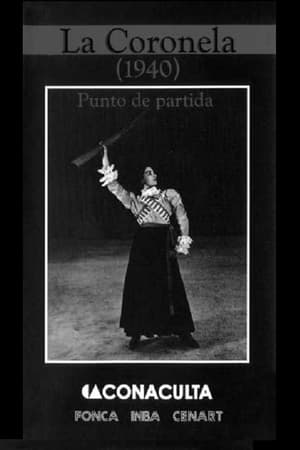
La Coronela (1940). Punto de partida
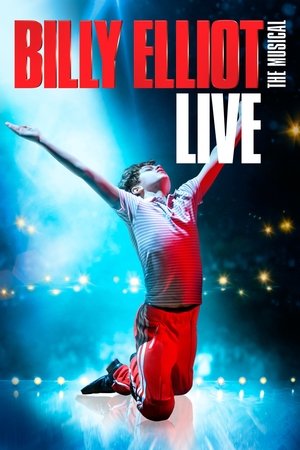
In County Durham, England, 1984, a talented young dancer, Billy Elliot, stumbles out of the boxing ring and onto the ballet floor. He faces many trials and triumphs as he strives to conquer his family’s set ways, inner conflict, and standing on his toes in a musical that questions masculinity, gender norms and conformity.
Eugen Suchoň's ballet Angelika is historically the first Slovak ballet in staged form, depicting the story of a musically gifted but poor and underestimated girl who is wrongly accused of theft. In the 2014/2015 season, the SND Ballet undertook the staging of the first Slovak ballet. Composer Eugen Suchoň (1908 - 1993), one of the founders of Slovak musical modernism, wrote the ballet pantomime Angelika for Slovakia as a seventeen-year-old pupil of the Music School. The work was found in the composer's estate along with other compositions from the so-called pre-Opus period. Mauro di Candia, who choreographed and directed the first staging of Suchoň's work, presents the staging concept of the ballet Angelika as an original, precise and pure ballet form within a contemporary choreographic language, combined with the musical elements of Suchoň's melodic score.
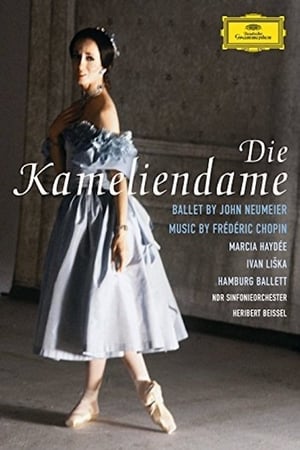
"Lady of the Camellias" (Kameliendame) was premiered in Jan 1978 at the Stuttgart ballet. Choreographer and text writer was John Neumeier who had been requested in 1972 by ballerina Marcia Haydee to write a full length ballet. He suggested "Lady of the Camellias" , the Dumas fils autobiographical novel. The idea of using Chopin music was suggested by ballet conductor Gehart Markson. The ballet was a success and this version was also presented in 1979 at the Kennedy Center in Washington DC. Neumeier revised it for the Hamburg Ballet now directed by Brazilian ballerina Marcia Haydee after the death of famous director John Kranko. The revised version with sets and costumes by Jugen Rose and conducted by Heribert Beissel was recorded as a movie in 1987.