Danny, dying of AIDS, returns home for his last months. Always close to his mother, they share moments of openness that tend to shut out Danny's father and his sister.
Rhonda, a big-haired bankteller from Brooklyn, encounters Travis, naked, suicidal and about to jump off the Brooklyn Bridge. Mistaking him for her perfect man, she stalks him all the way to Danton, Texas. Along the way she slowly comes to realize he is gay and is despondent over the AIDS-related death of his former lover. An alliance, and eventually true friendship, is formed between this extremely odd couple as they embark upon a 'treasure hunt' - with clues provided from beyond the grave.
Tum meets and falls for Kaeng. Tum is smitten but Kaeng seems to have moved on to other conquests.
At once an intimate chronicle of a romance and a sprawling portrait of life in early 1990s France following the intertwining journeys of Jacques, a worldly Parisian writer, and Arthur, a curious, carefree and much-younger university student who is just beginning to live. Brought together by chance, the two men find themselves navigating a casual fling that gradually deepens into a tender, transformative bond.
A man in the final stages of AIDS is cared for by his sister and mother and grandmother.
A painter gets infected by AIDS, and finds himself at disease clinic in Belgrade. He shared the hospital room with an ex-musician, junkie who tries to discontinue treatment and returns home to his wife. The painter believes in recovery through his paintings, believing that they have supernatural powers. In their room, the medics bring a boy suspected to be infected with the AIDS virus. Meanwhile, the musician's wife leaves him. Having desire for revenge, high on drugs and labile, he rapes nurse. The painter's health deteriorates and he dies. Shortly afterwards, the musician commits suicide. Only the boy remains in the room - a child of uncertain fate and in possession of dozens of "totemic paintings".
Keith, Anna and their son Peter are a close, loving family living in a smart suburban street of a provincial city. Anna is a typical middle-class housewife, filling her day with good works, until one day, when she finds a note that leads to a shattering discovery - her husband has been having an affair. Anna's intense shock at finding out Keith's secret is compounded when she arranges to meet his lover. When Steve arrives at the meeting place, Anna is forced to accept the fact that Keith has been leading a double life for the length of their marriage. Steve stresses the risk of AIDS and urges Anna to have an AIDS test. To show her what it can be like to live with the disease, he introduces her to Jim, who needs 24-hour care and has developed a realistic attitude towards his own death. When Keith leaves home suddenly, Anna is forced to tell her son about the threat of HIV, but Peter turns violently against her and runs away.
At the end of the 1980s, Stella, Victor, Adèle and Etienne are 20 years old. They take the entrance exam to the famous acting school created by Patrice Chéreau and Pierre Romans at the Théâtre des Amandiers in Nanterre. Launched at full speed into life, passion, and love, together they will experience the turning point of their lives, but also their first tragedy.
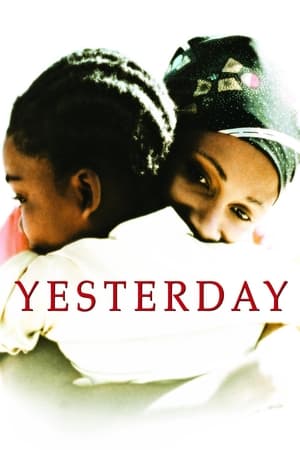
When fifteen year old Mercy faces the unimaginable, her courage and resilience come to the fore. What could have been the end of her story is only the start of a new journey.
Tsai interrupted his pre-production for The River to make this pioneering documentary for Taiwan's nascent AIDS-awareness campaign. Ignoring instructions to 'play down the gay angle', he centres the film on his own very candid conversations with two HIV+ young men. Sadly the identities of the interviewees have to be concealed, and so the freewheeling camerawork focuses most often on Tsai himself; but the sense of rapport between the director and his 'new friends' is palpable and very moving, even to Western viewers already only too familiar with these issues.
A group of gay friends spend summer weekends together at a lakeside house in upstate New York. As the season progresses and secrets begin to surface, the complex relationships within the group are sometimes strained and sometimes strengthened.
Pedro, a gay man with an active social life and big circle of friends, takes in his nephew Bernardo for a couple weeks. When it appears as though it might become a permanent arrangement, however, Pedro turns to his friends for guidance as he and 9-year-old Bernardo begin to forge a household together.
Gai Nhay ("Bar Girls") is the story of how the other half lives, with a twist. Southeast Asia being known for the multitude of bar girls ready to be "borrowed" for a (usually quite cheap) price, the life these girls live--and the motivations and tribulations that lead them to it--are usually hidden to their oblivious clientéle.
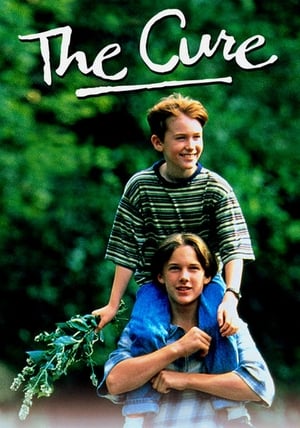
Baby Annie is HIV positive and has been left in the clinic by her drug addicted mother. To prevent her from being placed in a home where they'd just wait for her to die, nurse Susan takes charge of Annie at her home. Two years later, she plans to adopt her -- but suddenly Annie's mother reappears and demands her back. And under the law, Susan, as foster-mother, has no claim to the child.
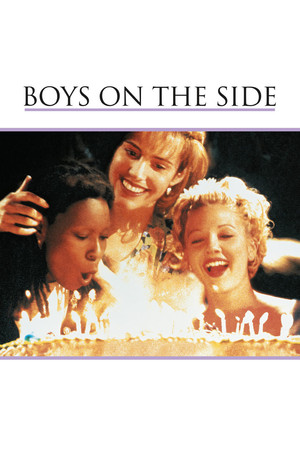
Bridgette is an aspiring actress who teaches aerobics at a local gym that's run by the womanizing Adam. After a tryst with Adam, Bridgette scores a role in a big play, but then learns that a former boyfriend is dying of AIDS. While preparing to get tested, Bridgette suspects Adam of cheating on her, and must face the HIV tests alone, which shockingly come back positive. Building a support network, including a penitent Adam, Bridgette faces her own mortality.
Inspired by the moving book “Só as Mães São Felizes”, by Lucinha Araújo, Cazuza's mother, the film covers a little more than 10 years of the singer’s crazy and brief life – from the beginning of his career in the Circo Voador venue, in 1981, to the huge success and the apotheosis of his shows with the Barão Vermelho band, his solo career, his relations with his parents, friends, lovers and passions, and the courage he had to face his final years, with HIV, until his death, in 1990.
Walter is HIV positive and is leading a promiscuis life in Rome. He does this so that he won’t infect his wife. Walter’s wife is also cheating on him. In a decidedly dull subplot, Walter’s father is a senator who wants to use his son’s illness to promote his own political career by calling for more AIDS research.
Coming from a country like India that is still in denial, where being HIV+ is still a curse, '68 Pages' rips open the underbelly of its society to reveal how it stigmatizes and shuns those who are HIV+ or even those who just want to be what they are. Through 68 Pages of a counselors diary, we see the stories of Paayal, a sex worker; Nishit, an ID user; Kiran, a gay man and Umrao, a transsexual bar dancer - their stories of pain and fear, humiliation and rejection - not only by the society, but even by their loved ones.
Akiko returns to her home village in Japan after seven years in South America, where she contracted AIDS from a blood transfusion. The town, thick with paranoia, is quick to ostracize the ailing Akiko. With only her best friend and her mom in her corner, Akiko suffers awful discrimination at school and at home.
Natalie, a gifted New York photographer, has a troubled past reflected in her art. When she struggles to make ends meet in the city, her agent, arranges an assignment in Boston for a considerable sum of money. Unable to turn it down in her dire straits, Natalie takes the job -- only to find that her estranged gay brother, Roy, is the employer. Roy wants to mend their broken past, but must convince her to stay long enough to do so.