An immigrant rises from humble beginnings to build a successful life with his devoted partner. But just as they begin to live the American Dream, the AIDS crisis intrudes, testing the strength of their bond and the limits of their resilience.
A group of teenagers who have been selected to participate in a recreational white water rafting trip. All of the kids selected have AIDS or have been infected with the HIV virus. At some point during the trip, all the kids tell their stories and share their feelings about what their lives have been like since being infected with the virus and how they struggle to live normal lives with a hope of a cure in the future.
Steven Russell leads a seemingly average life – an organ player in the local church, happily married to Debbie, and a member of the local police force. That is until he has a severe car accident that leads him to the ultimate epiphany: he’s gay and he’s going to live life to the fullest – even if he has to break the law to do it. Taking on an extravagant lifestyle, Steven turns to cons and fraud to make ends meet and is eventually sent to the State Penitentiary where he meets the love of his life, a sensitive, soft-spoken man named Phillip Morris. His devotion to freeing Phillip from jail and building the perfect life together prompts him to attempt (and often succeed at) one impossible con after another.
A teenage hustler and a young man obsessed with alien abductions cross paths, together discovering a horrible, liberating truth.
Tender Heart
A father-daughter relationship evolves through an era of bohemian decadence in 1970s San Francisco to the sober and heartbreaking era of the AIDS crisis in the 1980s.
Through interviews with key AIDS Healthcare Foundation (AHF) stakeholders from over the years coupled with archival video footage culled from AHF's 30 years of advocacy, care and activism, 'Keeping the Promise' tells a compelling story of AHF's history while offering a glimpse of, and road map to its future.
William Hart McNichols is a world renowned artist, heralded by Time magazine as "among the most famous creators of Christian iconic images in the world". As a young Catholic priest from 1983-1990 he was immersed in a life-altering journey working as a chaplain at St. Vincent's AIDS hospice in New York city. It was during this time that he became an early pioneer for LGBT rights within the Catholic church. "The Boy Who Found Gold" is a cinematic journey into the art and spirit of William Hart McNichols. The film follows his colorful life as he crosses paths with presidents, popes, martyrs, and parishioners, finding an insightful lesson with each encounter. McNichols' message as a priest, artist and man speaks to the most powerful element of the human spirit: Mercy.
Nick, a gay, HIV-positive architect, begins to display severe symptoms of AIDS and makes preparations to kill himself before he is unable to function normally. He arranges a party to reconnect and say goodbye to his closest friends and his confused parents. But when his ex-partner, Brandon, a television director who left Nick when he was diagnosed with HIV, shows up, what was supposed to be a celebratory event becomes much more difficult for everyone.
Archivos VIH/sida: historias y voces de una pandemia
Against all odds Themba realizes his dream playing for the National soccer team, Bafana Bafana.
The film depicts a friendship between an Irish journalist in Kenya and a Rwandan woman, who pair up to combat the AIDS crisis in the 1990s.
Award-winning actress Ruby Dee narrates this powerful documentary about the impact of AIDS on the families, friends and members of the acclaimed Turtle Creek Chorale. In the past decade, 145 member of the Chorale have died, most from HIV and AIDS. Although grief is a constant presence, After Goodbye: An AIDS Story shows that the singers and their loved ones are also engaged in a continual process of healing. This ultimately uplifting and inspirational video is a testament to the amazing strength of the human spirit.
With her mother's diary in hand, Marina's search for official documents for university leads her to her biological family on the Atlantic coast. What starts as an administrative quest reveals long-buried family secrets.
It is 1984. Frank is a determined English teenager who runs away from high school to find an alternative gay lifestyle in Amsterdam. He finds a home and a job at the "House of Boys", a bar-cum-brothel run by a strict Madame who has an eye for what his punters crave. Frank works his way up from barman to on-stage dancer and falls in love with some of his housemates, Jake. The first intimations of what is described as 'the gay cancer', casts a long shadow over Frank's tight-knit group of friends. Yet despite the troubles that cloud the hopes and dreams of young Frank, his perseverance, along with support from a willing doctor, will carry him through.
Two strangers meet at a train station on the day of an LGBT march. Their conversation drifts from topic to topic, as they flirt, argue, do small talk, and eventually share their secrets and loves.
Emma loves Sammy, who loves Cyril, who loves her back. What could have been a love story at the end of the last century is blown apart by the arrival of AIDS. Expecting the worst, each character's destiny takes an unexpected turn.
Told through the voice of former KGB agent Viktor Petrovich, whose life becomes inextricably linked with Ronald Reagan's when Reagan first caught the Soviets’ attention as an actor in Hollywood, Reagan overcomes the odds to become the 40th president of the United States.
In 1992, at the height of the AIDS pandemic, activist Terence Alan Smith made a historic bid for president of the United States as his drag queen persona Joan Jett Blakk. Today, Smith reflects back on his seminal civil rights campaign and its place in American history.
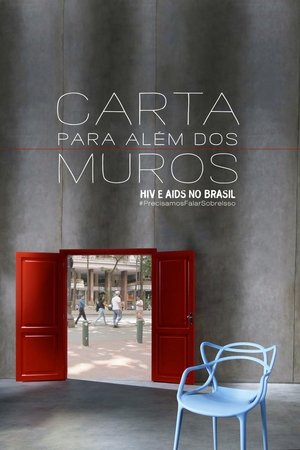
Letter Beyond the Walls reconstructs the trajectory of HIV and AIDS with a focus on Brazil, through interviews with doctors, activists, patients and other actors, in addition to extensive archival material. From the initial panic to awareness campaigns, passing through the stigma imposed on people living with HIV, the documentary shows how society faced this epidemic in its deadliest phase over more than two decades. With this historical approach as its base, the film looks at the way HIV is viewed in today's society, revealing a picture of persistent misinformation and prejudice, which especially affects Brazil’s most historically vulnerable populations.