The film chases a historical event when King Jungjo tried to replace hispersonal revenge on those who killed his father Sado, the Crown Prince, with agreat cause to build up a nation for its people, which eventually leads to remind the lessons of history that repeat permanently like a Mobius strip. The film seems to aim to introduce the uniqueness of Uigwe with a historical yet futuristic value as a World Heritage on the surface, but in fact, it pursues torestore audio-visually the immaterial thing that remains only as a record under the name of feast. Inside the device receiving images, there might have been desires to reproduce the world or to secularize the invisible from the beginning. Hungry TV will awaken the potential to visualize all the intangible via digitaltechnology. So to speak, there is digital technology, and it is followed by aquestion: How far the digital technology of 21st century would lead this deviceto?
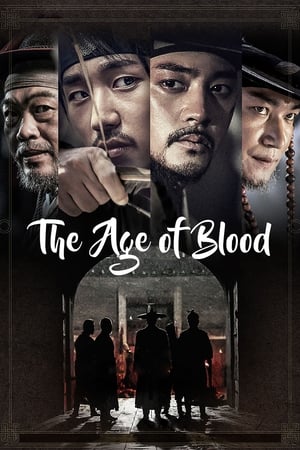
Ancient Korea, 1728. Swordsman Kim Ho, guard of King Yeong-jo of Joseon, is demoted and sent to work in Uigeumbu prison. When night falls, the prison is assaulted by the master warrior Do Man-cheol and his powerful henchmen for the purpose of freeing Lee In-jwa, who has been condemned to death for rising up in revolt against the king.
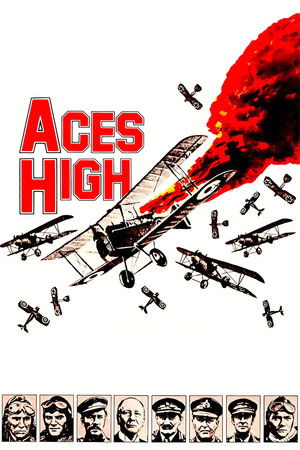
The first World War is in its third year and aerial combat above the Western Front is consuming the nation's favored children at an appalling rate. By early 1917, the average life-span of a British pilot is less than a fortnight. Such losses place a fearsome strain on Gresham, commanding officer of the squadron. Aces High recreates the early days of the Royal Flying Corps with some magnificently staged aerial battles, and sensitive direction presents a moving portrayal of the futilities of war.
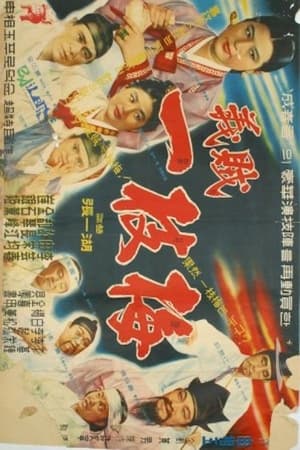
Iljimae's parents were killed due to a conspiracy when he was young. Many years later he became a chivalrous robber, robbing corrupt officials and helping the poor. He eventually manages in taking revenge for his parents' deaths. But the police start to chase him, and he hides himself at a gisaeng's house. The gisaeng was his ex-fiancee. She also lost her parents to a conspiracy. She begs Iljimae to stay with her, but he leaves to do what he has to.
1918, Castelao leaves his public position in Pontevedra to work as a doctor in Rianxo during the Spanish flu. A hero for the town, but an absent man for his wife, Virxinia. 1929, the couple travels through Britain a few months after the loss of their only son. Two broken beings and a bond that is no longer understood. A trip will unite them forever and ever. Castelao before being Castelao. Galicia before the “xeración Nós”. Castelao and Virxinia before being “we”.
In 1909, the Korean Empire is on the verge of losing its sovereignty to Japan. Patriot Ahn Jung-geun and his comrades pledge their lives to the movement for Korea's liberation. Seol-hee, a court lady of the late Empress, also expresses her intent to join the independence movement. Ito Hirobumi, the first Japanese resident-general on the Korean Peninsula, heads to Harbin to pursue his dream of advancing into Asia. On Oct. 26, 1909, a shot rang out at Harbin Station. Beloved son, father of two children, and husband, Ahn Jung-geun, assassinated Ito Hirobumi. In court, Ahn claims not to be a terrorist, but a prisoner of war desperate to protect his beloved homeland, Korea. Who is the one guilty of a crime?
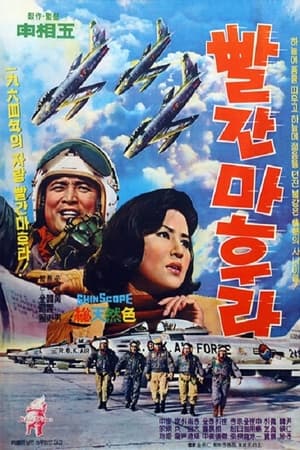
South Korean Air Force pilots engage in perilous missions against Communist North Koreans during the Korean War.
The movie depicts the events from July until September of 1914 which led to the defeat of the German troops at the Marne. While Sebastian Haffner explains and comments on operations and decisions on the basis of situation maps, key scenes are depicted by actors. A main focus is thereby placed by Haffner onto the controversial mission of lieutenant-colonel Richard Hentsch who is said to have, during a war patrol to the various army high commands, contributed to the abortion of the operations significantly.
Paul Baumer and his friends Albert and Muller, egged on by romantic dreams of heroism, voluntarily enlist in the German army. Full of excitement and patriotic fervour, the boys enthusiastically march into a war they believe in. But once on the Western Front, they discover the soul-destroying horror of World War I.
Created by Tony Award winner Shaina Taub, this musical recorded from Broadway tells the story of the American suffragist movement and the remarkable friendships, heartbreak, and action that brought women together—or, in some cases, tore them apart. The ensemble cast features Taub as Alice Paul, Tony winner Nikki M. James as Ida B. Wells, Tony nominee Jenn Colella as Carrie Chapman Catt, and Grace McLean as President Woodrow Wilson.
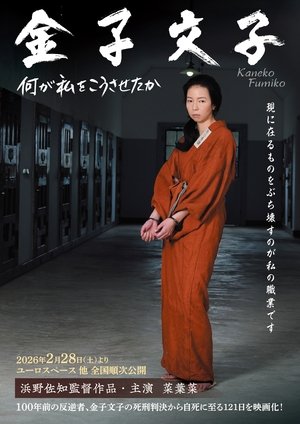
The 1923 Kanto earthquake sparks fears of a Korean uprising in Japan. Many anti-colonial and leftist activists are arrested, including Fumiko and her partner Yeol. Accused of a plot to assassinate the Crown Prince, they are sentenced to death, later reduced to life in prison.
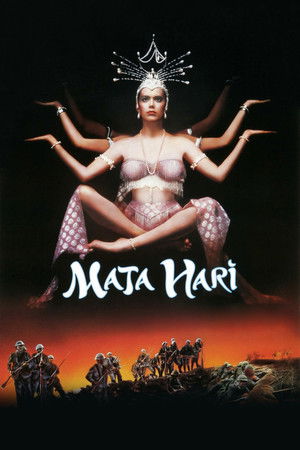
In August 1914, war between France and Germany seems imminent. Mata Hari, a beautiful Dutch-born dancer working in Paris, accepts an invitation to travel to Berlin as part of a show. On the train, she meets a young German army officer but any thoughts of romance are cut short when a French agent is murdered while in her company. She is arrested in Germany but freed when the officer intervenes. While in Germany, WWI breaks out and Hari is recruited by German Intelligence to spy on France.
The epic life story of Alice Guy-Blaché (1873–1968), a French screenwriter, director and producer, true pioneer of cinema, the first person who made a narrative fiction film; author of hundreds of movies, but banished from history books. Ignored and forgotten. At last remembered.
A detailed military history of the Korean War and preceding events, from 1945 to 1953.
After the death of their father, two siblings are raised by their father's best friend. However, when one gets kidnapped just before her wedding, the other rises against the Manchus.
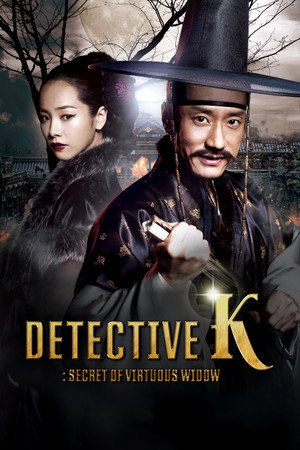
In 1782, King Jeong-jo of Joseon asks detective K to investigate a series of murders related to a case of corruption within the government.
An action historical drama depicting the story of Joseon's best swordsman Yi Nan in front of an irreversible fate.
In 1896, Norimatsu hears from a man from Joseon that the Empress of Korea has been assassinated by the Japanese. Stricken with guilt as a Japanese, he defies all warnings and sets out for the land of Joseon, a nation engulfed in darkness. Years later, another Japanese man, inspired by Norimatsu’s spirit, follows the same path—to bring the gospel to a land still in desperate need of Jesus. This is the story of unnamed missionaries who left behind not fame, but the love of Christ.
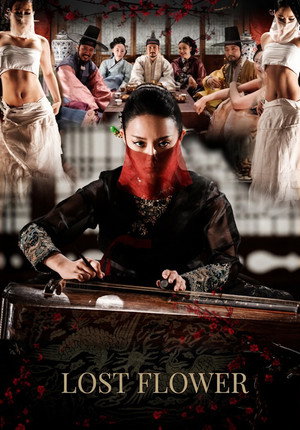
A triangular relationship between Eo Woo-dong, her husband Lee Dong, and fantasy character Moo-gong, highlights on the first half of the Joseon Dynasty and portrays the contradicted life of the high class people, criticizing the modern day Korean society.
Russia, 1917. After the abdication of Czar Nicholas II Romanov, the struggle for power confronts allies, enemies, factions and ideas; a ruthless battle between democracy and authoritarianism that will end with the takeover of the government by Vladimir Lenin and the Bolsheviks.