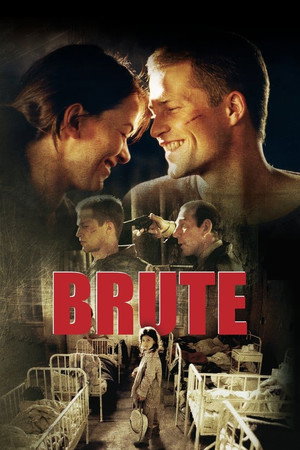
On Saturday, 5 April 1941, one day before the Invasion of Yugoslavia of the Kingdom of Yugoslavia, a colourful group of random passengers on a country road deep in the heart of Serbia board a dilapidated bus, headed for the capital Belgrade. The group includes two gypsy musicians, a World War I veteran, a Germanophile, a budding singer, a sickly looking man, and a hunter with a shotgun. The bus is owned by Krstic senior, and driven by his impressionable and dim-witted son Misko.
For Beary Barrington, The Country Bears' young #1 fan, fitting in with his all-too-human family is proving im-paws-ible. When he runs away to find Country Bear Hall and his heroes, he discovers the venue that made them famous is near foreclosure. Beary hightails it over the river and through the woods to get the Bears in the Band back together for an all-out reunion concert to save Country Bear Hall.
Comrade Krishna Kumar wants to make it big in politics but lacks the ideals a sakhavu should possess. He is ruthless enough to even get rid of friends who might be possible hurdles on his way up. His paths cross with that of a veteran comrade, sakhavu Krishnan and the film depicts how his life influences Krishna Kumar.
After fleeing from his foster family, 11-years-old Khamsa returns to the gypsy camp where he was born. With his cousin, Tony "The Midget", Khamsa dreams of getting rich with cock fights. Nothing seems to have changed since he left, the card games, the Mediterranean Sea... Until his best friend, Coyote, meets Rachitique, a small-time crook. Very soon they pass from stealing scooters to armed robbery, and Khamsa quickly spirals down into delinquency.
Heidi is orphaned and her uncaring maternal Aunt Dete takes her to the mountains to live with her reclusive, grumpy paternal grandfather, Adolph Kramer. Heidi brings her grandfather back into mountain society through her sweet ways and sheer love. When Dete later returns and steals Heidi away to become the companion of a rich man's wheelchair-bound daughter, the grandfather is heartsick to discover his little girl missing and immediately sets out to get her back.
A young refugee travels from Russia to America in search of her lost father and falls in love with a gypsy horseman.
Gambling boat operator Jenny Blake throws over her gambler beau Jack Morgan in order to marry into high society.
Two astronomers go on a media tour to warn humankind of a planet-killing comet hurtling toward Earth. The response from a distracted world: Meh.
Cast out of his insular community, a damaged and down on his luck man teeters between a life of crime and the path to redemption.
October 1918: Karl Liebknecht is released from prison and Berlin workers celebrate his release. Although WWI is almost over, the German Kaiserreich in vain sends its last reserves to the slaughter. The working class is in a rebellious mood; the uprising of Kiel’s sailors against war and militarism sets off a call for revolution led by Liebknecht. On November 9, Liebknecht declares the Free Socialist Republic of Germany. But pro-Kaiser military and right wing Social Democrats oppose him.
Zharko, leader of the Romanis in NYC, passes his position of leadership on to his unwilling grandson, Dave, leading to infighting between Dave and his father.
One day in the miserable life of a female factory worker and single mother of four children. One of her sons - ridiculed by his peers - leaves home and gets into trouble.
In the late 19th century, a brutal land baron slaughters a Roma clan, unleashing a curse on his family and village. In the days that follow, the townspeople are plagued by nightmares, the baron's son goes missing, and a boy is found murdered. The locals suspect a wild animal, but a visiting pathologist warns of a more sinister presence lurking in the woods.
In a post-WWII Yugoslavia still under Stalinist rule in the 1950s, six-year-old Malik is oblivious as to why his father, Mehmed, has suddenly disappeared. In truth, Mehmed has been sent to a labor camp as punishment for acts of sexual indiscretion involving young girls. Malik's mother, Senija, however, has no answers, and the family must cope in the father's absence.
Afonya Borshev is a plumber who drinks a lot, flirts a lot and doesn't care too much about tomorrow. His wife left him, his boss placed him on probation, his whole life is falling apart, but he doesn't realize it. When Afonya met Katya at a dance club he didn't pay her much attention, yet she may be the only one who can help him.
In 1947, among the ruins of war and in anticipation of a catastrophic flood, the locals of a Vojvodina village find themselves caught between the devastation of their livelihoods and the demands of the new Communist authorities.
Close to bankruptcy, Irena, the owner of a struggling pig farm in a tiny post-Communist town, finds a surprising benefactor in a handsome American man who appears to be the answer to all her prayers.
The study of a youth on the edge of adulthood and his aunt, ten years older. Fabrizio is passionate, idealistic, influenced by Cesare, a teacher and Marxist, engaged to the lovely but bourgeois Clelia, and stung by the drowning of his mercurial friend Agostino, a possible suicide. Gina is herself a bundle of nervous energy, alternately sweet, seductive, poetic, distracted, and unhinged. They begin a love affair after Agostino's funeral, then Gina confuses Fabrizio by sleeping with a stranger. Their visits to Cesare and then to Puck, one of Gina's older friends, a landowner losing his land, dramatize contrasting images of Italy's future. Their own futures are bleak.
Gypsy Carmen drives men wild in 1820s Spain, especially the dragoon Don Jose.
Lubo Moser is a jenisch, a gypsy. Mirana, who tried to oppose him, was killed. But how could this have happened? Why? Because Switzerland considers nomadism a social scourge, and, to eradicate it, it takes the children of the jenisch. Thus, without children, the Jenisch will be without a future. The mastermind is a state-run humanitarian institution, Pro Juventute, the arm the Street Children's Work: everything is perfectly legal and there is no opposition to the law. Lubo feels himself dying. And something about him really does die, on that night of wind and snow: it will be a new Lubo, tough and impenetrable, who will set up a project with unexpected implications to avenge his family and his people... and it will lead us to rethink the sense of justice, in the blurred boundaries between good and evil.