Jenny is young. Her life is over. She killed someone. And she would do it again. When an 80-year-old piano teacher discovers the girl’s secret, her brutality and her dreams, she decides to transform her pupil into the musical wunderkind she once was.
Welshman Sir Karl Jenkins is the most-performed living composer in the world. To mark his 70th birthday on the 17th February 2014, S4C broadcast a film portrayal of the pioneering musician in the programme Karl Jenkins: Pencerdd Penclawdd.
At the beginning of 1964, the music world experiences something completely unexpected. Maria Callas returns to the opera stage as the prima donna. Her “Tosca” at the Royal Opera House becomes a sensation. Maria Callas wants to show everyone once again that she deserves the title of “prima donna assoluta.” On the condition that star director Franco Zeffirelli take over the direction, the exceptional singer agrees to sing the role of Tosca. The BBC recorded the 2nd act of the opera for television. It is one of the most dramatic acts in opera history: in order to free the painter Cavaradossi from the hands of torturers, Tosca ends up murdering the police chief Scarpia. The film footage is one of the rare opportunities to see Maria Callas in an opera performance and to experience her highly emotional performance art and vocal abilities...
Frederick Ashton's La Fille mal gardée (The Wayward Daughter) is one of the choreographer's most joyous and colourful creations. Inspired by his love for the Suffolk countryside, the ballet is set on a farm and tells a story of love between Lise, the daughter of Widow Simone, and Colas, a young farmer. It contains some of Ashton's most stunning choreography, most strikingly in the series of energetic pas de deux that express the youthful passion of the young lovers, performed here by Natalia Osipova and Steven McRae. The ballet is laced with exuberant good humour, and elements of national folk dance, from dancing chickens and a maypole dance to a Lancashire clog dance for Widow Simone, performed by Philip Mosley.
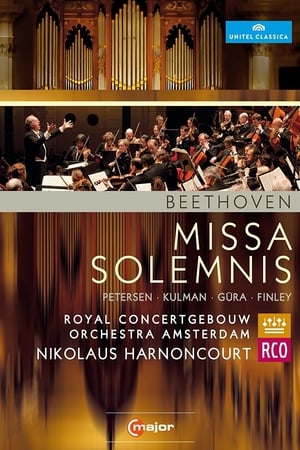
With this performance of the Missa solemnis Nikolaus Harnoncourt, Honorary Guest Conductor of the Royal Concertgebouw Orchestra, once more attained the status of a living legend, due mostly to his wide-ranging expertise of music from the Baroque and Classical era. The highly acclaimed soloists are Marlis Petersen (Soprano), twice the singer of the year by the renowned Opernwelt magazine, Elisabeth Kulman (Alto), Werner Güra (Tenor), winner of the BBC Music Magazine Award for the best vocal performance, and Gerald Finley (Bass), Grammy-Awardwinner for the best opera recording. They are accompanied by the famous Netherlands Radio Choir.
Letters, Riddles and Writs is a one act opera for television by Michael Nyman broadcast in 1991.
Although he is unanimously credited with having democratised opera, making it accessible to the greatest number, focus is rarely put on the strategy he devised and implemented in order to carry out his actions, nor what his actions reveal of the man and artist, and of the resulting metamorphosis from opera singer to pop artist. Through this angle, this film sets out to pay tribute to the man who summed up his credo, obsession and life’s work, in the following way: “They led the public to believe that classical music belonged to a restricted elite. I was the way to prove to the world that was wrong.
Experience what Zell Music Director Riccardo Muti calls “the work of a divine architect” in this special encore presentation of Beethoven’s Ninth Symphony. Recorded live September 18, 2014, at Orchestra Hall during one of the opening programs of the Chicago Symphony Orchestra’s 2014/15 season, this performance features Muti leading the Orchestra and Chorus and distinguished soloists in one of history’s most powerful and inspiring artistic works. A masterpiece whose staggering influence can be seen across classical music, it concludes with the famous Ode to Joy, which calls for understanding, peace and universal goodwill. The Chicago Symphony Orchestra is grateful to an anonymous donor for generously underwriting the recording of this concert in 2014.
Lyrical biography of the classical composer, depicted as a romantic hero, an accursed artist.
Avant-garde composer John Cage is famous for his experimental pieces and "chance music" but temporarily branched into video in 1992 with this art film about meaningless activity. The work is composed of two segments that are supposed to be played simultaneously: "One 11" contains the artistic statement, and "103" is a 17-part orchestral piece. Also included is a revealing documentary about Cage and director Henning Lohner.
A documentary that explores the challenges that a life in music can bring.
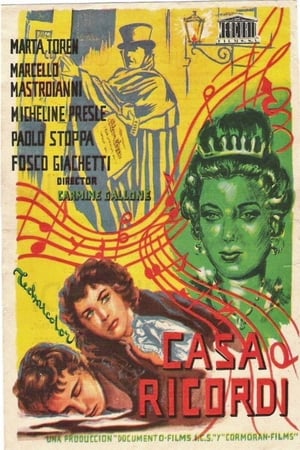
The film covers a hundred years in the lives of the Ricordi family, the Milan publishing house of the title, and the various composers and other historic personalities, whose careers intersected with the growth of the Ricordi house. It beautifully draws the parallel between the great music of the composers, the historic and social upheavals of their times, as well as the "smaller stories" of the successive generations of Ricordi.
Set amongst the unlikely backdrop of cowboy boots, rodeos, and global geopolitics, thirty of the world's most promising musicians travel to Fort Worth, Texas to compete in the renowned Van Cliburn International Piano Competition. Vying for gold and their shot at classical piano stardom, the contestants must endure six grueling performances, multiple elimination rounds, and a discerning panel of jurists. Behind the scenes, we uncover the stories of adversity, sacrifice, and heartbreak driving the pianists to perform at the highest level. As fan favorites and early contenders are eliminated, one unassuming genius rises to the top.
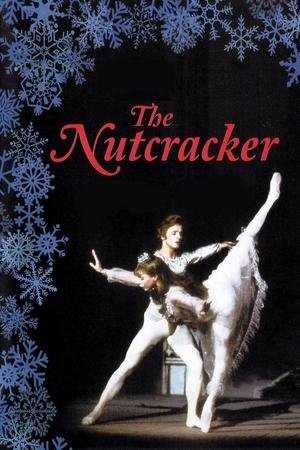
The Nutcracker is Mikhail Baryshnikov's breathtaking and critically acclaimed Emmy-nominated production. This spectacular performance is danced by the magnificent team of Baryshnikov, one of the greatest classical dancers of the century, and Gelsey Kirkland, both showcased at the peak of their careers, with members of the American Ballet Theatre.
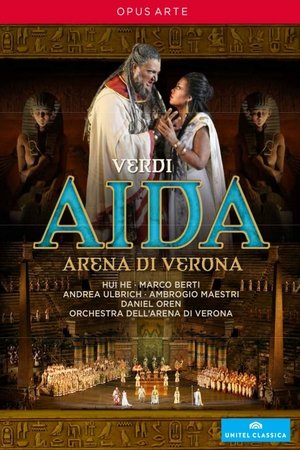
The historic Toscanini television concerts with the NBC Symphony Orchestra. This concert, broadcast in two parts, on 26 March and 2 April 1949, from NBC Studio 8H, features the opera "Aida" by Giuseppe Verdi. (Both broadcasts were released as "Vol. 3" in the DVD series.)
Live action/animation special geared to educate young people about classical music.
Chiaki is an aspiring conductor who faces the challenge of leading an orchestra which is made up of substitutes. Nodame gives her support to her beloved as she works hard towards achieving her dream to pass a promotion exam at their music conservatory. Will Chiaki be able to revive a broken down orchestra and launch his musical career? What will become of Nodame and Chiaki's relationship?
In Search of Beethoven offers a comprehensive documentary about the life and works of the great composer. Over 65 performances by the world's finest musicians were recorded and 100 interviews conducted in the making of this beautifully crafted film. Eleven interviews are included in the Extras and Six complete movements.
Italian tenor Andrea Bocelli grew up in Lajatico, a rural village in Tuscany, where his family still farms nearby. In July 2007, on the slopes of his ancient hill town, a special theater was constructed for a one-night-only concert of his greatest popular hits along with new songs performed to honor the occasion. Some famous musical friends dropped by and the magical result is Andrea Bocelli - Vivere - Live in Tuscany, premiering this December on PBS.
British filmmaker Simon Cellan Jones directs the BBC drama Eroica, starring Ian Hart as Ludwig van Beethoven. Shot on digital video, this TV film depicts the first performance of Beethoven's Third Symphony, June 9th, 1804, in Vienna, Austria. Prince Lobkowitz (Jack Davenport) has invited friends to listen to Beethoven conduct his new symphony for the first time. Among the aristocratic attendees are Count Dietrichstein (Tim Pigott-Smith), Countess Brunsvik (Claire Skinner), and composer Josef Haydn (Frank Finlay). The actual musical score is performed by the Orchestre Revolutionaire et Romantique, under the direction of John Eliot Gardiner.