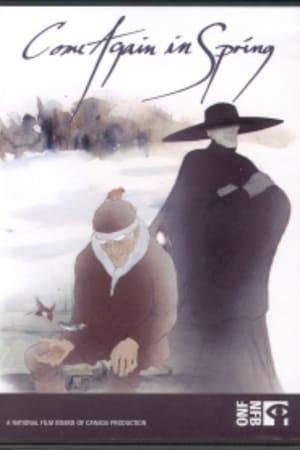
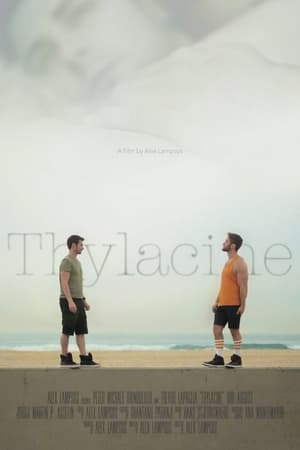
Based on a scene from Stephen King's "The Gunslinger", this short film was the Grand Prize winner in Simon & Schuster's 'American Gunslinger' contest in 2003.
As Julie Mac and her gang of Sharpies fight their way through their turbulent teenage years, Julie reflects on the unexpected bond between herself and the Italian tailor who crafts her iconic ‘Connie’ cardigan; a symbol that will firmly establish her within the Sharpie subculture and strengthen her sense of identity. RAGE is a snapshot of the Sharpie subculture in 1970s Melbourne, a time when running from the cops, avoiding the ticket inspectors, drinking, spewing and rooting were all in a night's work. Inspired by the book RAGE: A Sharpie's Journal, Melbourne 1974 - 1980 by Julie Mac.
In the mist room, in the dim light, the steaming heat is floating and overflowing. The flickering male bodies, sucking each other's desire and loneliness, the more squeezed, the thirsty. You seem to have entered the forbidden area by mistake in formal attire, falling between dream and waking, staring, and being stared at. You can't remember how you came here or how to get out. Theater and video director Zhou Dongyan once again touched the life experience of gay men’s community culture that is hard to articulate but difficult to cut. This time, he moved the poetic lens language into VR, taking you and me to the male sauna, peeling off the layered desires, and exploring the hidden love in some kind of lovelessness.
'SIGN' is a short film that tells, through vignettes, music, and sign language, the story of a relationship between Ben, a hearing man, and Aaron, who is deaf.
This is the visit to an exhibition of painting and photography with the help of a girl named Claudia, and a sickness called Anorexia.
A man strolling in a city street is attacked by three assailants. A policeman comes to the rescue and the men struggle with each other.
Filmmaker Marc Fafard examines the historical and cultural significance of the seafaring Vikings.
A group of elementary school boys goes for a walk on the outskirts of a big city. The ominous atmosphere of fun begins when they pull in a man they met by chance.
A potpourri of features involving Hollywood celebrities. The Columbia University football team, winner of the 1934 Rose Bowl game, visits the Warner Bros. Studios and is greeted by several stars; Margaret Lindsay, Guy Kibbee, and Dick Powell work at a gold mine; Joan Blondell, recovered from a recent illness, thanks her fans; songs from the movie Harold Teen (1934) are performed by the songwriters and the film's stars.
The South Pacific – the ocean between the American continent and Asia, stands for endless vastness, an infinite stretch of water and pristine nature. For many, the South Pacific is synonymous with paradise sun, beaches and of course, the bikini. But the bikini, or rather the island Bikini, also stands for a disastrous series of nuclear tests, carried out by the USA immediately after the Second World War. To this end, numerous ships of different sizes and categories were brought together. The remnants of these vessels have found a watery grave at the bottom of the lagoon: in depths of up to 60 metres, practically inaccessible for the average diver. Until recently, the region could not be visited for decades, due to radioactive contamination. But how have nature and mankind developed? Accompany us to a very special ships cemetery. Explore a region untouched by human hand for more than 60 years and experience the magic of the South Seas.
Stranded on a deserted island, a group of people struggle to survive against a swarm of supernatural flies.
In tropical Recife, in northeastern Brazil, temperatures drop to impossible lows and the inhabitants have to adapt. This 'mockumentary' gradually turns critical, looking at the climate, urban development and social interaction from every angle. Does a ray of sun pierce the clouds, after all?
A tribute to Mallarmé that not only asserts the continuing relevance of his work but also confronts its literary ambiguities with political and cinematic ambiguities of its own. In outline, the film could not be more straightforward: it offers a recitation of one of Mallarmé’s most celebrated and complex poems (it was his last published work in his own lifetime, appearing in 1897, a year before his death) and proposes a cinematic equivalent for the author’s original experiment with typography and layout by assigning the words to nine different speakers, separating each speaker from the other as she or he speaks, and using slight pauses to correspond with white spaces on the original page.
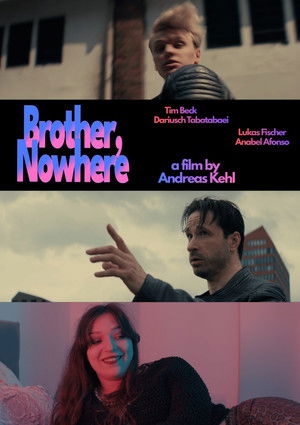
Mike is a guy who once tried to be famous on the internet, but failed and decided to give it up. Almost 3 years later, his "influencer" personality haunts him with the guilt of not having done anything better with his life.
A journalist must portray a sociologist.
In Madrid, a tenant agrees to ignore the existence of the other tenant living in his apartment, so that both inhabit the space as if it were an individual use.
This experimental film follows the work of two scientists who test a new device that uses specialized circuitry to transfer data between computer networks and living plants. Neither science nor fiction, this documentary highlights the human labor of scientific procedures, attentive to the future they are producing – in which humans will disappear.
At her father’s request, Coline returns to her childhood bedroom to sort through her belongings. The various objects she finds remind her of childhood memories that stick to her and that she will finally accept to leave behind…
In this musical special, the Octonauts must find a way to hold back hungry swarms of coral-eating starfish to save a new friend's fragile reef home.
Animation. The theme is Weightlessness. Objects and characters are cut loose from habitual meanings, also from tensions and gravitational limitations. A lyric Eric Satie track accompanies the film. Such a portrait seems necessary from time to time to remind us that equilibrium and harmony are possible, and that we will not dissolve into a jelly if we allow ourselves to relax into them: A horseman rides through the landscape, through the town, but never arrives anywhere in particular. An acrobat swings on a rope above a canal in Venice, and is content just to swing there. Nothing threatens to disturb them. This film is a total contrast to the Kafka-like oddities of Eastern European animation. —Canyon Cinema