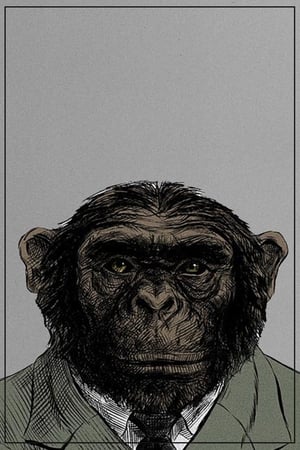
Based on the novel 'Evolution Man' by Roy Lewis, this tells the story about the first man - young Edward - to descend from apes. Edward is ejected by his tribe, but is very resourceful. He learns to walk, discovers fire, manages to hunt - and we follow him as he evolves. He has a generous nature, and search for true humanity - a world where we don't eat our fathers.
A choir of tropical frogs performs infectious pop in delightfully unsettling animation from Costa Rican-Canadian artist Bianca Shonee Arroyo-Kreimes. Riffing on karaoke companion videos and the swipe-n-scroll conventions of handheld media, she infuses candy-coloured digital animation with the spectre of ecological collapse.
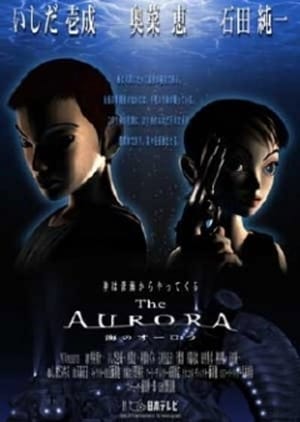
Deep-sea archeologist Hiroshi Ibuki is the member of the digging team working at the bottom of the sea hoping to uncover the origins of Earth's existence but instead uncovers a mysterious colony of bacteria which gives off light similar to the Aurora Borealis. The ancient bacteria, once revived, attempt to make the world habitable for themselves - a process that would bring Earth back to its early primal form, killing all current life in the process.
After Homer accidentally pollutes the town's water supply, Springfield is encased in a gigantic dome by the EPA and the Simpsons are declared fugitives.
The main character of the film is a little boy named Marek, who from an enemy of nature becomes its devoted friend. Before this happens, however, fate plays quite a trick on him. At first, however, nothing foreshadows this. Marek arrives in the forest with a school trip. He quickly separates himself from the rest of the children, after which he gives vent to his hooligan fantasy. He destroys an anthill, cuts a tree with a knife, tries to catch a spider. When he fails, he starts chasing a butterfly. He doesn't know that under this figure hides the prince of white and black magic. Wanting to punish the unruly boy, the sorcerer reduces him to the size of an insect. Mark, reduced to the size of an insect, must learn to live in completely new conditions. This is by no means easy.
Follow two ever-changing creatures as they flow from one life-form to another on a vivid journey of sound and light. Sonaria's visual language is simple and abstract, designed to suggest, while the sonic language is layered and immersive, designed to answer.
This stop-motion animated short film draws us into a post-apocalyptic world through the eyes of a solitary hamster. Wandering through the ruins of once-thriving cities, he scavenges for objects, searches for water, and tries to care for the last surviving plants. One day, he stumbles upon a pair of binoculars. Through them, he spots a strange house covered in flowers, standing in the middle of the urban desert. Intrigued, he sets off to explore and discovers the Giant, a plant-like creature trapped inside its own overgrown sanctuary. Terrified of the outside world, the Giant dares not cross the walls of its home. Petit decides to help. Together, they embark on a journey that’s as simple as it is extraordinary: to make the Earth bloom again.
The story of the evolution of life on Earth in animated form.
Pohádka o stromech a větru
A plucky, pioneering pre-historic fish has a groundbreaking plan to improve his life.
In this animated reverie, ambient sound and poetic narration evoke the experiences of a young boy in the forest at twilight. Accompanied by a friend, the boy walks past vigilant rocks and a sentinel tree, hears the grasses' silent plea ("don't tread on us, leave us be"), espies a spider in his web and two worms snug in their leafy bed. In the darkening sky, they watch clouds billow by tickling the snoring moon. Arriving home, the boy wonders where the path of the nearby river flows.
Prince Charles tells a group of children the story of the Old Man of Lochnager, based on the book he wrote.
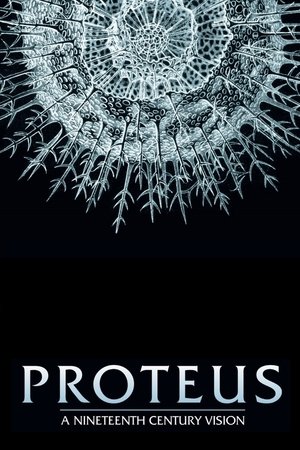
The animated documentary Proteus explores the nineteenth century's engagement with the undersea world through science, technology, painting, poetry and myth. The central figure of the film is biologist and artist Ernst Haeckel, who found in the depths of the sea an ecstatic and visionary fusion of science and art.
The sun’s energy circulates throughout the earth, feeding the cycle of life. Everything is connected in a natural loop, which repeats, like the circular discs of magical optical toys. This perfectly balanced rhythm is disrupted by human excess, throwing the cycle out of orbit and temporarily stopping the circulation of energy in nature.
Times are changing. A mysterious red dust has brought disease and destruction. Only the sheep remain healthy. As they become the only source of food and clothing, humans treat them like gods. But times, they keep changing. A dystopian tale brought to life in stop motion.
Arrosez-les bien !
A sci-fi, eco-conscious fantasy about a 14-year-old heroine, Suzu, a descendent of a distinguished shaman who saved people from catastrophe in the past. Suzu sets out on a journey, along with the spirit of nature, Coluboccoro, to regain peace and nature to the ruined villages.
A little girl catches floral patterns with a magic cloth and uses them to make her own pretty dresses. Every night, ants move her house from one field to the next. One day, a seed drops into her mouth and a young shoot sprouts from her navel.
In 2061 CE, humanity's indiscriminate pollution of space has substantially hindered the development of space travel. In response, an international federation has designated the sun as a natural incinerator, federally establishing a treaty with the goal of first processing hazardous waste on Jupiter and forming the space environment defense force Cosmo Ecology. However, polluters evading surveillance networks continue to illegally dispose of radioactive waste directly into the sun. As a result, increased solar flare activity is on the verge of turning the Earth into a desert.
A humourous illustration of the natural process of evolution.