The Naked Dance is the first documentary about America's legendary legal red-light district that thrived in New Orleans from 1898 until World War I. Storyville got its name when Alderman Sidney Story attempted to clear up the New Orleans waterfront by restricting prostitution to a specific neighborhood. To his chagrin, the area was dubbed "Storyville," and it was so known until the U.S. Navy closed it for good in 1917.
This documentary film includes never-before-seen footage and exclusive interviews to tell the story of Charity Hospital, from its roots to its controversial closing in the wake of Hurricane Katrina. From the firsthand accounts of healthcare providers and hospital employees who withstood the storm inside the hospital, to interviews with key players involved in the closing of Charity and the opening of New Orleans’ newest hospital, “Big Charity” shares the untold, true story around its closure and sheds new light on the sacrifices made for the sake of progress.
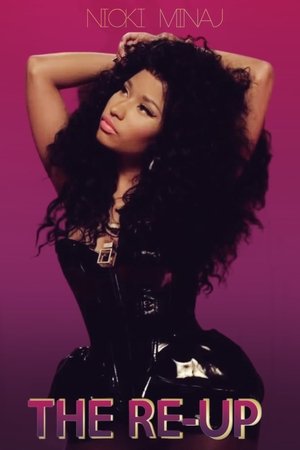
A backstage and on-stage look at Nicki Minaj's career during the Pink Friday Tour, festivals, and more.
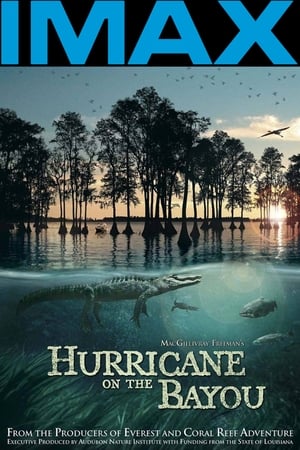
The film "Hurricane on the Bayou" is about the wetlands of Louisiana before and after Hurricane Katrina.
The Battle of New Orleans: A Meaningful Victory explores how the British misjudged their opponent and miscalculated the complexities of the battle ground. It also describes why the multi-cultural population of New Orleans proved the naysayers wrong about their loyalties to a young nation. WYES Community Projects Producer Marcia Kavanaugh and Tom Gregory hosted and produced this documentary.
I Will Keep My Soul is a gathering of encounters and observations, figured in text and image, of Helen Cammock’s experiences in New Orleans. Cammock convenes both contemporary and historical voices—from archivists, artists, writers, and musicians to the protagonists of the civil rights movement—and adds her own through poetry, ceramics, and the sound of her trumpet.
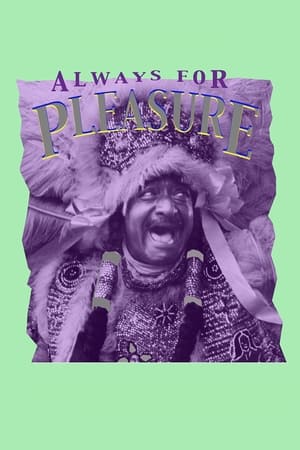
The feature-length documentary, TOOTIE’S LAST SUIT explores the complex relationships, rituals, history, and music of New Orleans’ vibrant Mardi Gras Indian culture while telling the story of Allison “Tootie” Montana, former Chief of Yellow Pocahontas Hunters. Celebrated throughout the New Orleans as “the prettiest,” for the beauty and inventiveness of his elaborately beaded Mardi Gras costumes, Tootie Montana masked for 52 years, longer than any other Mardi Gras Indian. Yet Tootie Montana’s contributions to Mardi Gras Indian culture far exceed his artistic innovations and dedication. Through the example of his own achievement, he came to be revered for turning Mardi Gras Indians away from gang-style violence toward artistic accomplishment and competition. In the aftermath of Katrina, TOOTIE’S LAST SUIT bears witness to the Mardi Gras Indians who, in picking up the threads of their torn lives and tradition, are the spiritual healers of New Orleans.
A touching documentary about a city that has lost hope, and about one man's fight to bring it back.
A musical portrait of New Orleans' street celebrations and unique cultural gumbo in 1977: second-line parades, Mardi Gras, Jazz Fest. Features live music from Professor Longhair, the Wild Tchoupitoulas, the Neville Brothers and more. This glorious, soul-satisfying film is among Blank's special masterworks. Preserved by the Academy Film Archive in 1999.
Documentary where rich social history frames a spirited debate on the development of water infrastructure throughout the USA.
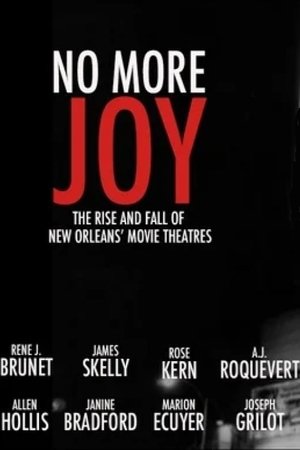
From the first movie nickelodeon on Canal Street in New Orleans at the turn of the century to the mega-plex theatres in the suburbs of the city, this film traces their history. With interviews from the people that were working in silent movie theatres to the visionaries that knew that "if you built them they will come", this is fascinating look at a history in a city that is a joy in everyone's memory.
A look back 20 years ago, on the challenges Coast Guard air crews and rescue swimmers had to overcome in New Orleans, to successfully rescue thousands of people in need following Hurricane Katrina in 2005.
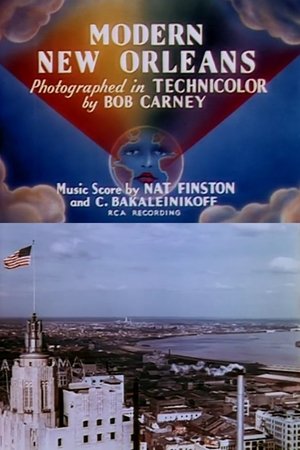
This Traveltalk look at New Orleans starts at the recently modernized port and harbor facilities, with ships unloading various cargo and loading cotton. We then ride along Canal Street and visit the Tulane University campus. After a look at the variety of the residential architecture, we end our visit at the city's new airport.
Mardi Gras, drag balls and politics – where else could these elements come together but in New Orleans? Interweaving archival footage and contemporary interviews, The Sons of Tennessee Williams charts the evolution of the gay Mardi Gras krewe scene over the decades, illuminating the ways in which its emergence was a seminal factor in the cause of gay liberation in the South.
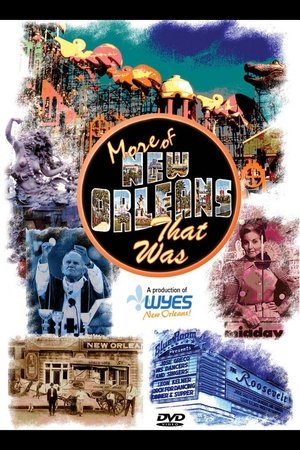
A ride on the Zephyr at Pontchartrain Beach, a ride on the Canal Street streetcar, a journey along the New Basin Canal, exploring Lincoln Beach, watching the New Orleans Pelicans play ball, seeing the Mardi Gras Indians on tree-lined North Claiborne Avenue or just going to the neighborhood movie theatres. Visit some of the special places from New Orleans’ recent past.
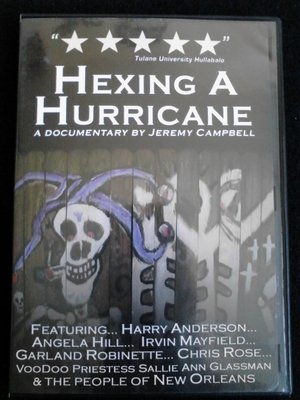
Hexing a Hurricane is a 2006 documentary film about the effect of Hurricane Katrina on New Orleans. It has been billed as the "First Katrina documentary" released by a New Orleanian. The film was directed by Jeremy Campbell and distributed by the National Film Network. The film's score was orchestrated by New Orleans artist Eric Laws.
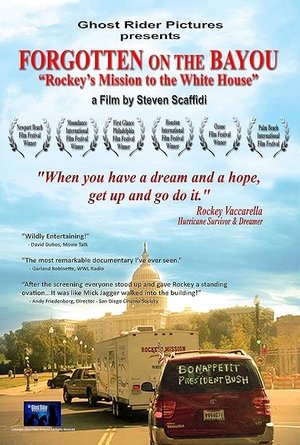
On August 29, 2005, Rockey Vaccarella rode out Hurricane Katrina on his roof by holding on to a rope for 4 hours. Rockey and his family lost everything but he refused to give up. Nearly one year after surviving the worst natural disaster in the history of America, Rockey set out on a mission to deliver a message to the President of the United States. Even when most people thought he was crazy, Rockey hooked up his FEMA trailer and journeyed from Louisiana to the White House. By the time he arrived in the nation's capitol, Rockey had captured the attention of America and much of the world. FORGOTTEN ON THE BAYOU is the true story of an unforgettable man who believes that anything is possible.
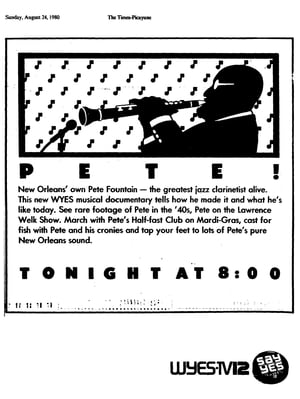
Narrated by Phil Harris, a longtime friend of Fountain's, "Pete!" uses performance film, interviews, behind-the-scenes footage and a home videos to offer an intimate portrait of Fountain, the walking, talking embodiment of his hometown. Produced and directed by by John Beyer, the film originally aired on PBS stations nationwide. When it aired locally as part of a PBS membership drive, "Pete!" was credited with raising "more than had ever been raised by a single program in the history of WYES," according to a story published in The Times-Picayune in August 1980.
To make the perfect Sazerac combine one part technique, one part interpretation, and a dash of folklore.
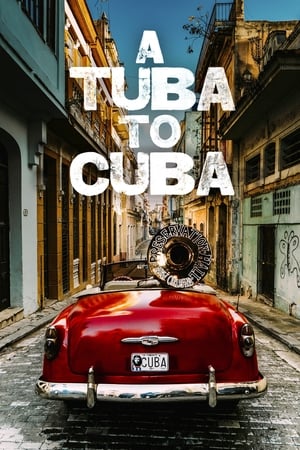
A son seeking to fulfill his late father’s dream takes his band from the storied city of New Orleans to the shores of Cuba, where — through the universal language of music — dark and ancient connections between their peoples reveal the roots of jazz.