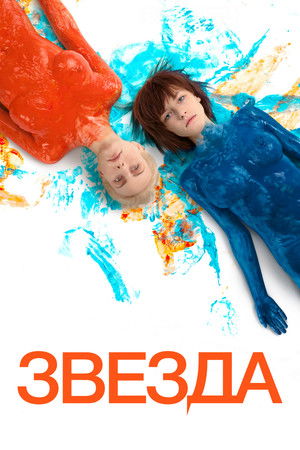
Sabina has travelled from Romania to Holmsund in northern Sweden to find a job with her brothers. Elin has just finished school and is enjoying the first day of the summer holidays. That evening they meet, and it's a meeting that lasts forever.
In a fascinating geopolitical drama, Danish filmmaker Mik-Meyer closely follows Ravalomanana as he attempts to return from exile in South Africa to Madagascar, under the threat of arrest and bodily harm.
Omnibus film with 11 short films directed by students of the HfG Ulm
The portrait of a young bakery worker in Swabia. A vague desire for something else lurks between her sentences and the images of her everyday life.
A report on the Film Academy in Ulm, Germany
In Japan, a group of teenagers addicted to video games devote their hours and money to a passion that destroys them.
Janosch, an interpreter, is called to help during a police deployment at the Port of Hamburg. A young African woman has barricaded herself in a container ship and threatens to commit suicide. In order to get her out, Janosch promises to help her, an offer which bears unexpected consequences.
Find bric-a-brac and trinkets galore in this vividly colourful snapshot of Portobello Road Market.
MUTE is an animated short about a world populated by people born without mouths.
The procedure of separating and extracting certain aspects of a scene by adjusting the focus of a series of frames in succession according to various organizational patterns is developed in Retour d'un repère. While the filmic operations are structured in relation to a limited space (a branch over a 19c duck pond), the filmic process rests on a visual transformation of a pantoun, a verse form borrowed from literary rhetorics, which characteristically transforms itself gradually and continuously in a precise manner. - Lightcone
The film’s visual structure is principally composed of variations on the arabesque: arcs of light, water spouts, spider webs, burgeoning trees, flowers and foliage, a woman’s smile, arms stretching, an arm giving rhythm to a rocking chair. It uses natural elements (light, mirrors, water, and wind) and photographic techniques (multiple exposures and lenses) to distort the various elements, or to intensify their design.
Staggeringly simple films: a man itching his back, a man thinking, a man yawning, but like the works of Samuel Beckett, these minute gestures stand in as grand statements of the human condition, akin to the films of Bas Jan Ader and Marcel Broodthaers.
A short film about a small town where the past and the present are difficult to tell apart.
Pies y corazones
A kid and his teacher learn an important lesson: a grammatical mistake can create big trouble, but even a correction done the wrong way can cause senseless fears.
A single mother struggles with the day-to-day challenges of raising her daughter, holding down a job, and grieving her husband’s death.
Europa is a 12-minute anti-fascist film made in 1931 in Warsaw, Poland by surrealists Stefan and Franciszka Themerson. The film is based on Anatol Stern's 1925 futurist poem Europa. It uses collages and photograms, and articulates the sense of horror and moral decline its makers were witnessing. The film, while long thought to have been lost, is considered an avant-garde masterpiece.
Following a series of title cards, a man in sunglasses briefly flutters his hands like fairy. Owen Land states that this film was not made by George Landow, and believes it should be credited to John Cavanaugh. "George Maciunas had a number of films which didn’t have titles on them. Then he put them together into his Fluxus reel and tried to remember who made them. It was an intentional Fluxus joke." (Owen Land, interview with Mark Webber, 2004)
Ydessa Hendeles' exhibition entitled "The living and the Artificial" (consisting of works of art all comprising a photograph of living persons in the company of one or several teddy bears) had puzzled Agnès Varda so much that she decided to go to Toronto where the artist lives and interview her. In front of Agnes Varda's DV camera, Ydessa tells about the singularity of her artistic approach. She also expresses herself about the Holocaust, which both her parents survived.
Numerals on clear film from 1 to 1000."