In their search for work, a group of workers face familiar frustrations. Cedrón raises his own conflicts and tries to understand their cause. As in all his other films, the director sets his sight on aspects of reality that are not well observed.
The closed community of a private neighborhood of high-priced houses, is moved by the discovery of three corpses that appear floating in a pool and rushes to frame it as an accident.
Eleven young film-makers got together to collaborate in this atypical project. Atypical not only because of its technical specs, but because of its narrative structure. There are several scenes with only the city in common, and more as a conceptual presence at that than as a precise geography. None of those scenes contains a single "story": Each one of them is part of a larger situation that we cannot see, as though the beginning and end of each "story" had to be filled in by the audience.
Lorenzo, a quiet teenager lives in a small town at the edge of the world in beautiful Patagonia. He’s a good student and a curious and smart person, more skilled in music and literature than sports. Lorenzo’s father decides to host Caito, the son of a friend from Buenos Aires who had to go to hospital for a long stay. Caito has obviously a different family background and seems to be a tough kid. Lorenzo finds Caito very intriguing in many ways as they start spending a lot of time together…
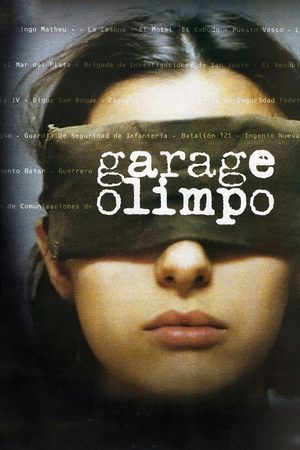
Maria is a militant activist in an organisation opposed to the military dictatorship in Argentina. She teaches reading and writing in the shanty towns and lives with her mother in an old and run-down residence. One morning, Maria is carried off, in front of her mother, by a military squad dressed in civilian clothes. The young woman is taken to the Olimpo garage, one of the numerous torture chambers which haunt Buenos Aires to the general indifference of the population. In order to make Maria talk, Tigre, the head of the centre, gives her to one of his best men, Felix.
A long night's journey into day: Victor, a street hustler in the Santa Fe and Pueyrredón neighborhoods of Buenos Aires, from the evening of November 1, All Saints Day, to the dawn of November 2, All Souls Day. Victor's odyssey takes him from clients to friends to a gay gym then a hotel room and an all-night café. He plays pick-up soccer with kids whose parents are going through trash or waiting in parks. A vendor gives him a chrysanthemum. It seems he's being followed, and on the night streets, death is close at hand. Can Victor survive until dawn?
Jaime has lost his job and has to provide for his wife, son and daughter. Pressured by this circumstances, he visits his mom, who lives in an apartment he owns, to ask her to move with him so he can sell the apartment. But she is not going to cooperate. And, to Jaime's surprise, she also has a boyfriend!
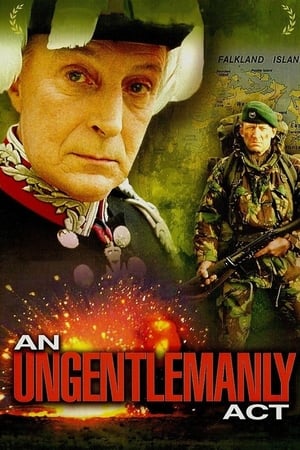
The Falklands Play is a dramatic account of the political events leading up to, and including, the 1982 Falklands War. The play was written by Ian Curteis, an experienced writer who had started his television career in drama, but had increasingly come to specialise in dramatic reconstructions of history. It was originally commissioned by the BBC in 1983, for production and broadcast in 1986, but was subsequently shelved by Controller of BBC One Michael Grade due to its alleged pro-Margaret Thatcher stance and jingoistic tone. This prompted a press furore over media bias and censorship.The play was not staged until 2002, when it was broadcast in separate adaptations on BBC Television and Radio.
In 1960, a team of Israeli secret agents is deployed to find Adolf Eichmann, the infamous Nazi architect of the Holocaust, supposedly hidden in Argentina, and get him to Israel to be judged.
Two coworkers decide to blackmail the corrupt demolition company they work for by setting up a fake accident.
Joaquín Góñez, a novelist in his sixties recalls his emotions, his wild years in Buenos Aires, the memories of old friends, the meaning of loyalty and the intimate relationship with his mother, Roma.
The story—in which an American heiress on holiday in South America falls in love with an Argentine horse breeder against the wishes of their families—takes a backseat to the spectacular location shooting and parade of extravagant musical numbers, which include the larger-than-life Carmen Miranda singing the hit “South American Way” and a showstopping dance routine by the always amazing Nicholas Brothers.
After the end of the military dictatorship in Argentina in 1983, Floreal is released from prison. Instead of returning to his wife, he wanders through the night of Buenos Aires. He meets some people from his past–most of which are only imaginary–and remembers the events of his imprisonment.
Based on actual accounts, this film portrays the days and hours before and during the invasion of the Falkland Islands by Argentina, which eventually lead to the Falklands War. As the Argentine forces land on the main island and make their way towards Government House, the handful of British defenders batten down the hatches and prepare to defend Governor Rex Hunt, his family, and their fellow islanders from the invaders.
X arrives in a small town and witnesses a violent act; Z takes the job of a dead manager and discovers that he had a notebook written in code and a map; H is hired to go down a river and investigate a series of mysterious monoliths built on the shore.
For many, the name Malvinas/Falklands evokes an absurd war between England and Argentina in 1982. For Julieta Vitullo, the protagonist of this film, this tragic history becomes deeply personal 25 years later when she suffers a loss associated with her search to uncover that past, unfolding into a life-affirming struggle for renewal and rebirth. This film tells the story of two trips, one made in 2006 and the other in 2010. In the space between one trip and the next, between past and present, between the public and the private, between what can and cannot be told, the movie reflects on the possibilities of conveying extreme life experiences, presenting landscapes and sounds that suggest subtle contours of that shape, 'The Exact Shape of the Islands.'
An army captain in Argentina learns why his lonely men are deserting to an outlaw's gaucho gang.
Estela Canto and Jorge Luis Borges meet in 1944. She is an intelligent and beautiful woman. He, still an unknown writer, is shy and very attached to his mother. They fall in love, or at least Borges does.
In the 1980s, a team of lawyers takes on the heads of Argentina's bloody military dictatorship in a battle against odds and a race against time.
Laura lives in fear in a small town. Her ex partner, Hernán, was violent with her and now he's about to return to town. Laura must find a solution to never cross paths with him again.