In 1971, a group of young female soccer players filled Mexico City's Azteca Stadium with 115,000 spectators to play the final match of the Second Women's World Cup. This documentary features their exceptional and forgotten story.
Laurent Duvernay Tardif - LDT : toujours plus loin
Starting with a long and lyrical overture, evoking the origins of the Olympic Games in ancient Greece, Riefenstahl covers twenty-one athletic events in the first half of this two-part love letter to the human body and spirit, culminating with the marathon, where Jesse Owens became the first track and field athlete to win four gold medals in a single Olympics.
Part two of Leni Riefenstahl's monumental examination of the 1938 Olympic Games, the cameras leave the main stadium and venture into the many halls and fields deployed for such sports as fencing, polo, cycling, and the modern pentathlon, which was won by American Glenn Morris.
Documentary focusing on the Wales national football team and their first Major Tournament since 1958 at the Euro's 2016 in France. going beyond expectations and reaching the Semi Final, Making a Country Proud
Crowds is a feature documentary that records popular events of Uruguay where thousands of people gather spontaneously, called by faith, passion, celebration and memory. What happens when we set aside our individuality to act collectively? This documentary observes the passions that draw thousands of people close in order to join in a choral character. It discovers the crowd while it transgresses and experiences catharsis, while it seeks miracles and hopes; in continuous movement it splits and rejoins... until they dissipate and individuals re-emerge in their own solitude.
Le combattant : Patrick Côté
An experimental pixelated collage of highlights from the Toronto Blue Jays' 1993 World Series victory, set to ambient tunes released the same calendar year.
Sport documentary
Chile hosts a decisive World Cup qualifier at Santiago’s National Stadium just weeks after the stadium had been transformed into a concentration camp and killing field for opponents of Augusto Pinochet (who had just gained power in a military coup). Though FIFA investigates the matter, the game goes on, with the Chilean team winning in a walkover after their opponents from the Soviet Union boycott in protest over the stadium's use
This documentary spotlights one of the most contentious deals in football history and the extraordinary player at the center of the storm: Luís Figo.
György Schirilla, known for his long-distance running and swimming across the icy Danube, ran to Moscow to commemorate the 50th anniversary of the October Revolution. A year later, a bistro was built in his honour in the small Hungarian village of Kenderes. Gyula Gazdag captured moments of his run to Kenderes and the opening ceremony. The film's original title comes from a "poem" delivered by the village council president, which included the line: "We can always count on your long run."
Intimate story about the rising career of Gabriela Adam, only with her determination and the support of an institutional educational network, where her family plays a fundamental role.
"The King of South Beach" is a documentary evaluating LeBron James' time as a member of the Miami Heat - his controversial announcement, his title wins, and his ultimate departure.
TransWorld Motocross' newest film feature delves into the world of social media moto superstar Axell Hodges. With over 250,000 followers on Instagram alone, the 20-year-old from Encinitas, California, has successfully figured out how to make a living on his dirt bike, without lining up behind a starting gate! True, as a former Amateur National Champion, Axell does have a racer’s background, but the skill and style he’s developed through the years while at play on his dirt bike are what make him truly amazing. This documentary style film gives viewers a glimpse into the “24/7 fun” world of Axell Hodges. Who is he? Why do fans love him? Why do sponsors need him? And most importantly…how did he get so skilled at riding his motocross bike?
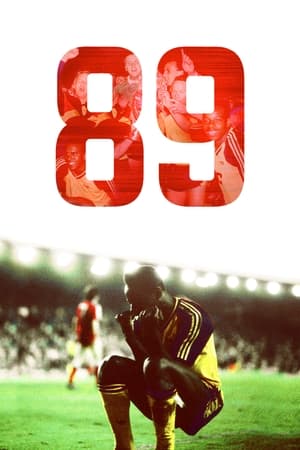
A look at the April 15, 1989 tragedy at Hillsborough Stadium in Sheffield, England, where a stampede in the stadium's standing-room-only areas killed 96 people and injured 766. The film also examines the ongoing efforts of victims' families to seek truth and justice, as well as tangible effects on English football, including stadium upgrades and the emergence of the English Premier League.
They do not earn millions, yet they are happy nonetheless: Maria Meissner (87), Josef “Sepp” Schmid (74), and Rudi Egerer (65) have spent most of their lives working for FC Bayern. Maria still cleanses the trophies nowadays, Sepp still washes and prepares the jerseys of the players in the basement, and Rudi is still the bus driver. They are simple people who may have access to the glamorous world of the big stars, but who never wanted to adapt to the ‘modern times’ unconditionally. They have remained side characters and experience their club from a special angle: Being witnesses of the development from a people’s sport to star cult and commercialisation.
1977: Grêmio lives a dark period in its history, after losing the last eight Campeonato Gaúcho to Internacional. Then there was a crowd that would shake up the structures and prejudices of the universes of the gaucho football and forever mark its name in history: the Coligay, the first organized football group of supporters formed exclusively by homosexuals.
Strength Wars: The Movie follows the lives of eight athletes preparing for the ultimate strength competition. The prize? To be labeled the strongest man in the world. Putting two different types of athletes against each other, Strength Wars is the ultimate proving ground to test any given athlete's true strength. Eight athletes. Eight athletic disciplines. One winner. The film highlights eight men from across the globe including Larry Wheels, Terron Beckham, Blaine Sumner, NDO Champ, Big Neechi, Jerry Pritchett, Anabolic Horse, and Leonidas Arkona. Welcome to Strength Wars. May the best man win.
The Detroit Pistons of the late 1980s and early '90s seemed willing to do anything to win. That characteristic made them loved — and hated. It earned them the title: Bad Boys.