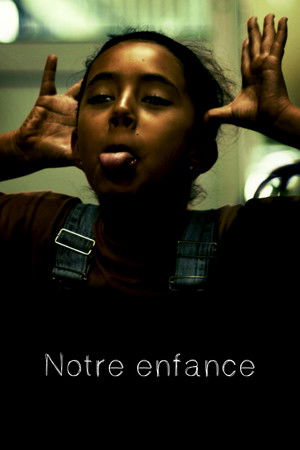
The people of the Mafrouza shantytown in Alexandria daily reconstruct themselves and the world around them, but they also question the camera, who answers them and thus becomes a character in the film.
Tarō Okamoto became world-famous by designing the “Tower of the Sun” at Expo ’70 in Osaka. The ideas and problems that came with its creation, however, are intertwined with the evolution of Japanese culture – from the Paleolithic up until modern times. In his documentary debut, director Kōsai Sekine takes us on a philosophical journey that transcends the visual limits of documentaries.
Does gloomy fascination that surrounds serial killers tell us something important about ourselves? The figure of Joachim Knychala, who murdered five women between 1975 and 1982, is used to focus our attention on those whose lives were marked by the infamous 'vampire from Bytom'. Among them there is a former journalist, Edward Kozak, who, despite his old age, admits he has a variety of obsessions. The film about the 'vampire' offers him an opportunity to enter the limelight one more time.
Perry J. Watkins was drafted into the U.S. Army in 1968 and served 15 years reaching the rank of sergeant. He was also openly gay, even to the point of doing drag shows on base. He was discharged in 1982 but fought for reinstatement and the United States Supreme Court ruled in his favor. This is his story.
A thoughtful exploration of gypsy culture, an intimate portrait of flamenco guitar player Yerai Cortés and a healing family exorcism through music. Antón Álvarez (aka C. Tangana) makes his filmmaking debut with this documentary.
From the rains of Japan, through threats of arrest for 'public indecency' in Canada, and a birthday tribute to her father in Detroit, this documentary follows Madonna on her 1990 'Blond Ambition' concert tour. Filmed in black and white, with the concert pieces in glittering MTV color, it is an intimate look at the work of the icon, from a prayer circle before each performance to bed games with the dance troupe afterwards.
In 1948, after the Japan’s defeat, the General Headquarters and Japanese government ordered that the Chosen gakko, schools for Koreans in Japan,ō be shut down. Koreans in Osaka strongly resisted, and 16-year-old Kim Taeil was even shot and killed by the police. This was the Hanshin Education Incident. 70 years have passed, but the Japanese oppression continues. They've removed the Chosen gakkoō from being eligible for free education. Gaining strength from the growing hatred from the conservatives, the Abe administration is misusing the educational issue as a means to cause political strife. In the midst of ongoing conflicts in Japan, nonfiction writer KO Chanyu has directed Korean Schools in Japan, compiling a history of the Koreans' fight for education.
Twenty years after China’s scandalous “Black Blood Economy,” when a million Chinese citizens were infected with HIV and countless died from AIDS, thousands of rural peasants still suffer the consequences, their plight hidden from the eyes of the world and strongly censored by Chinese authorities.
A look into the birth of the soul music scene on Beale Street in Memphis, Tennessee. Chronicles the rise of soul music, the creation of many iconic songs, and the effect that the genre would have on generations to come. Featuring interviews with B.B. King, Isaac Hayes, Steve Copper, and many other legendary artists.
This charming and casually reverent work is an authorized single-screen version of an installation by celebrated video artist Ahtila. Amid stunning snow-draped forests, a women’s theatrical group rehearses a stage version of the Annunciation (the director is played by Aki Kaurismäki’s signature actress Kati Outinen), in the process discovering the parallel worlds of humans and animals, and the proximity of the ordinary to the miraculous.
How do white South Africans deal with their fears of crime and violence? Like crocodiles, some survive without evolving, living with their fears. Others make fear their friend and evolve in ways you'd never imagine.
Twenty years after having talked about death, the world and their problems in "El desencanto", the Panero brothers reflect about their actual situation at the moment and what has happened since the last movie.
Looks at the link between Guantanomo Bay and the torture methods used in Iraq. How US forces handle the task of retrieving information from the detainees. Ex detainee Mehdi from Sweden breaks his vow of silence.
A feature-length documentary on Yvonne Bezerra de Mello, award-winning artist and human-rights activist who has gained international recognition for her work with street children in Rio. The film recounts how a woman turned her back on a wealthy lifestyle, driven into action by the execution of 8 streetkids by military police in 1993. In subsequent years Yvonne's struggle to better the lives of endangered and abandoned children has led her to found "Projeto Uere" ("Children of Light") a radical project committed to protection and education of kids who live in the streets and slums of Rio which has brought her into conflict with Brazil's wealthy elite.
A documentary about the extreme films released from the 1970's-today with interviews from the creators.
A Biography documentary going behind the scenes of the hit show 'Glee,' featuring interviews with creators and a handful of cast members as well as never-before-told stories from its conceptual beginning through the casting process.
Tribute celebrating the iconic sitcom featuring classic archive material. We meet the insiders to find out exactly why this sitcom is one of the most successful TV shows ever.
British Naturism wants to persuade more people to give social nudity a try with some naked swimming. But is the marketing director's new girlfriend even ready to take the plunge? Can British Naturism sell social nudity to a younger generation by launching a weekend of nude swims over one weekend in September?
Documentary depicting the historic moments that defined America's journey from barren wilderness to global superpower, featuring contributions from experts and archive footage. Beginning with the first Viking visitors a millennium ago and the Pilgrim Fathers settling at Plymouth Harbour, the film also takes in independence in the 18th century, as well as the gold rush, civil war and the abolition of slavery in the 19th century.
Marking the 50th anniversary of the Berlin Airlift, this documentary looks back on an uneasy time in world history. This first "battle" of the cold war started with the Soviet blockade of Berlin, a move to force the Western Allied powers to abandon their post World War II control of West Berlin. The Soviet blockade included all rail, road and water communications. On June 26, 1948, the United States and Britain began a year-long effort, documented here, to supply West Berlin by air. By July, the Soviet army had increased into 40 divisions - against eight for the West. The blockade ended on May 12, 1949. This is the story of the blockade, told by those involved. They describe the enormous logistical effort to transport some 2.3 million tons of food, fuel and equipment -- a battle the Western powers won. And when it was over, the former Allies formed NATO, the Soviets created the Warsaw Pact, and the Cold War grew even colder.