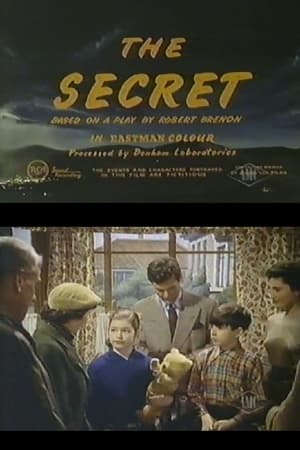
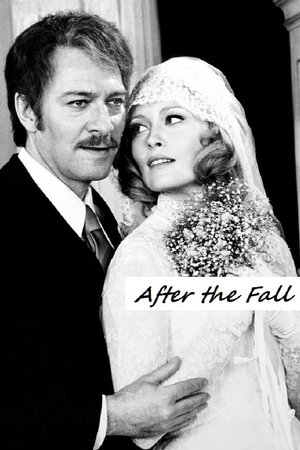
Old guilt, forgiveness and a new love. After 20 years in the French Foreign Legion, Martin returns to his Czech hometown. As soon as he arrives, he learns that his mother has died in his absence. Martin realizes that while in the military he learned to survive in any dangerous situation, but not how to cope with the complexities of human emotions and relationships. When he meets the deputy mayor's clever daughter Sara, he falls passionately in love and happiness seems to be within reach. But then his past catches up with him ...
Walter Lee Younger is a young man struggling with his station in life. Sharing a tiny apartment with his wife, son, sister and mother, he seems like an imprisoned man. Until, that is, the family gets an unexpected financial windfall.
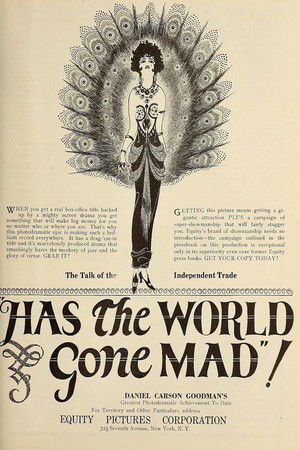
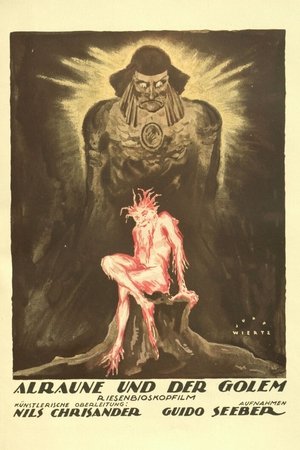
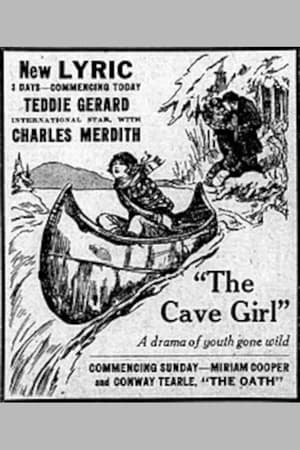
A lost film.
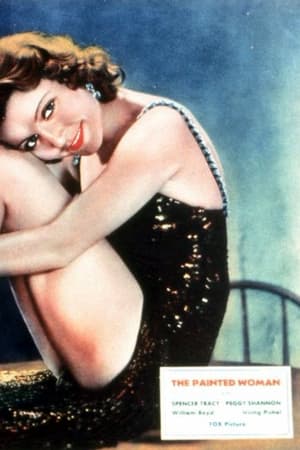
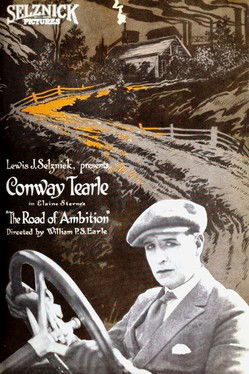
Ivan Savonsky, popular society artist, meets Olga Kartoff, a young woman high in social circles, and while she is instantly attracted by him, he sees in her only the perfect model for his picture, "The Dagger Woman." Studying her, and by carefully playing on her emotions he gains her confidence, and afterward she consents to pose for him. The picture completed, she is grieved and then angered to discover that Ivan's interest rests solely in it, and how it will fare at the exhibition. She pleads with him in vain. The picture is pronounced a masterpiece, and Ivan is in his triumph as he returns to his studio. Here Olga has secreted herself. Humiliated by the reports circulated regarding herself and the artist, and unable longer to bear his disinterest she plunges a dagger to his heart and kills him.
January 1942, in Nazi-occupied Poland during World War II. Thousands of Jews have been confined to the Warsaw ghetto for more than a year. Outside, life goes on; inside, they struggle to survive another day. Still, on a cold winter night, a group of Jewish actors manage to stage a lively musical comedy.
Female gang leader, "The Tigress," is married to a master criminal. She steals a child from a wealthy family and raises him as her own, giving him all her love while keeping him unaware of her criminal activities. She becomes the de facto leader of the gang and rules them with an iron will.
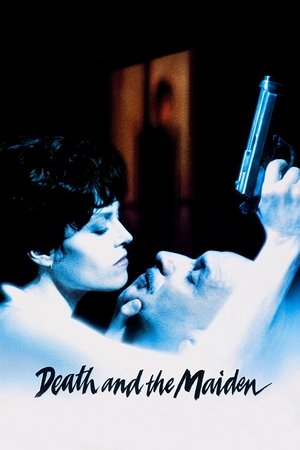
When a young woman unexpectedly arrives at an older man's workplace, looking for answers, the secrets of the past threaten to unravel his new life.
Kick In is a lost 1917 silent film crime melodrama directed by George Fitzmaurice and starring William Courtenay. It is based on the 1914 Broadway play of the same name by Willard Mack.
Unjustly accused of adultery in a scandalous divorce, Larita Filton flees to the French Riviera. She soon falls in love with a young Englishman, John Whittaker, and begins anew under an assumed name. But when John brings her home to his disapproving family, Larita’s past begins to resurface.
Saya who came to Tokyo after being traumatized by an incident eight years ago. She learns that the man involved in the case has been engaged to her sister and returns home without being able to stand. Saya's radical words and deeds involve the people around him and reveal their hidden humanity.
The plot centers on students involved in the Soweto Riots, in opposition to the implementation of Afrikaans as the language of instruction in schools. The stage version presents a school uprising similar to the Soweto uprising on June 16, 1976. A narrator introduces several characters among them the school girl activist Sarafina. Things get out of control when a policeman shoots several pupils in a classroom. Nevertheless, the musical ends with a cheerful farewell show of pupils leaving school, which takes most of act two. In the movie version Sarafina feels shame at her mother's (played by Miriam Makeba in the film) acceptance of her role as domestic servant in a white household in apartheid South Africa, and inspires her peers to rise up in protest, especially after her inspirational teacher, Mary Masombuka (played by Whoopi Goldberg in the film version) is imprisoned.
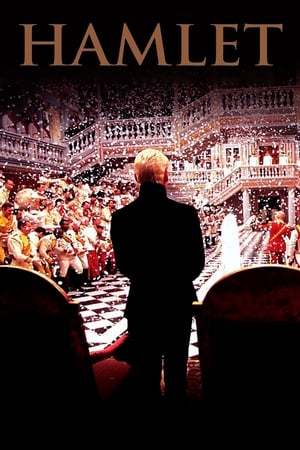
Hamlet, Prince of Denmark, returns home to find his father murdered and his mother now marrying the murderer... his uncle. Meanwhile, war is brewing.
Inspired by a 1975 American touring production of Thornton Wilder’s “Our Town” he visited as a young man, Dmitry Krymov’s “Everyone is Here” is a memory piece, a starting point for a flight of imagination and immersion into his own past. Wilder’s “Our Town” is superimposed on the personal memories of Krymov, his biography and events from his family life. The structure of the play gives rise to an interweaving of events, memories, reminiscences, fantasies, associations, dreams - a carefully planned, as if random confusion, which in the finale leads the viewer to a keen awareness of their own life.
The movie, adapted from Robert Chesley's homoerotic play of the same title, revolves around two men who started out as phone sex buddies who grew on each other through time. The fragility of this kind of relationship is put to fore when Bert (Tom Wagner) got sick and couldn't return his calls. J.R. was left with nothing to hold on to but blank hope. No warning. No goodbye. Bert is gone.
Sergeant Malone of the Mounties and effeminate Etienne Doray are both in love with Rose-Marie, but she doesn't light up until soldier of fortune Jim Kenyon drifts into the post. Soon Jim is accused of murder but he escapes.
In 1970s Germany, Léopold, a 50-year-old businessman, picks up and seduces 20-year-old Franz, who swiftly moves into his apartment. The dynamic between them intensifies with the sudden arrival of their ex-girlfriends.
In Oklahoma, Agnes, a lonely waitress living in an isolated and dilapidated roadside motel, meets Peter, a quiet and mysterious man with whom she establishes a peculiar relationship.
A film adaptation (funded by Ken Togo) based on an expose book by a person involved in the Japanese entertainment industry of the time. The book describes among other things the drug-fueled parties, orgies of the entertainment business and what some celebrities like Johnny Kitagawa among others were allegedly up to in their free time. Basically giving an open-book about the secrets of the entertainment-world. The film adapts and portrays some of the shocking scenes of this book, focussing more on the gay-aspect of the expose.
Raixa estate, June 24, 1939. Sergi Forteza, son of the landowner, falls in love with Irina Dols, niece of the foreman, during the celebration of the summer solstice party.
Major timber merchant Yegor Bulychyov is terminally ill. In his house, he is surrounded by insignificant and greedy people, impatiently waiting for his death. Clever and insightful Yegor understands that he lived his whole life with strangers. He protests in his own way against the dissimulation and hypocrisy of the "masters" - the clergy, liberals, against the foundations of the bourgeois society that is going to collapse. Bulychyov's dying curse drowns his class in the powerful sounds of a revolutionary song.