It arises from the nostalgia for a place that witnessed the growth of two generations, but is now abandoned, awaiting its prompt demolition.
Documentary about a boy living with his family in extreme poverty in Rio de Janeiro.
Vilde (12) wants to be the first female 'Halling' folk dance champion. A traditional dance for men only. Her greatest challenge isn't the competition - she's convinced that her strength and passion for dance and life are helping her beloved grandfather to win his fight against cancer.
An experimental film about life on earth as a cosmic experiment and the curiosity and naivete of reaching out to alien life.
An steiler Wand
Troleriya Virus is a Bangladeshi Documentary movie.They Show this movie Corona virus effect
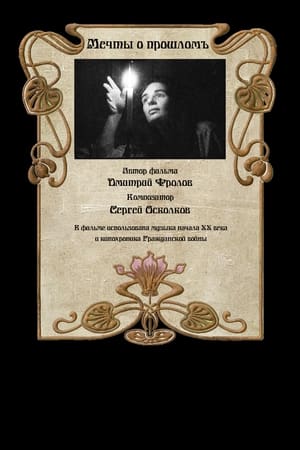
A film about peace, love and war. Dedicated to the 100th anniversary of the end of the Civil War in Russia. The film takes place at the end of the summer of 1917, when Russia and the whole world were at a crossroads between two eras. None of the people could even imagine how much his life would change in the very near future. In a strange way, the atmosphere of the film echoes our current reality and what is happening in Russia today. According to the form of visualization, the film belongs to experimental mockumentary cinema. To give greater authenticity to what is happening on the screen, the shooting was carried out on black-and-white negatives of 16 and 35 mm, hand-operated cameras were used and the material was developed in manual spiral tanks. The documentary chronicle of the Kolchak army of 1919 and the White army in the Far East of 1922 is embedded in the finale of the film.
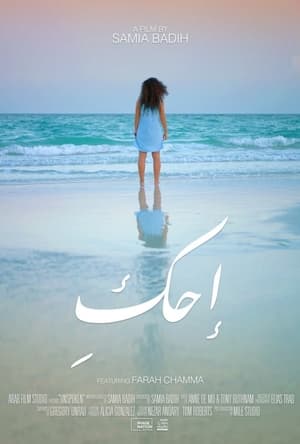
Unspoken or إحكِ is about Palestinian spoken word poet Farah Chamma who, at the age of 17, became an online sensation after her poems went viral. Today, Farah finds her poetry at odds with the world she lives in. The film shows her conflict as she struggles with self-censorship and keeping her poetry authentic and real.
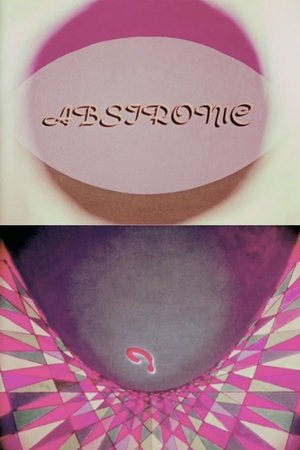
Pioneering artist Lillian Schwartz demonstrates the human input -- integrity, artistic sensibilities, and aesthetics -- that goes into producing early computer art. In voice-over she explains the intent behind a number of her films and offers insight into the artist's problems and decisions. Produced for AT&T.
Several African immigrants living in Spain speak openly about female genital mutilation.
A pioneer of visual music and electronic art, Mary Ellen Bute produced over a dozen short abstract animations between the 1930s and the 1950s. Set to classical music by the likes of Bach, Saint-Saëns, and Shoshtakovich, and replete with rapidly mutating geometries, Bute’s filmmaking is at once formally rigorous and energetically high-spirited, like a marriage of high modernism and Merrie Melodies. In the late 1940s, Lewis Jacobs observed that Bute’s films were “composed upon mathematical formulae depicting in ever-changing lights and shadows, growing lines and forms, deepening colors and tones, the tumbling, racing impressions evoked by the musical accompaniment.” Bute herself wrote that she sought to “bring to the eyes a combination of visual forms unfolding along with the thematic development and rhythmic cadences of music.”
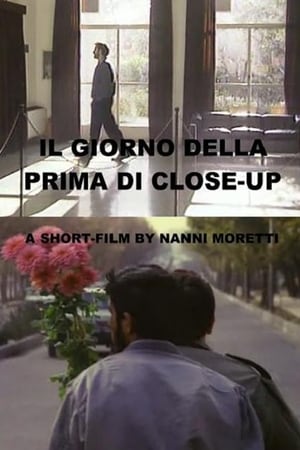
At his cinema in Rome, the Nuovo Sacher, Nanni Moretti anxiously oversees preparations for the premiere of the film Close-up, by Iranian director Abbas Kiarostami. Meanwhile Disney's The Lion King is taking Italy by storm.
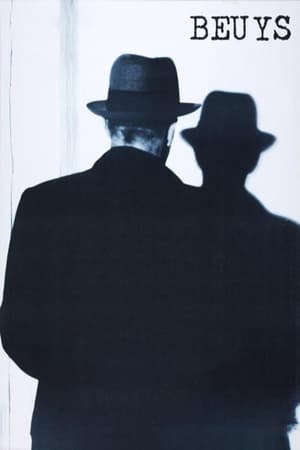
The German artist Joseph Beuys is reflecting on his theory of art, being filmed as a kinetic sculpture. In 1981, the film has won the German film critic's award for “Best short film in Germany”.
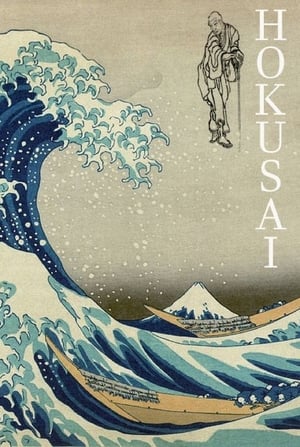
A documentary about the life and art of wood-block artist Katsushika Hokusai.
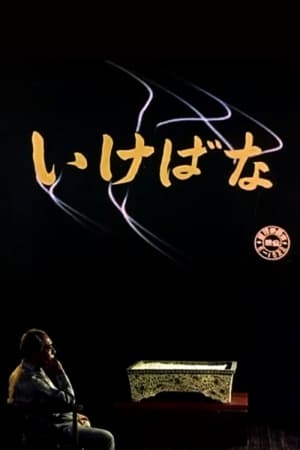
The history and art of ikebana, a centuries old Japanese art of flower arrangement and a look inside the Sogetsu School of Ikebana, where the director's father Sofu Teshigahara worked as the grand master of the school.
A film inspired by postcards dating from the 1920s and 1930s that were found in an antique shop. The postcards reveal a story of a woman, who travelled around the Adriatic islands in those years.
Film produced and directed by Ricky Leacock, Edward Pincus, and MIT Center for Advanced Visual Studies documenting the Centerbeam kinetic sculpture project and its first installation at documenta 6 in Kassel, Germany in 1977
Surreal film melding documentary footage of Chicago and its residents, featuring fast paced montage sequences set against a rollicking 1960s musical backdrop. The film aptly deconstructs the absurdities of contemporary American life, particularly the thick fog of patriotism engulfing the country at the time.
A documentary that follows the story of Dario Pasquarella, deaf director and actor, and his company. Through his work, Dario seeks to bring together the deaf and hearing community, who are usually separated by a lack of communication. In his shows he uses both languages, LIS, sign language and spoken language, to tell stories in which the deaf and hearing can live in symbiosis.
Chao-Li Chi shadow boxes indoors and practices with a sword outdoors. Theoretically, the film describes in a single continuous movement three degrees of traditional Chinese boxing, Wu-tang, Shao-lin, and Shao-lin with a sword. A long sequence of the ballet-like, sinuous Wu-tang becomes the more erratic Shao-lin; in the middle, there is an abrupt change to leaping sword movements, in the center of which, at the apogee of the leap, there is a long held freeze-frame.