A portrait of the brilliant American writer Truman Capote (1924-84) and the New York high society of his time.
A meeting between the daughter and the grandmother of the director, Iván Mora Manzano, at a time when the memories of one, the girl’s, were taking shape, and the other’s the grandmother’s, were vanishing. This starting point is used as a pretext to talk about other topics such as the importance of family memories and the search for memory.
Deep in the jungles of Southeast Asia is an elusive and endangered member of the panther family that is threatened by poachers, development, and natural habitat changes. The fate of this exotic, python-patterned, clouded leopard may rest in the hands of a small cadre of scientists, activists, and veterinarians determined to help it stave off extinction. Three daring women comb the forests of Thailand for evidence of the elusive "ghost cat." They infiltrate a notorious smuggler's paradise and black market of exotic animals, determined to save the stunning creature.
102 Years in the Heart of Europe: A Portrait of Ernst Jünger (Swedish: 102 år i hjärtat av Europa) is a Swedish documentary film from 1998 directed by Jesper Wachtmeister. It consists of an interview by the journalist Björn Cederberg with the German writer, philosopher and war veteran Ernst Jünger (1895-1998). Jünger talks about his life, his authorship, his interests and ideas. The actor Mikael Persbrandt reads passages from some of Jünger's works, such as Storm of Steel, The Worker, On the Marble Cliffs and The Glass Bees.
In the late ‘70s, in the midst of the military dictatorship, a surrealist literary work- shop is the oasis of Martín, a tormented young man who seeks to improve his poetry. Caron, a brilliant and eccentric writer, adopts him as a son. Their bond is recorded in short home movies and an unusual correspondence.
‘Sharp Objects’ follows the forgotten story of the Klungkung keris back to its origins and to its post-colonial relevance to Bali today, tracing the looting of the keris to modern day tourism in Bali. The film juxtaposes the 'knowledge' of colonial archives against community-based knowledge and mythology, convoluting the understanding of what is preserved, what is dead and what is lost. The artists apply a tangible intervention on the photochemical material they use for the film. This time consuming approach embodies the narrative of the labor intensive iron forging craftmanship of a keris blacksmith.
Idak-Idak-Idak is a hybrid-documentary relating the stolen Lombok Treasures with the Sasak diaspora through three generations of women: a daughter, her mother, and her grandmother. Blending full-spectrum cinematography with personal footage, this film moves between Indonesia and the Netherlands to examine colonial legacies, displacement and healing the heart of home. In Sasak, "Idak" can be interpreted as both “heart” and “absence”, becoming a container for memory, loss, and the unseen layers of the self between generations.
About the poet C.A.Conrad, an eccentric Elvis worshiping poet and tarot card reader, who confronts his violent past and the suspicious death of his boyfriend, Earth. The film attempts to unravel the mystery of Earth's death, while Conrad wrestles with his inner demons through a series of unconventional rituals and a tour of the deep South.
A Short film by Christophe Bisson
Donoso por Donoso
Revealing the flaws of Japanese society, the 1995 sarin gas attack in the Tokyo subway prompted Murakami to return to his homeland, whose conformism he rejected, to examine it closely. This led to the creation of two works: Underground and 1Q84.
San Francisco's North Beach in the 50's - A mix of jazz, poetry and art - The Beach recreates the atmosphere that prevailed through first-hand accounts from the actual "players" along with photographs and artwork from that vibrant time.
Java, l'âme de l'Indonésie
The documentary is titled after Arkadaş Z. Özger’s poem “Hello My Dear” which had caused much controversy in the period it was first published. Considered to be in defiance of heteronormativity, the said poem includes references to the poet’s personality, his family, his relationship to the society, and his “unexpected” death, which came three years after its publication. Today, 50 years after it was written, the documentary follows these same lines in the poem utilising cinematic elements. The documentary also rediscovers the poetics; reaches out to the family, the comrades, the friendships, departing from the official historical accounts, cognizant of his experience of otherness, in pursuit of the “lost” portrait of Arkadaş Z. Özger.
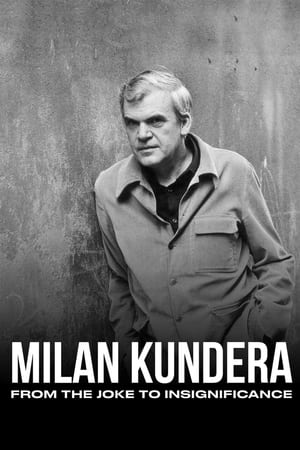
The brilliant Czech writer Milan Kundera has not given an interview in thirty years; nor does he appear in public. How did he become a legendary author? What is so unique about his books?
Road movie-style documentary about the Great Post Road (De Groote Postweg/Jalan Raya Pos). Pramoedya Ananta Toer (1925), one of the most important Indonesian authors of recent decades, wrote an essay about the Great Post Road at the request of director Bernie IJdis. This thousand-kilometer road across Java was built at the beginning of the last century under the leadership of the Dutchman Daendels and cost the lives of thousands of Indonesian forced laborers. Because Toer, as a former political prisoner, is restricted in his freedom of movement, the filmmakers act as his eyes and ears during a trip along the Post Road. During the journey, parallels between Indonesia in the past and present slowly unfold. In addition, as the film progresses, the grimness of Toer's situation and the situation in his country becomes palpable.
Passers-by, those who knew him in his youth, René Barjavel, witness of his beginnings, his wife, his doctor, writers ... By questioning them Michel Polac tries to better understand the troubled personality of Louis-Ferdinand Céline, Notorious anti-Semite and genius writer.
José Emilio Pacheco: me llamo Nadie
A portrait of the British writer Thomas Hardy (1840-1928), who, although he had radical instincts, hated hypocrisy, was of great poetic brilliance, had a tragic perception of life and a calm outward appearance, was at heart a man of seething and somber darkness.
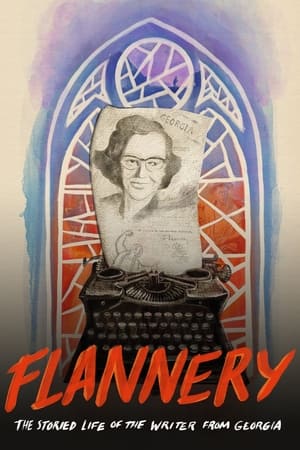
Explore the life of Flannery O’Connor whose provocative fiction was unlike anything published before. Featuring never-before-seen archival footage, newly discovered journals, and interviews with Mary Karr, Tommy Lee Jones, Hilton Als, and more.