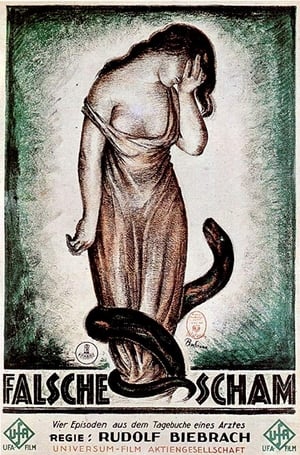
The dangers of the dread venereal disease syphilis are depicted in this earnest drama from the 1940s. The story centers upon an intrepid health commissioner who is out to get rid of the tawdry hookers responsible for spreading the disease.
Morganson's Finish was inspired by the Jack London story of the same name. The hero, Dick Gilbert is in love with wealthy Barbara Wesley but he is disgraced in her eyes through the underhanded machinations of his rival Dan Morganson.
The TARDIS materialises not far from Paris in 1794 — one of the bloodiest years following the French Revolution of 1789. The travellers become involved with an escape chain rescuing prisoners from the guillotine and get caught up in the machinations of an English undercover spy, James Stirling — alias Lemaitre, governor of the Conciergerie prison.
A dramatization of the assassination of Franz Ferdinand.
The fathers of Isabel Channing and Howard Billings were good friends until they had a falling-out over a horse and swore to be enemies forever. Years later, Howard is seen returning from college and Isabel, who has lost her,is working hard to keep the old homestead (and stables) together. Thornhill is trying his best to cheat her out of everything. Howard takes a hand.
Middle-aged teacher Nadia experiences increasing social exclusion and paranoia as society begins to exclude her and her husband, Ange, in disturbing ways complicated by her difficult family history and her troubled relationship with her son, Ralph, and his family.
Frederick Osborn is too busy to tend to his family duties and his wife Frances feels neglected. But Frederick's attention is caught when his wife takes up with a pair of companions to whom she is devoted, but whom he sees as more than a little shady.
A series of four 2-reelers based on the stories of George Bronson Howard, directed by Duke Worne, and starring Roy Stewart in the title role; each episode in the series was a story complete in itself. They are all presumably lost.
A young girl is presented, on her birthday, with a beautiful pearl necklace, the oldest heirloom in the family. Her maid carefully locks it up in the bureau drawer; but the next morning the necklace is missing. Naturally, the maid is accused, but she denies all knowledge of the whereabouts of the necklace, and puts the blame on the washerwoman, who had called at the time she was locking the jewels up; in consequence, the washerwoman is arrested, and her little son, thrown on his own resources, finds employment with the milkman. Two or three days later, while delivering milk at a fashionable residence, he sees a young lady walking in her sleep, out across the lawn, and follows her to a hollow tree, where he sees her dig up the jewels, which she has hidden on a previous somnambulistic promenade. Of course, this soon leads to the straightening out of all the difficulty. This short is presumably lost.
In the Jacobite Rising of 1745, the Young Pretender Bonnie Prince Charlie leads an insurrection to overthrow the Protestant House of Hanover and restore his family, the Catholic branch of the House of Stuart, to the British throne.
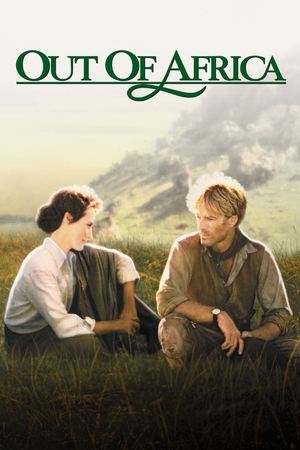
Tells the life story of Danish author Karen Blixen, who at the beginning of the 20th century moved to Africa to build a new life for herself. The film is based on her 1937 autobiographical novel.
Glory Moore, a young girl, finds herself left unprovided for after her father's death, as the farm has to be sold to pay his debts.
Margot is the pawn in a game set up by her father, "Old Bill" Prewitt, and her husband, Tom Sloan. They use her to fleece gamblers until a gun fight results in serious injuries for both Tom and Bill. Bill thinks Tom is dead and takes Margot across country. He finally collapses from exhaustion and they are found by a trapper.
A Faust-like meringue involving a wealthy Count who enters into a deal with the Devil: for every soul he delivers to Satan, the count will be granted an extra year of life. One of the count's victims, an artist named Rodolphe, dedicates his life to punishing the nobleman, a mission he accomplishes with the help of the beautiful Fairy Queen.
During WWI, soldier Calvin Price dreams of returning home to marry his sweetheart, Janie. Upon his return, he finds himself shunned because local rivals, the Sparklin brothers, have framed him as a coward and a drunk. Janie has even engaged herself to one of them. Calvin tracks down the brothers, forces a public retraction of the lies, and restores his reputation as a town hero. When a regretful Janie tries to win him back, Calvin rejects her and chooses Rosy, a loyal childhood friend who supported him all along.
Pinky Cochrane is one of a trio of starving artists: the other two are Sam Wellbridge and Mac MacTavish. When one of their favorite models dies, the three heroes take charge of the woman's infant son Victor. Once the boy has grown to manhood, his three foster fathers decide to choose a likely wife for their "shared" son.
A widowed woman marries her husband's brother, who soon proves to be a tyrant stepfather to his adopted son.
Billy Davis discovers that his father's bakery business is in serious financial trouble and leaves college in order to help his family.
At a party thrown by millionaire Max Goldberg, Charles Howard, an aristocratic young artist, succumbs to the charms of chorus girl Lita O'Farrell, Goldberg's erstwhile girl friend. After a whirlwind courtship, the two marry and then their incompatibilities begin to surface.
Jan Saxe and Peter Harlingen, two young men from Holland, arrive in America with little orphan Bertha Kruger whom they have befriended during the trip and whom they both love. Bertha has come to live with her blind Aunt Sophie, and when Jan secretly raises $500 for an operation to restore her aunt's sight, Bertha marries Peter, believing that he was the donor of the "secret gift."